
This produce trade glossary defines the working vocabulary of the fresh and frozen produce import-export business — the incoterms, document names, cold-chain terms, quality metrics, and payment structures that fill every contract and email in the trade. Each entry links to the full guide where one exists on this site. Bookmark it: every other page here assumes this vocabulary, and now it lives in one place.
Table of Contents
A–C
- Air Waybill (AWB): The air-freight transport document — non-negotiable, unlike an ocean B/L. See the air freight guide.
- Allocation: A supplier’s committed share of production reserved for a buyer — the scarce commodity in peak weeks; earned by frames, not emails.
- Bill of Lading (B/L): The ocean transport document that is simultaneously receipt, contract, and title. Order, straight, seaway, and telex variants each move risk differently — see the B/L guide.
- BRC / BRCGS: The dominant food-safety certification for processing plants; AA-grade plants anchor the frozen trade’s certified tier.
- Brix: Dissolved sugar percentage measured by refractometer — the eating-quality number in citrus, grapes, melons, and mangoes. Contracts state floors (e.g., Navel 11.5+).
- CAD (Cash Against Documents): Payment structure where banks release shipping documents only upon payment — see the documentary collection guide.
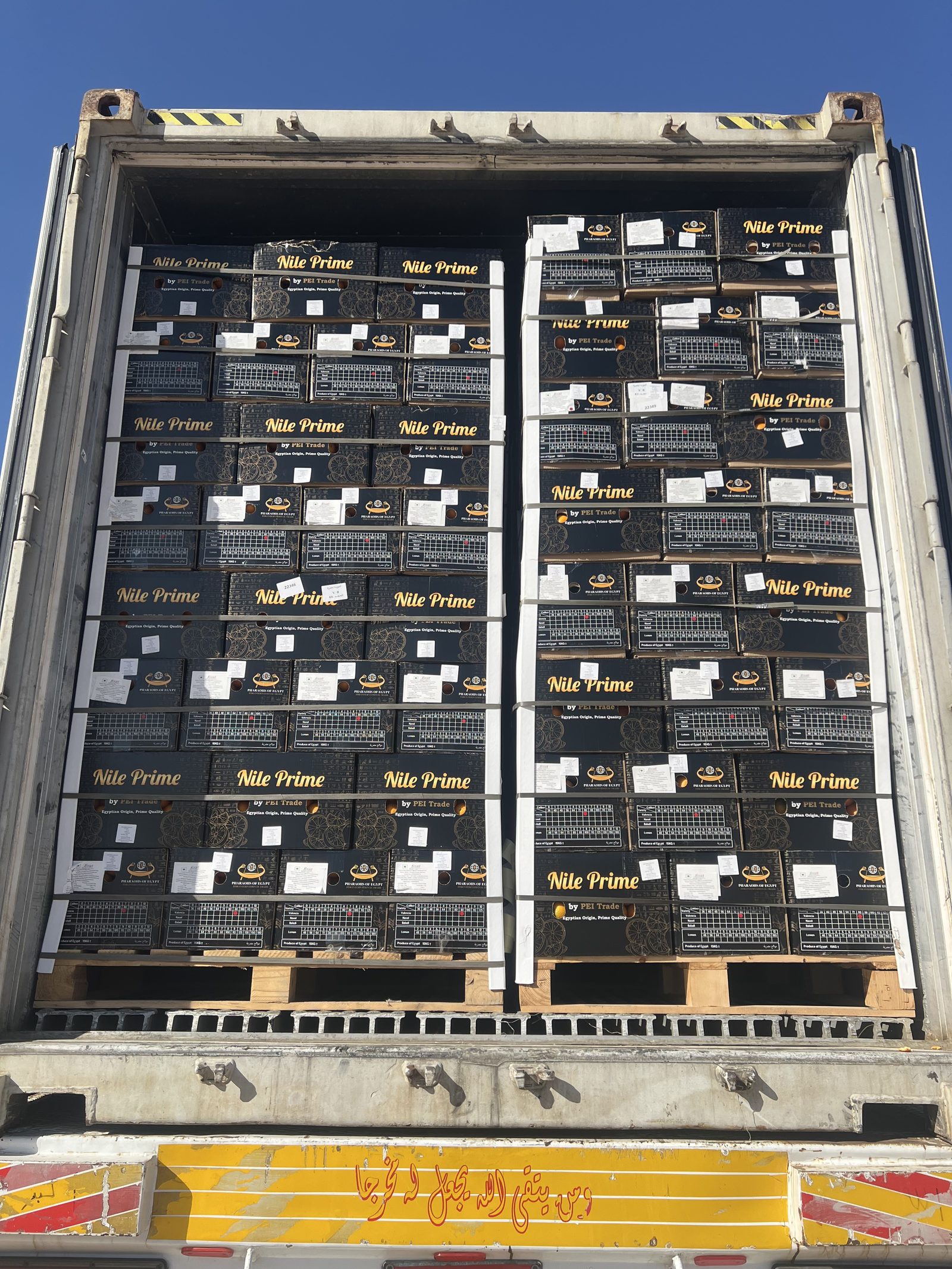
- Caliber: Fruit size expressed as diameter (mm) or count per carton — the pricing unit of citrus, onions, and grapes. See sizes guide.
- CFR / CIF: Incoterms where the seller pays freight (CIF adds insurance — at minimum cover, upgrade it). See the incoterms guide.
- Chilling injury: Physiological damage from storage below a product’s tolerance — mangoes below ~10°C, lemons below ~8°C. Invisible at loading, ruinous at arrival. See the storage chart.
- Cold chain: The unbroken temperature-controlled path from field pre-cooling to retail shelf; its evidence is the logger.
- Cold treatment: In-transit sustained low pulp temperature protocol against fruit fly, required by China and some markets — probe-recorded and auditable.
- Curing: Post-harvest drying/healing that builds storage life in onions, garlic, and sweet potatoes — the single most important word in those trades.
D–F
- D/P and D/A: Documents against Payment / against Acceptance — the two documentary-collection modes; D/A extends credit, D/P does not.
- Demurrage & Detention: Daily charges for holding a container in port (demurrage) or outside it (detention) beyond free time — the new importer’s classic ambush. See the guide.
- Degreening: Controlled ethylene treatment converting citrus peel color without touching internal ripeness.
- EUR.1 / GAFTA CoO: Preferential certificates of origin unlocking reduced or zero duty into the EU and Arab markets respectively.
- Ethylene: The ripening hormone — emitted by mangoes and guava, fatal to greens and potatoes sharing their air; the co-loading rulebook.
- FCL / LCL: Full vs Less-than Container Load; LCL consolidation serves sub-container buyers per the small-orders guide.
- FOB: Free On Board — seller delivers loaded on vessel; buyer owns freight, insurance, and risk from the rail. The trade’s default quote basis.
- Force majeure: Contract clause excusing performance under defined catastrophes — in produce, drafted for weather and harvest failure with notice duties.
- Free time: The days of demurrage/detention-free container use after discharge — negotiable at booking, never at arrival.
G–L
- GACC: China’s customs administration — orchards and packhouses must hold GACC registration to ship China. See the China guide.
- GLOBALG.A.P: The farm-level certification European retail requires; GRASP adds the social-practice module. Verify numbers in the database, not the PDF.
- GOEIC: Egypt’s General Organization for Export & Import Control — the exporter registry every verification starts with.
- HS Code: The harmonized classification determining duty everywhere — six universal digits plus national extensions. One wrong digit is a stuck container; see the HS guide.
- Incoterms: The ICC’s standardized delivery terms (FOB, CFR, CIF, DAP…) defining exactly where cost and risk transfer.
- IPAFFS: The UK’s import pre-notification system post-Brexit — see the UK guide.
- IQF: Individually Quick Frozen — fluidized-bed freezing keeping pieces separate and free-flowing; the premium frozen standard vs block. See IQF vs block.
- ISPM-15: The wood-packaging treatment standard — every export pallet carries the IPPC stamp or the container waits. See the packaging guide.
- Landed cost: The true per-unit cost at your warehouse: FOB + freight + insurance + duty + clearance + inland + waste divisor. The only honest comparison basis.
- Letter of Credit (LC): Bank-guaranteed payment against compliant documents under UCP 600 — expensive, bureaucratic, and exactly right for first deals in strict markets. See the LC guide.
- Logger: The calibrated in-container temperature recorder — the voyage’s black box and every claim’s star witness.
M–P
- MRL: Maximum Residue Limit — the pesticide ceilings per destination; pre-shipment multi-residue screening per lot is the professional standard.
- Phytosanitary certificate: The origin plant-health certificate accompanying every fresh shipment — wording must match the destination’s requirements exactly.
- Pre-cooling: Removing field heat within hours of harvest — the step reefers cannot substitute and shelf life never forgives skipping.
- Private label: Products packed under the buyer’s brand at origin — see the private label guide.
- Proforma invoice: The seller’s pre-contract quotation document fixing spec, price, and terms — the reference the LC or T/T is built against.
- Pulp temperature: The fruit’s internal temperature — what protocols and claims actually measure, vs air temperature which merely suggests it.
Q–S
- Reefer: The refrigerated container — a setpoint-controlled machine demanding correct stuffing, venting, and pre-cooled cargo. See the reefer guide.
- Rolling: A carrier bumping booked cargo to a later vessel — peak-season risk managed by allocation relationships, not indignation.
- Season frame: A season-long volume-and-price agreement with call-offs — the structure behind every stable program on this site.
- Setpoint: The reefer’s commanded temperature — product-specific and non-negotiable, from −18°C frozen to +13°C sweet potatoes.
- Shelf life: Days of commercial quality remaining — spent by every hour above optimum; budgeted by the voyage math.
- SO₂ pads: Sulfur-dioxide sheets controlling botrytis in grape cartons — dosage per format, documented.
T–Z
- T/T: Telegraphic transfer — the trade’s workhorse payment; 30/70 against documents is the standard structure. See the T/T guide.
- Telex release: Electronic B/L surrender at origin allowing document-free cargo release at destination — speed for trust. See the B/L guide.
- TRACES / COI: The EU’s trade control system; organic consignments require its electronic Certificate of Inspection. See the organic guide.
- UCP 600: The ICC rules governing letters of credit worldwide — the rulebook behind every discrepancy dispute.
- ULD: Unit Load Device — the aviation pallets and containers air cargo actually flies in.
- Ventilated container: The unpowered vented box that carries cured onions and garlic in cool months at reefer-beating rates. See the container guide.
- VGM: Verified Gross Mass — the mandatory certified container weight filed before loading.
- Waste divisor: The honest way to cost arrival losses: divide by the sellable fraction (÷0.97 for 3% waste), never subtract.
FAQ
What is the difference between FOB and CIF?
Under FOB the buyer arranges and pays freight and insurance from the loading port; under CIF the seller includes both — but CIF insurance defaults to minimum cover, so buyers upgrade it or insure separately. Quotes on different terms must be converted before comparison.
What is the difference between demurrage and detention?
Demurrage charges accrue while the container sits inside the terminal beyond free time; detention accrues while it remains in your possession outside the port. Some carriers run combined clocks — check which governs your lane.
What does IQF mean in frozen produce?
Individually Quick Frozen — pieces freeze separately in a fluidized-bed tunnel and stay free-flowing, unlike block freezing where product freezes into a solid mass. IQF commands premiums for retail and food-service use.
What is a phytosanitary certificate?
The official origin document certifying plant cargo meets the destination’s plant-health requirements — issued by Egyptian agricultural quarantine per shipment, with wording that must match each destination’s specific rules.
Sources
International Chamber of Commerce — Incoterms 2020 and UCP 600 (iccwbo.org) · IPPC — phytosanitary standards including ISPM-15 (ippc.int) · UNECE — fresh produce quality standards (unece.org) · PEI Trade — Egyptian export practice · World Customs Organization — HS nomenclature (wcoomd.org).