
Reefer container shipping from Egypt is the artery every trade on this site runs through — mangoes to Jeddah, oranges to St. Petersburg, frozen strawberries to Rotterdam. The mechanics are the same; the settings, and the mistakes, differ by product. This guide explains how reefer shipping from Egyptian ports actually works: the ports, the settings per product, transit times, and the checkpoints that protect your cargo. It serves every hub — mango, citrus, strawberry, and frozen.
Last updated: July 2026 · By the Nile Prime export team
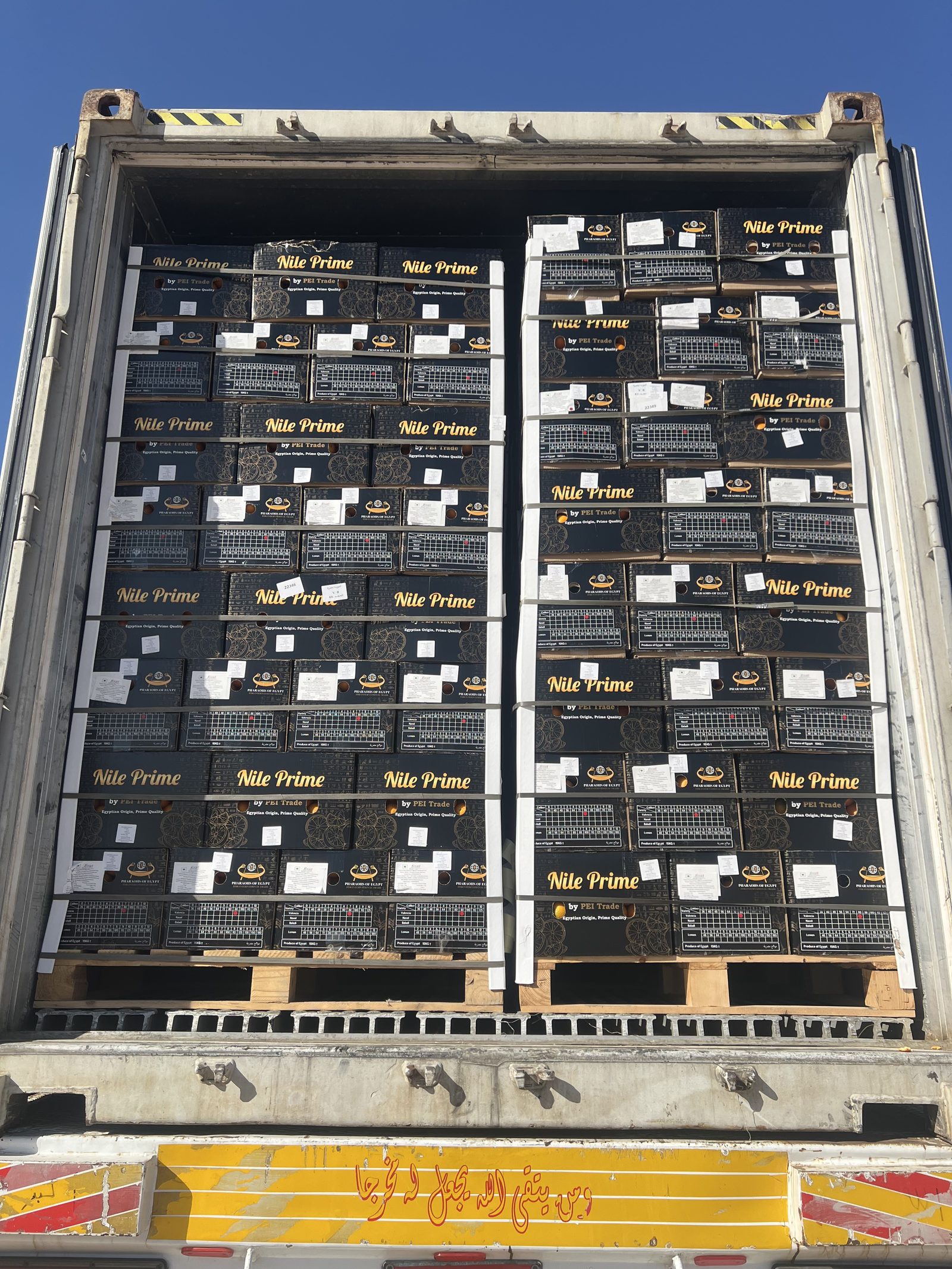
Table of Contents
- The Ports & Lanes
- Reefer Settings by Product — The Master Table
- The 6 Checkpoints That Protect Your Cargo
- Reefer Shipping from Egypt — FAQ
- Ship With a Cold-Chain-First Exporter
- Worked Example: The Stuffing Difference
- Setpoints by Product
The Ports & Lanes
| Egyptian Port | Serves | Key Lanes |
|---|---|---|
| Alexandria / El Dekheila | Delta & Nubaria production | EU (10–12 d), Russia (12–14 d), UK |
| Damietta | East Delta | Mediterranean hubs (5–8 d), EU |
| Sokhna / Adabiya (Red Sea) | Gulf-bound cargo | Jeddah 3–5 d, Jebel Ali 5–7 d, Asia |
Reefer Settings by Product — The Master Table
| Product | Temp | Humidity | Vents | Killer Mistake |
|---|---|---|---|---|
| Mangoes | 10–12°C | 90% | Open 25–35 CBM/h | Below 8°C = chilling injury |
| Citrus | +2–5°C (protocol-dependent) | 90% | Open | Field-hot loading; wrong cold-treatment probes |
| Fresh strawberries | 0–2°C | 90–95% | Minimal | Any chain break — hours cost days of shelf life |
| Sweet potatoes | 12–14°C | 85–90% | Open | Below 10°C = chilling injury |
| Onions (summer) | +2–5°C | 65–75% | Open wide | High humidity = rot; winter can go ventilated |
| All frozen (IQF) | −18°C | — | Closed | Any thaw event — demand the data logger |
The 6 Checkpoints That Protect Your Cargo
- Pre-cooling proof: pulp temperature at loading, logged — a reefer maintains temperature, it doesn’t remove field heat.
- Pre-cooled container: box at setpoint before stuffing begins.
- Load plan photo: cartons inside the red load line, floor channels clear, no blocking the return-air path.
- Settings on the B/L: temperature, humidity, and vents written on the bill — your claims evidence.
- Data logger in the cargo: independent of the carrier’s unit; non-negotiable for frozen.
- Genset planning: power coverage for trucking legs and port dwell — where most “mystery” quality losses actually happen.
Every checkpoint above is standard practice on Nile Prime loadings — QC photos and reefer download shared per shipment. Documentation that travels with the container is covered in the export documents guide, and who pays for what in the Incoterms guide.
Worked Example: Two Identical Containers, One Ruined — The Stuffing Difference
Two hypothetical reefers of strawberries leave the same packhouse the same morning, set to the same −0.5°C. Container A was stuffed by the book: fruit pre-cooled to target before loading (a reefer maintains temperature; it cannot remove field heat from 20 tonnes), pallets stacked below the red load line with the T-floor uncovered at the door end, cartons blocked so air must pass through the vented boxes rather than around them, and the unit’s fresh-air vent closed for the deep-cold setpoint. It arrives perfect. Container B was loaded warm at midday “to save a pre-cooling day,” stacked over the load line, with a loose pallet-wrap sheet sagging over the rear T-floor. The unit ran flat-out the whole voyage showing a compliant supply air temperature — while return-air and pulp data told the real story: the core pallets never reached setpoint, and arrival finds soft fruit in the middle of the stow. No machinery failed; physics was simply ignored. The claim fails too — the logger shows the unit performed; the cargo was the problem. Every rule in this section exists because of Container B.
Setpoints and Vent Settings by Product
| Product | Setpoint | Fresh-Air Vent | Notes |
|---|---|---|---|
| Oranges | +3 to +5°C | 15–25 m³/h | Respiring cargo needs air exchange |
| Strawberries | −0.5 to 0°C | Minimal | Pre-cooling non-negotiable |
| Mangoes | +10 to +12°C | 15–25 m³/h | Chilling injury below ~10°C |
| Onions (ventilated alt.) | Ambient/vented | Max | Reefer only in hot months |
| Frozen (IQF) | −18°C or colder | Closed | No fresh air — nothing respires |
| Potatoes | +6 to +8°C | 10–15 m³/h | Cold sweetening below ~6°C |
Reefer Shipping from Egypt — FAQ
How long does reefer shipping take from Egypt?
Gulf ports 3–7 days from Sokhna; Mediterranean hubs 5–8 days and Rotterdam 10–12 from Alexandria/Damietta; Russian ports 12–14 days; Far East 18–25 days.
What temperature are Egyptian produce containers shipped at?
By product: fresh strawberries 0–2°C, citrus +2–5°C, mangoes 10–12°C, sweet potatoes 12–14°C, onions +2–5°C at low humidity, and all frozen products at −18°C with vents closed.
Does a reefer container cool down warm cargo?
No — a reefer holds temperature; it cannot remove field heat. Fruit must be pre-cooled to pulp setpoint before loading, which is why pre-cooling proof is the first checkpoint of a professional shipment.
What should be written on the bill of lading for reefer cargo?
The exact settings — temperature, humidity, and vent opening — plus the genset arrangements for land legs. The B/L settings line is your primary evidence in any temperature claim.
Ship With a Cold-Chain-First Exporter
Nile Prime — the premium brand of PEI Trade — runs every loading to the checklist above: WhatsApp +20 109 911 1918 · [email protected].
Sources: carrier reefer guidance (Maersk/CMA CGM commodity settings) · PEI Trade operational practice.