
Every offer sheet for Egyptian oranges speaks one language: counts. Understand Egyptian orange sizes and the carton math behind them, and you can read any quotation, spec the right fruit for your shelf, and calculate landed cost per orange before you sign. This guide covers the count system, size-to-market matching, carton formats, and container loading — the numbers side of the complete Egyptian citrus export guide.
Last updated: July 2026 · By the Nile Prime export team
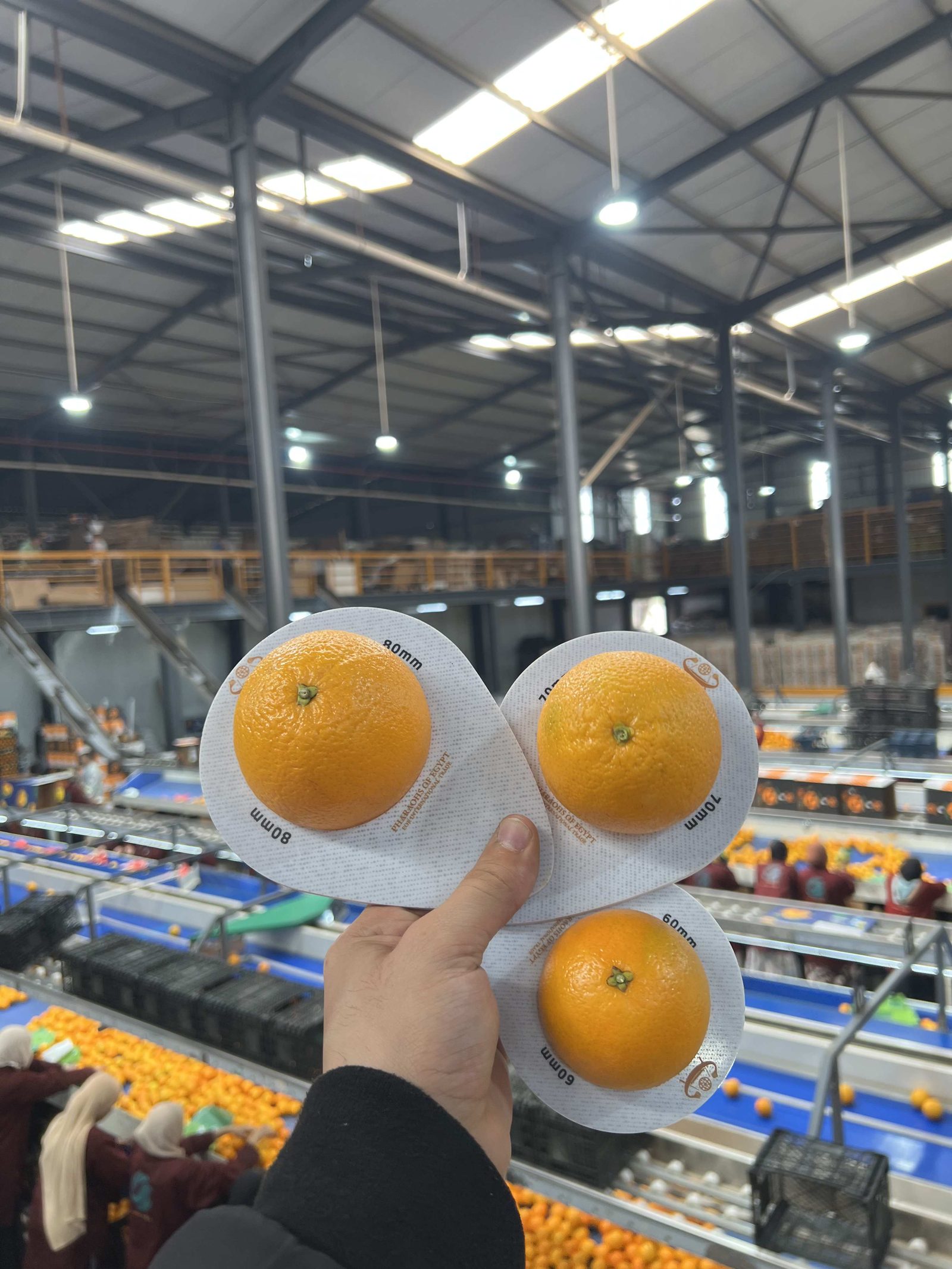
Table of Contents
- The Count System — Size Chart (15 kg Carton)
- Size Preferences by Market
- Carton Formats & Pallet Math
- What Good Grading Looks Like
- Egyptian Orange Sizes — FAQ
- Get a Count-Priced Offer
- Worked Example: The Size-Mix Negotiation
- Preferences by Market
The Count System — Size Chart (15 kg Carton)
| Count | Fruit Diameter | Approx. Weight/Fruit | Typical Demand |
|---|---|---|---|
| 48–56 | 81–88 mm | 268–312 g | Display fruit, wholesale premium — mostly Navel |
| 56–64 | 77–88 mm | 235–270 g | Retail sweet spot — strongest prices |
| 72–80 | 70–80 mm | 190–210 g | Core retail and food service |
| 88–100 | 64–74 mm | 150–170 g | Value retail, consumer bags |
| 113–125 | 58–67 mm | 120–135 g | Juicing programs, price-driven markets |
Two rules from the table: mid counts (56–88) earn the strongest retail pricing almost everywhere, and juice buyers should buy small — counts 100–125 deliver the same juice per tonne at a lower price per carton. Which variety fills which counts is covered in Valencia vs Navel.
Size Preferences by Market
| Market | Preferred Counts | Note |
|---|---|---|
| Gulf retail | 56–80 | Large display Navel 48–56 for premium shelves |
| Russia / EAEU | 72–100 | Volume counts; consistent sizing valued over size itself |
| EU / UK | 64–88 | Strict uniformity within carton; Class I only |
| Far East | 56–72 | Gift-quality appearance premium |
| Juice processors | 100–125 | Bought on yield, not looks |
Carton Formats & Pallet Math
| Format | Net | Per Pallet | Per 40-ft Reefer | Used For |
|---|---|---|---|---|
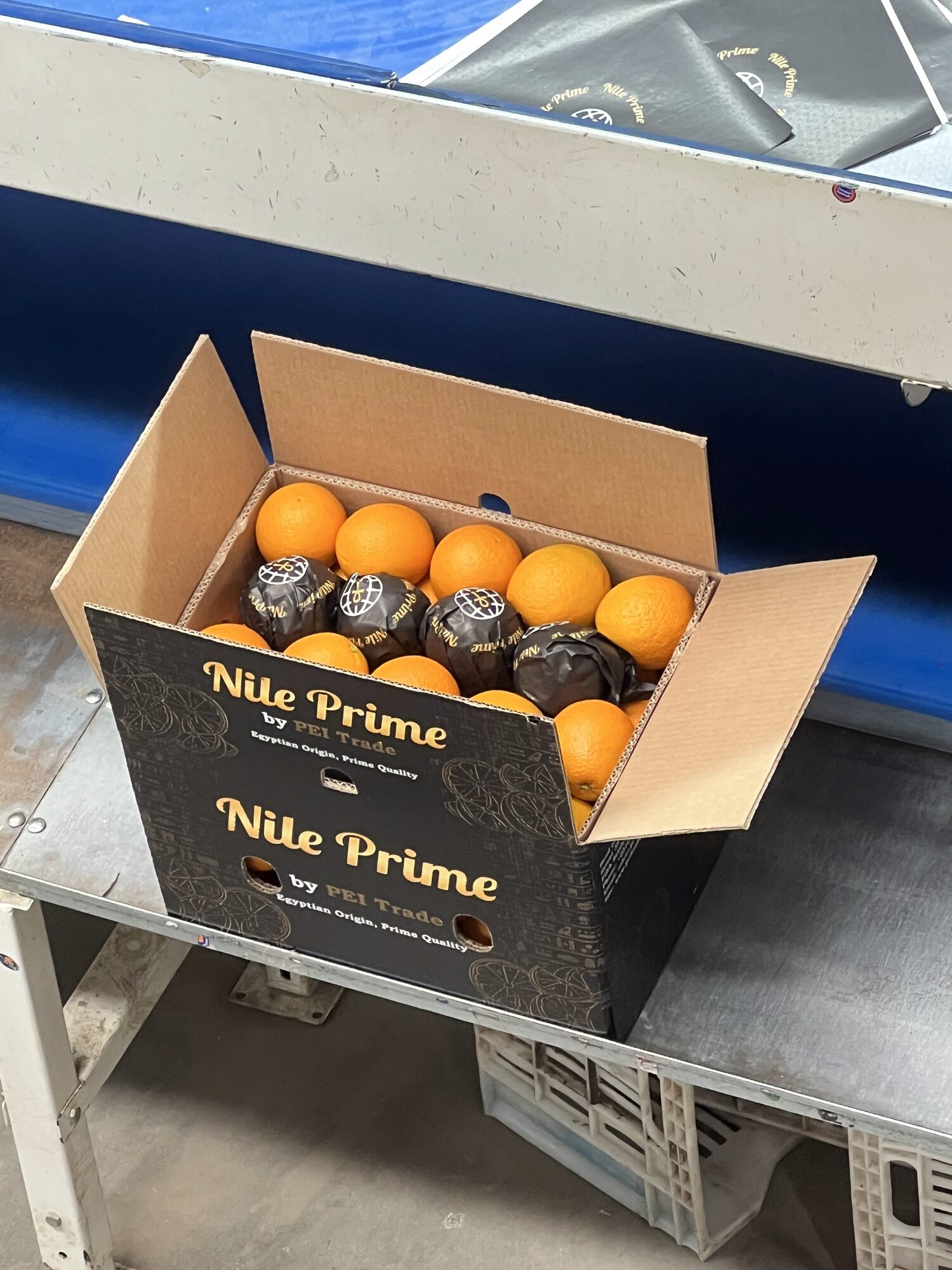
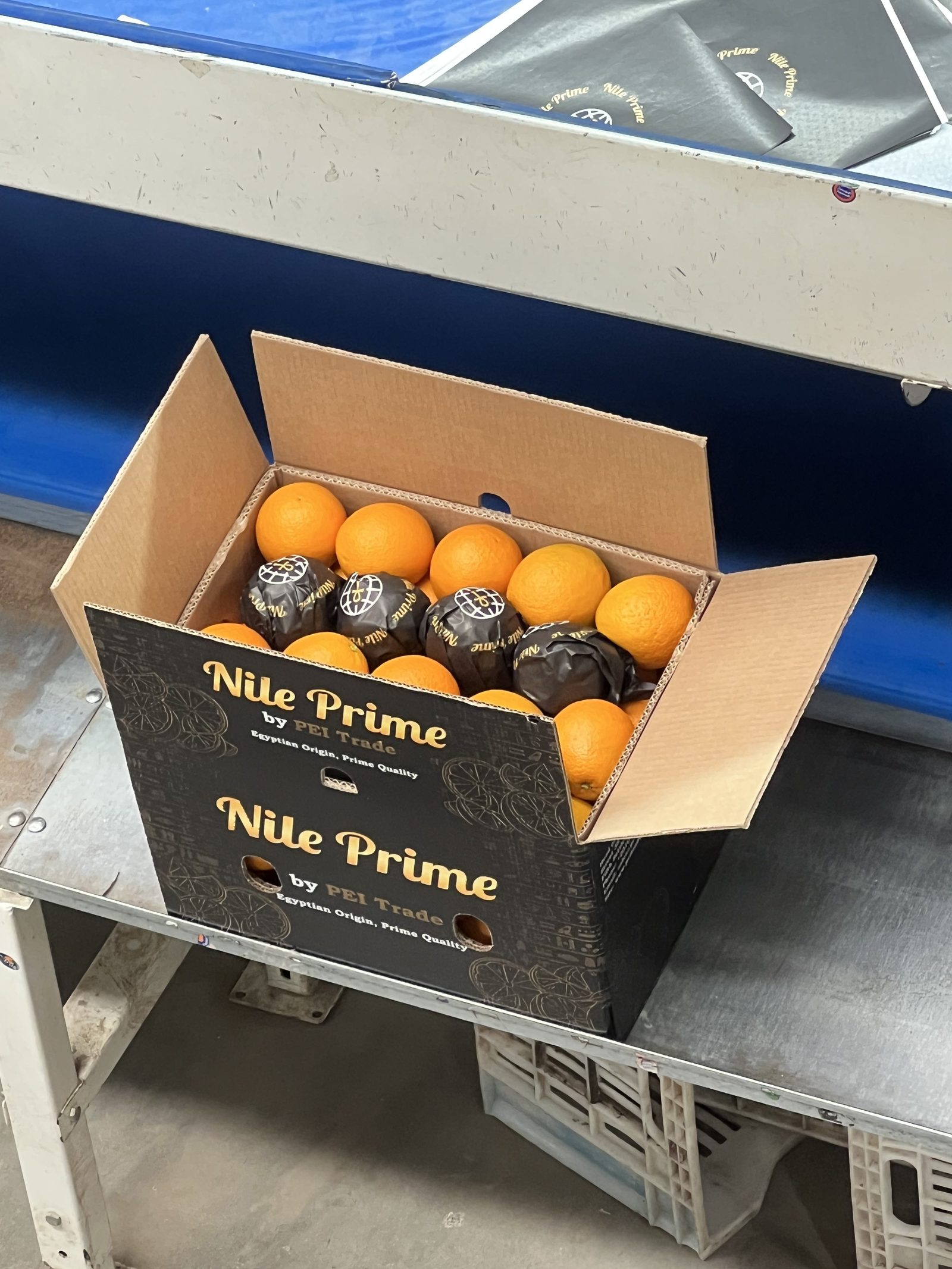
| 15 kg telescopic | 15 kg | 80 cartons | 20 pallets ≈ 24 t | The global standard |
| 8–10 kg premium | 8–10 kg | ~90–100 | ≈ 21–22 t | Retail programs, wrapped fruit |
| 2–3 kg nets/bags in master | 12–15 kg master | ~60 | ≈ 22 t | Supermarket consumer packs |
| Open-top display | 10–15 kg | ~60 | ≈ 22 t | Wholesale markets |
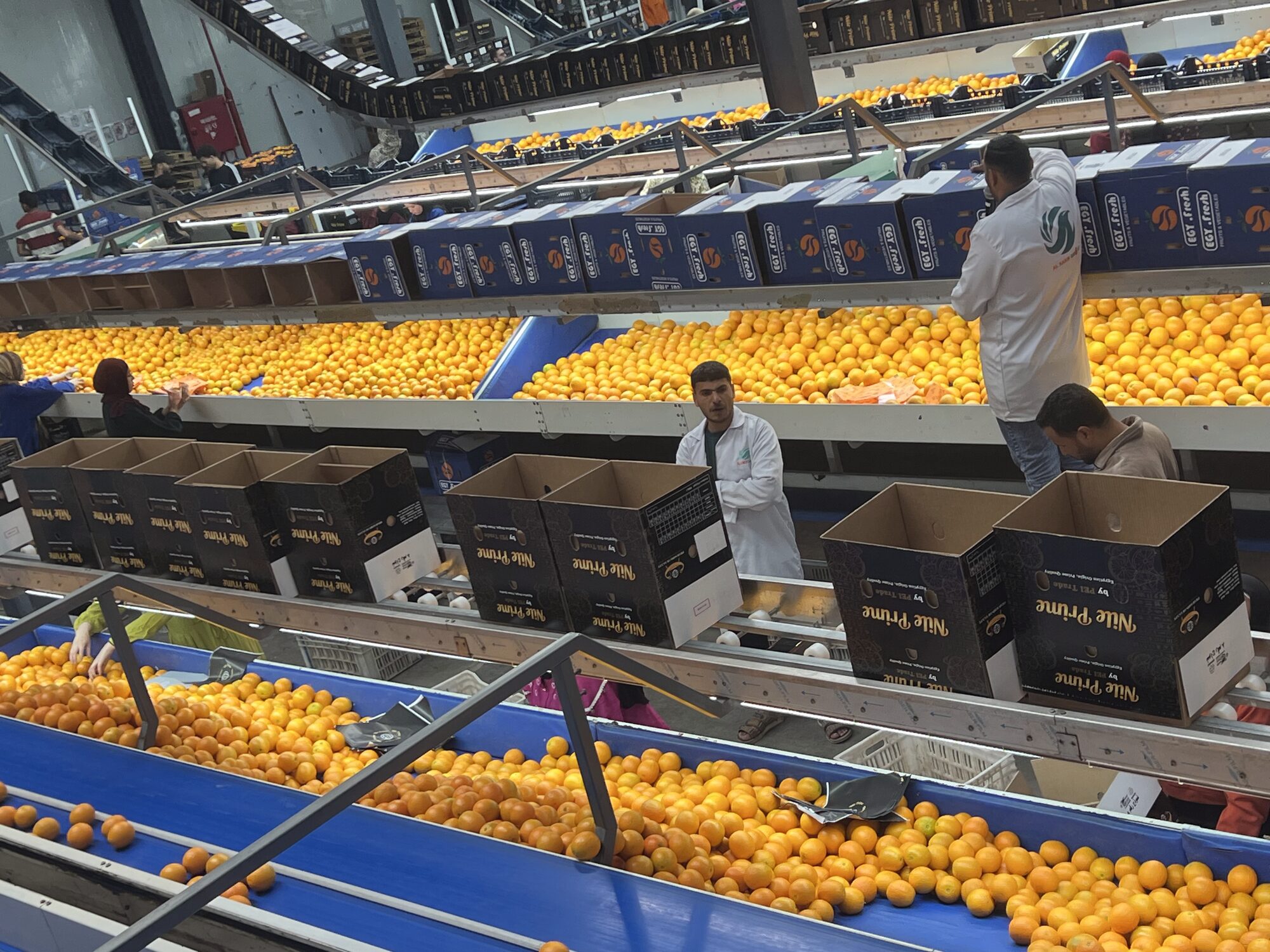
Quick landed-cost math: a 15 kg carton at count 64 holds 64 oranges — divide your landed carton cost by 64 and you know your cost per orange before it reaches the shelf. That one habit — costing per fruit, not per tonne — is how professional retail buyers compare offers across counts and origins.
What Good Grading Looks Like
- ±3 mm inside the carton — uniformity within a count matters more than the count itself.
- Count distribution per lot in writing — “mixed sizes” is not a spec, it’s a warning.
- Washed, fungicide-treated, food-grade waxed — standard for every export carton.
- QC photos before loading — a disciplined packhouse sends them unprompted; details in the orange exporter ranking.
Worked Example: The Size-Mix Negotiation That Decides the Season
Every citrus contract hides a second negotiation inside the price line: the size mix. Watch a hypothetical one between a Riyadh importer and an Egyptian exporter. The importer opens: “All 56s and 64s” — the Gulf retail sweet spot, big glossy fruit for the family table. The exporter’s truth: an orchard produces a bell curve, not a single size; a crop might run 10% at 48/56, 45% at 64/72, 35% at 80/88, 10% smaller. Selling one buyer only the curve’s crown means dumping the rest at discounts — so pure-crown orders carry a premium of, say, $60–90/tonne in this sketch. The professional compromise they land on: a weighted mix — 50% at 56/64 for the retail wall, 35% at 72/80 for food service and promotions, 15% at 88 for the juice counter — priced as a blend that beats the pure-crown quote by enough to fund a promotion. Both sides win the way this trade actually wins: the importer’s channels absorb the curve, the exporter’s orchard sells through, and neither pays the mismatch penalty. Buyers who order sizes their channels can’t sell — the commonest rookie error — pay it twice: premium going out, markdowns coming home.
Size Preferences by Market — The Cheat Sheet
| Market | Preferred Counts (15 kg) | Why |
|---|---|---|
| Gulf retail | 56–72 | Family fruit bowls; visual size sells |
| Russia / CIS | 64–80 | Volume trade; balanced size-price |
| China premium | 48–64 wrapped | Gift culture rewards large fruit |
| EU retail | 64–88 | Net bags and price points rule |
| Juice / food service | 88–100 | Yield per dollar, not looks |
| Bangladesh / price lanes | 80–100 | Smaller fruit, sharper price points |
Egyptian Orange Sizes — FAQ
What do orange counts like 56 or 88 mean?
The number of oranges in a standard 15 kg carton. Count 56 means 56 large fruit (≈270 g each); count 100 means 100 small fruit (≈150 g). Lower count = bigger oranges.
Which orange sizes sell best at retail?
Counts 56–88 (roughly 170–268 g per fruit) carry the strongest retail demand and pricing in most markets, with large 48–56 Navel serving premium display shelves in the Gulf and Far East.
How many oranges fit in a 40-ft container?
About 1,600 cartons of 15 kg — roughly 24 tonnes. At count 64 that is around 102,400 individual oranges per container.
What sizes should juice buyers order?
Small counts, 100–125. Juice yield per tonne is essentially the same as larger fruit, but the price per carton is meaningfully lower — the trade’s standard juicing spec for Egyptian Valencia.
Get a Count-Priced Offer
Tell us your target counts and channel — Nile Prime quotes Valencia and Navel per count with QC photos on every loading: WhatsApp +20 109 911 1918 · [email protected].
Sources: PEI Trade — Egyptian Citrus Export Report 2026 · Tridge — Egypt orange exports.