
Importing Egyptian mangoes to the UK puts a July–October origin in front of the world’s most mango-literate diaspora market at exactly the moment Indian and Pakistani supply exits it. Britain buys mangoes with rare sophistication — Alphonso by name in April, Sindhri by June — and then spends the autumn quarter undersupplied. This guide covers the varieties that fit UK channels, post-Brexit border requirements, the air-versus-sea decision, and a worked season program for a UK importer.
Last updated: July 2026 — the Egyptian mango season is open now.
Table of Contents
- The UK Window: What July–October Looks Like
- Matching Varieties to UK Channels
- The UK Border: Post-Brexit Requirements
- Air vs Sea for the UK Lane
- Worked Example: A Season Program From Birmingham
- FAQ
- Sources
The UK Window: What July–October Looks Like
The UK mango year is a relay of diasporas and seasons: Indian fruit (Alphonso, Kesar) owns April–June on devotion and air freight; Pakistani Sindhri and Chaunsa carry June–August in the northern-cities wholesale trade; and from late July the subcontinent tapers — leaving August–October to Brazilian and Israeli sea fruit of serviceable but unremarkable eating quality. That taper is Egypt’s door: Egyptian varieties peak exactly across it, a 5-hour flight or 8–10 day sail away, with eating quality the late-window incumbents cannot match. The commercial logic mirrors the Egypt-vs-India analysis: Egypt doesn’t fight the Alphonso religion — it inherits the congregation when the temple closes for the year.
Matching Varieties to UK Channels
| UK Channel | Right Egyptian Variety | Mode | Why |
|---|---|---|---|
| Ethnic wholesale (Southall, Birmingham, Manchester) | Sedika, Ewais — tree-ripened | Air | Flavor-literate buyers pay for aroma; boxes sell by smell |
| Supermarket mainstream | Keitt — firm, fibreless, large | Sea + ripening rooms | Price points, shelf life, ripen-at-home programs |
| Premium retail / food halls | Sedika air + conditioned Keitt | Both | Story + consistency |
| Food service / juicing | Late Keitt, size outliers | Sea | Yield per pound sterling |
The UK Border: Post-Brexit Requirements
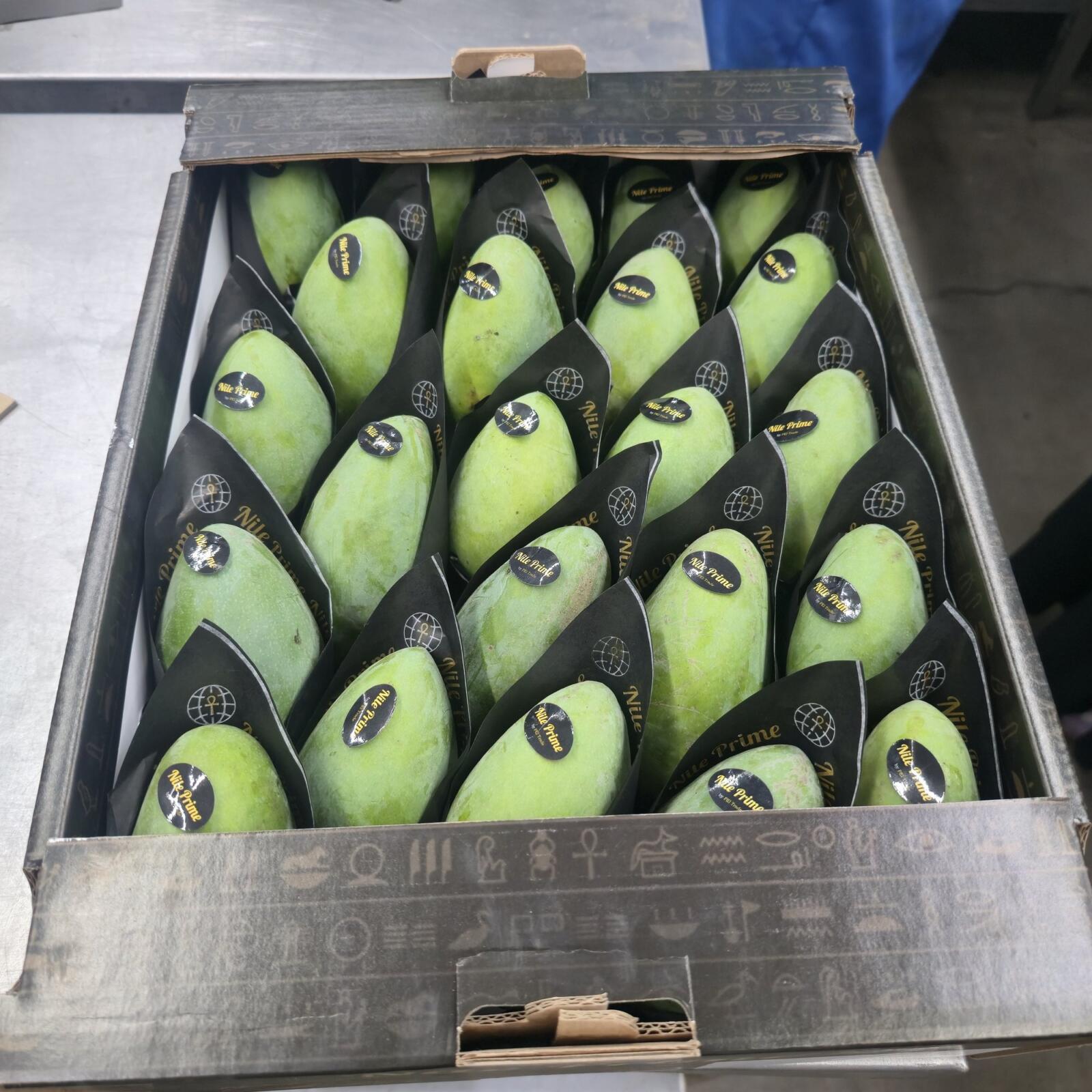
- UK-specific phytosanitary certificate: post-Brexit Britain runs its own plant-health regime — the phyto must name the UK, not ride an EU template; mangoes sit in the medium-risk fruit tier under the Border Target Operating Model with documentary and risk-based physical checks.
- IPAFFS pre-notification: the importer files the consignment on IPAFFS before arrival — the UK equivalent of TRACES, and the step new importers most often discover at the border instead of before it.
- Place of destination / BCP routing: know whether your consignment clears at the border control post or an authorized destination facility — heathrow air freight and Thamesport sea freight run different rhythms.
- UK MRL compliance: Britain retained EU-style limits with its own schedule — pre-shipment residue screens per lot, per the standard Egyptian export protocol, satisfy both.
- Labeling: UK-format origin and importer labeling; metric weights; no EU flags on packs.
None of this is hard; all of it is specific. The document mechanics follow the universal set in the documents guide — the UK layer is IPAFFS, the UK phyto wording, and the check-rate lottery, and an exporter who shipped the UK last season answers all three in one email, which is itself the qualification test.
Air vs Sea for the UK Lane
The lane runs both modes profitably, for different fruit: air (Cairo–Heathrow, ~5 hours, illustratively $2.00–2.80/kg) carries tree-ripened Sedika-class fruit that lands ready to sell and commands wholesale prices double the sea fruit’s; sea (Alexandria/Damietta to UK ports, 8–12 days, ~$0.20/kg) carries firm-picked Keitt into ripening rooms per the Europe guide’s protocol. The decision rule from the landed cost guide applies unchanged: let the channel’s price ceiling choose the mode. The classic UK error is flying Keitt — paying air rates for a variety whose entire virtue is surviving the sea — and its mirror: sailing Sedika, which arrives as compote.
Worked Example: A Season Program From Birmingham
A hypothetical Birmingham wholesaler serving South Asian grocers across the Midlands builds his first Egyptian season. June: two suppliers qualified per the verification guide; UK-lane experience confirmed; IPAFFS registration sorted with his broker. Late July: first air consignment — 2 tonnes of Sedika — lands as Pakistani Chaunsa volumes wobble; his grocers’ customers, mango-fluent and season-aware, try the unfamiliar name on his recommendation. Reorders arrive in 48 hours. August: weekly air rhythm at 3–4 tonnes; one documentary-check delay at Heathrow costs a day (the IPAFFS entry referenced the wrong establishment code — fixed once, never repeated). September: he adds a monthly sea container of Keitt for the price-driven end of the trade, ripened by a Spitalfields service ripener. October: season closes: ~28 tonnes air + 40 tonnes sea. In this sketch the air program returned the fatter margin per kilo, the sea program bought him shelf presence in mainstream-adjacent stores — and the season’s real asset is neither: it’s that his grocers now ask in June when the Egyptian fruit is coming. A three-month window, held for one season, becomes an annuity.
FAQ
When are Egyptian mangoes available in the UK?
July through October — opening exactly as Indian and Pakistani supply tapers and running until Brazilian counter-season fruit takes over. Peak volumes and best pricing run August–September.
What do UK imports of Egyptian mangoes require post-Brexit?
A UK-specific phytosanitary certificate, IPAFFS pre-notification before arrival, compliance with UK MRLs, and UK-format labeling. Mangoes face documentary checks and risk-based physical inspection under the Border Target Operating Model.
Which Egyptian mango varieties suit the UK market?
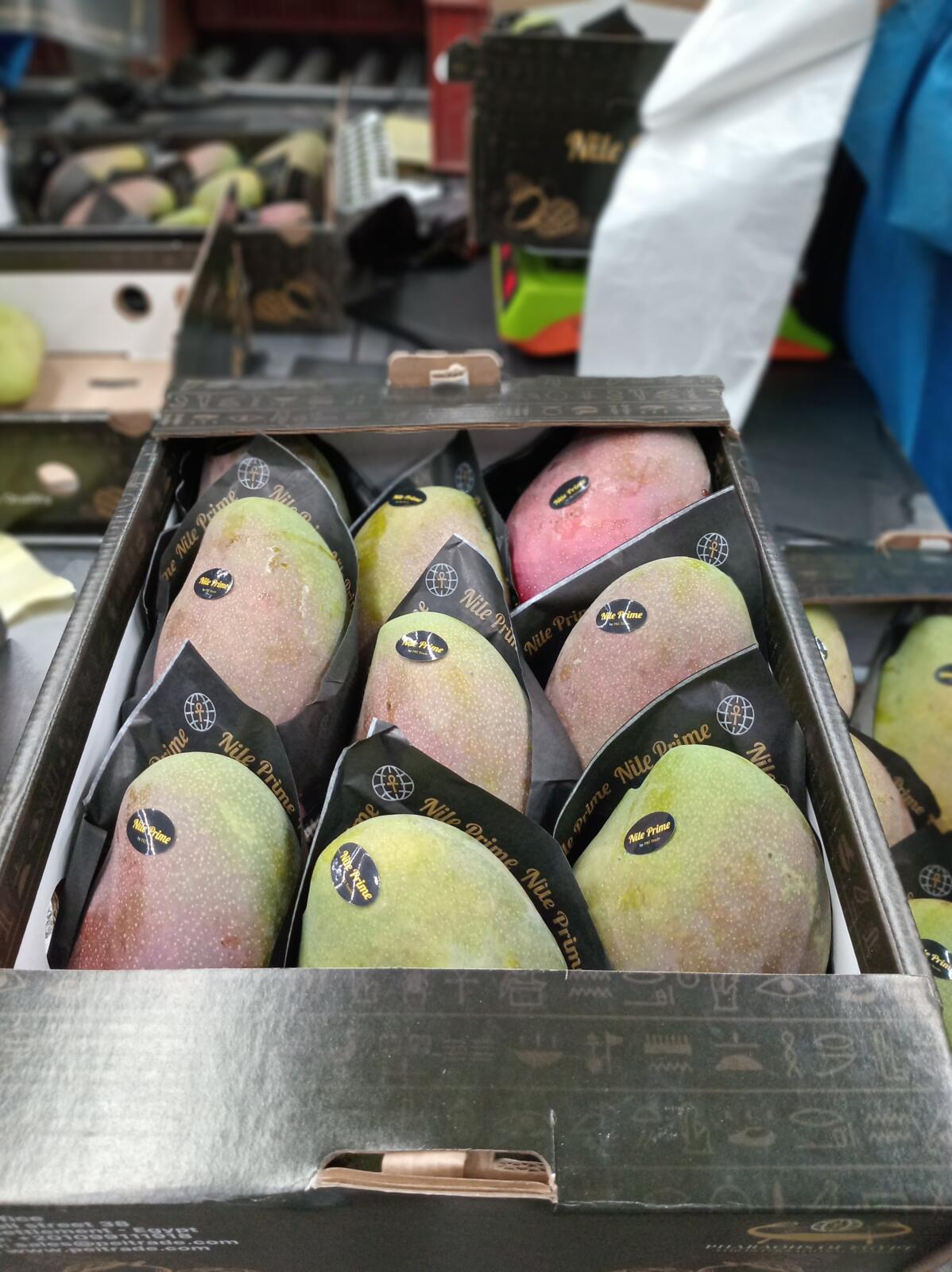
Sedika and Ewais by air for the flavor-driven ethnic wholesale trade; Keitt by sea for supermarkets and price-sensitive channels, ripened at destination. Matching variety to channel — not variety preference — decides margins.
Air or sea freight for Egyptian mangoes to the UK?
Both, for different fruit: air (~5 hours) for tree-ripened premium varieties commanding double wholesale prices; sea (8–12 days) for firm-picked Keitt at roughly a tenth of the freight cost. Never fly Keitt; never sail Sedika.
Sources
UK DEFRA — Border Target Operating Model and plant health guidance (gov.uk) · IPAFFS — import notification system (gov.uk/guidance/import-of-products-animals-food-and-feed-system) · Fresh Produce Consortium UK (freshproduce.org.uk) · PEI Trade — Egyptian mango export programs to the UK · FAO — mango trade statistics (fao.org).