
The Gulf is the shortest serious market Egyptian citrus has. Transit is measured in days rather than weeks, the buying is specification driven rather than retail audit driven, and the demand curve is shaped by a religious calendar rather than by a European promotional plan. All three of those facts change how a container should be built.
Routing and transit
Two routes serve the Gulf. Sokhna on the Red Sea is the natural port for Jeddah and gives the shortest sailing, typically 3 to 5 days direct. Alexandria and Damietta on the Mediterranean serve Jebel Ali, Doha, Dammam and Shuwaikh through the canal, generally 7 to 10 days depending on the service and whether the vessel transhipments at Salalah or Khor Fakkan.
Jebel Ali carries the widest sailing choice and functions as the re-export hub for the wider region, so fruit landed there frequently moves on to Oman, Bahrain and East Africa. That onward leg is worth knowing about, because it adds handling days that the original shelf life calculation has to absorb.
What the GCC trade actually buys
Navel dominates the early part of the Gulf season and Valencia takes over from February. Mandarin, mainly Murcott, sells well through the winter and carries a premium in the run-up to Ramadan.
Counts run larger than in Northern Europe. The Gulf wholesale market favours 48 to 72 on orange, with 56 and 64 the working core, while European retail concentrates at 72 to 100. Colour expectation is high, which means degreening is normal on early navel for this destination. Our note on waxing, coating and PLU stickers covers what may be applied and how it must be declared.
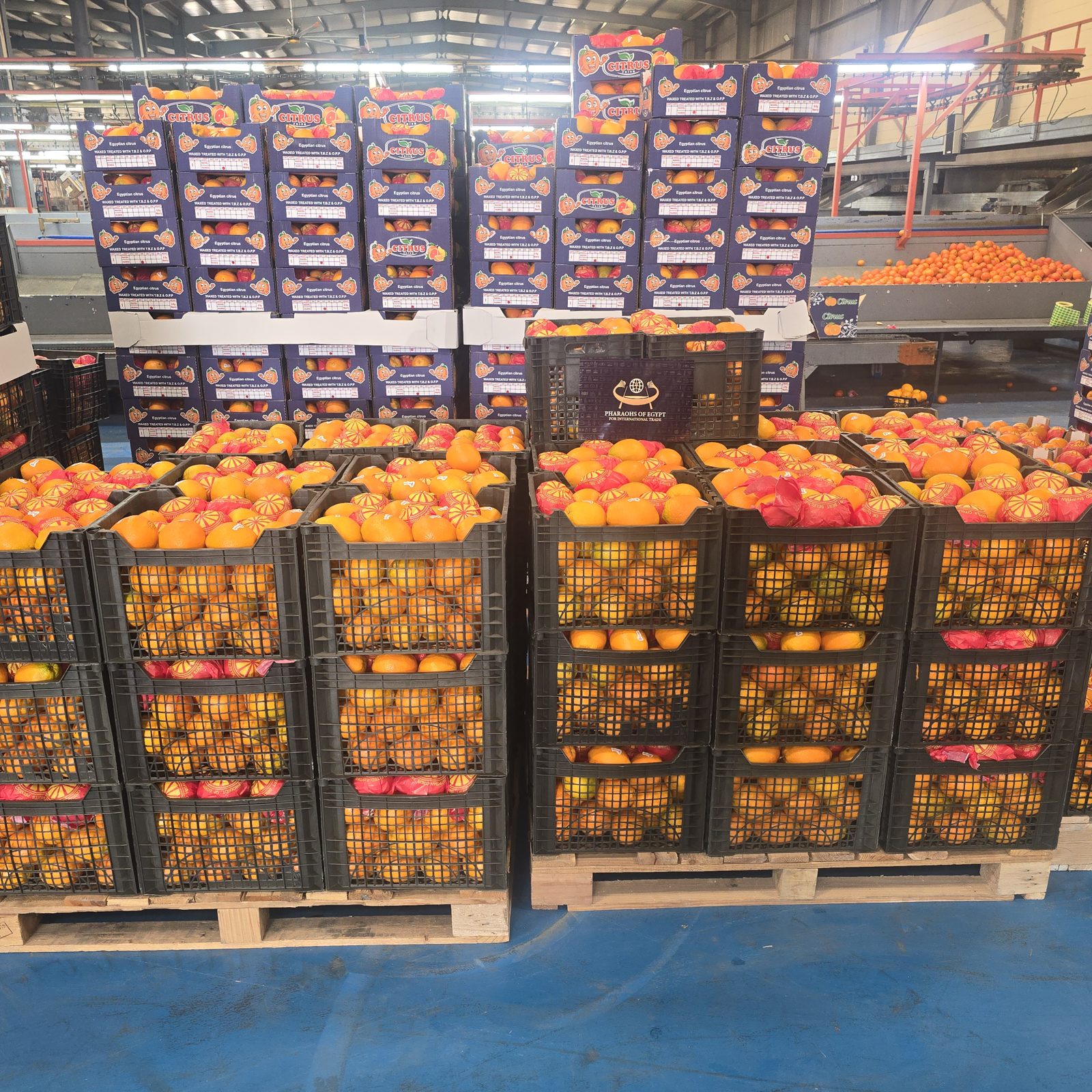
Pack format is predominantly the 15 kilo net telescopic carton, loose filled rather than tray packed, with printed brand panels. Retail programmes for the modern trade in Saudi Arabia and the UAE take 5 and 10 kilo formats and increasingly ask for mesh or flow-wrapped consumer packs. Carton and pallet figures are set out in our note on citrus carton and pallet configuration.
Documentation
The document set is lighter than for the European Union. A phytosanitary certificate, certificate of origin, commercial invoice, packing list and bill of lading form the base. Saudi Arabia requires the shipment to be declared in the SABER platform with the relevant conformity certificate, and the Saudi Food and Drug Authority applies its own residue limits, which are not identical to EU limits and must be checked crop by crop against the spray record. Halal certification does not apply to fresh fruit. Arabic labelling on consumer packs is required by the Gulf standards, and country of origin must be clearly marked on the carton.
The Ramadan position
Ramadan is expected to begin in the second half of February 2027. Gulf buying for it starts six to eight weeks ahead, which puts the serious purchasing window in late December and January. Demand rises on mandarin, orange for juicing and larger-count fruit for gifting and hospitality. Freight tightens in the same weeks and rates firm.
The practical consequence is that a buyer planning Ramadan volume should have the variety split and the count spread agreed in November and the vessel space booked in December. Waiting until February means buying whatever is left at whatever the rate has become.
For Gulf citrus availability, counts, pack formats and a routing proposal, message the Nile Prime desk on WhatsApp at +20 10 9911 1918.