
The produce shelf life and storage chart below is the master reference behind every import decision on this site: how long each Egyptian product lives, at what temperature and humidity, what destroys it fastest, and how much of its life the voyage consumes. Bookmark this page — every product guide links back to it, because storage arithmetic is where programs succeed or spoil.
Table of Contents
- The Master Chart: Every Product, Every Number
- The Five Laws of Post-Harvest Life
- Ethylene: The Invisible Saboteur
- Voyage Math: Shelf Life Minus Transit
- Worked Example: Planning a Mixed Program Against the Chart
- Frozen Changes Everything
- FAQ
- Sources
The Master Chart: Every Product, Every Number
| Product | Optimal Temp | Humidity | Storage Life | Chief Enemy |
|---|---|---|---|---|
| Oranges (Navel/Valencia) | +3 to +5°C | 90–95% | 4–8 weeks | Mold (Penicillium), chilling below +2 |
| Mandarins | +4 to +6°C | 90–95% | 2–4 weeks | Puffiness, mold — shorter clock than oranges |
| Lemons | +10 to +12°C | 85–90% | 1–4 months | Chilling injury if stored citrus-cold |
| Strawberries | −0.5 to 0°C | 90–95% | 5–10 days | Botrytis; every hour above 2°C |
| Grapes | −1 to 0°C | 90–95% | 2–8 weeks | Stem browning, berry drop, botrytis |
| Mangoes | +10 to +13°C | 85–90% | 2–3 weeks | Chilling injury below +10°C |
| Pomegranates | +5 to +7°C | 90–95% | 2–3 months | Husk scald, weight loss |
| Dates (semi-dry) | 0 to +4°C | 65–75% | 6–12 months | Moisture pickup, sugaring |
| Onions (cured) | 0 to +2°C or vented ambient | 65–70% | 1–8 months | Humidity — the one crop that hates 90% |
| Garlic (cured) | −1 to 0°C or vented | 60–70% | 3–7 months | Sprouting, waxy breakdown |
| Potatoes | +6 to +8°C | 90–95% | 2–5 months | Cold sweetening below +6, greening in light |
| Sweet potatoes (cured) | +13 to +15°C | 85–90% | 4–7 months | Chilling injury — never refrigerate cold |
| Green beans | +5 to +7°C | 90–95% | 7–10 days | Chilling pitting, russeting |
| Frozen (all IQF) | −18°C or colder | n/a | 18–24 months | Temperature cycling, freezer burn |
The Five Laws of Post-Harvest Life
- The clock starts at picking — storage slows biology; nothing stops it. Every number above assumes prompt pre-cooling.
- Q10 rules everything: deterioration roughly doubles per 10°C above optimum — strawberries at 10°C age four times faster than at 0°C; a warm afternoon on a quay is a week of life.
- Optimums are cliffs, not suggestions: most tropical products (mango, sweet potato) suffer chilling injury below their range — cold is not universally safer.
- Humidity splits the kingdom: leafy and soft produce wants 90%+; cured alliums want 65% — which is why onions never share a reefer with strawberries.
- Cured crops live longest: curing (onions, garlic, sweet potatoes) builds the protective layer that makes months-long storage possible — verify it before buying, per the onion guide.
Ethylene: The Invisible Saboteur
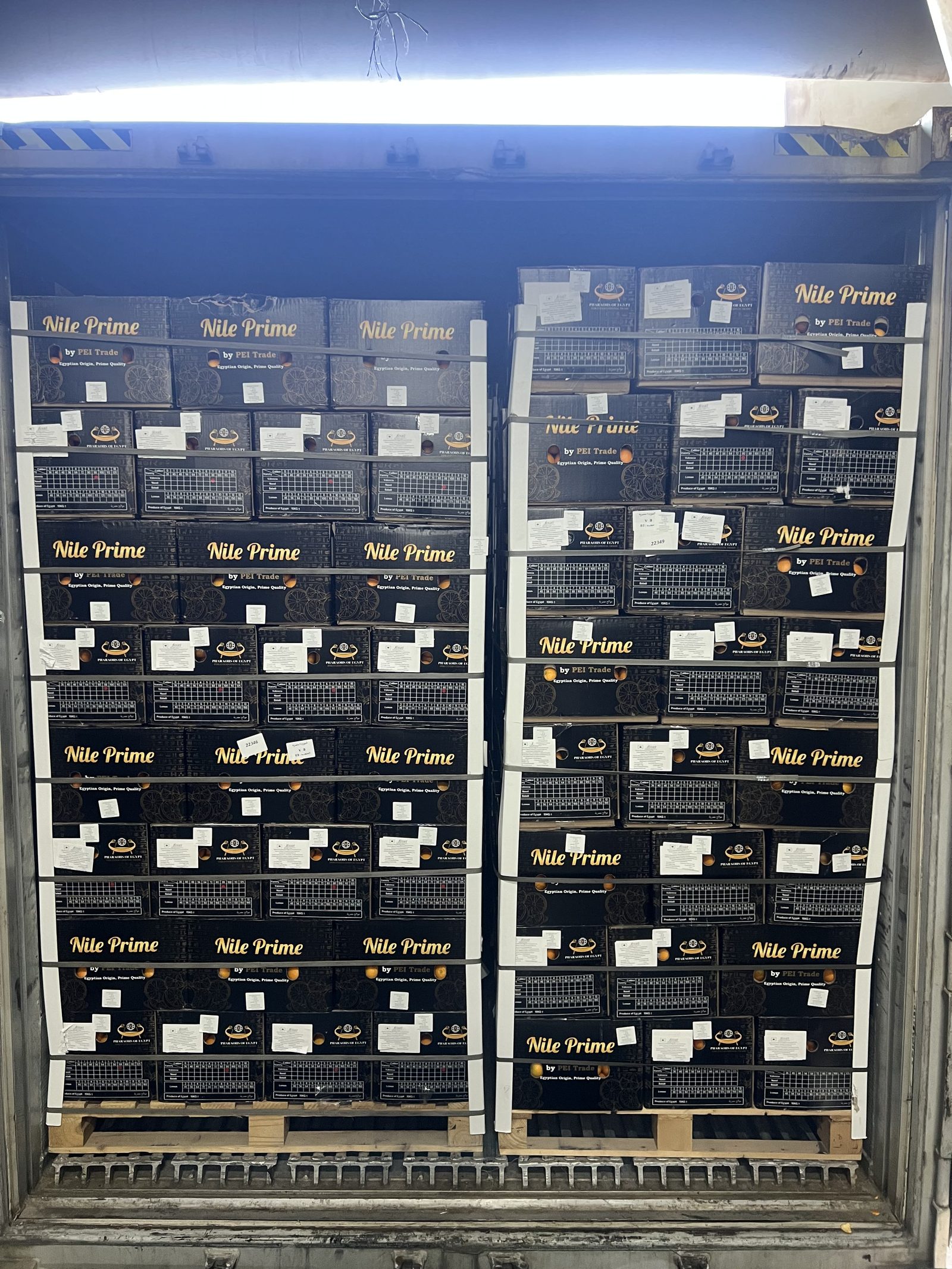
Ethylene — the ripening hormone some products emit and others fatally absorb — writes the co-loading rules for every mixed program. High emitters: ripening mangoes, guava. High-sensitivity victims: leafy greens, green beans, cucumbers — and potatoes, which sprout in its presence. Citrus sits mid-table; frozen cargo is immune. The practical rules: never co-load emitters with sensitives in one reefer or one cold room; ventilation settings partially purge ethylene on respiring loads (one more reason vent specs belong in the contract); and destination cold stores need the same segregation discipline the container had. Mixed-container programs per the groupage guide live and die on this table.
Voyage Math: Shelf Life Minus Transit
The planning formula is subtraction: storage life at optimum, minus days from harvest to loading, minus voyage days, minus clearance days, equals selling window at destination — and programs are viable only when that remainder covers the sales cycle with margin. Egyptian examples at typical transits: strawberries to the Gulf by sea (3–8 days transit against a 10-day life) work only with flawless pre-cooling and same-week retail — which is why premium programs fly, per the air freight guide; oranges to Rotterdam (10 days against 6+ weeks) sail with life to spare; mangoes to China (28–32 days against ~3 weeks) require the firm-picked, cold-treated Keitt protocol precisely because the naive subtraction goes negative. When the math is tight, every day recovered in clearance is a day added to the shelf.
Worked Example: Planning a Mixed Program Against the Chart
A hypothetical Muscat importer designs a weekly mixed reefer and audits it against the chart. His wish list: oranges, strawberries, green beans, onions, and potatoes in one box. The chart’s verdicts: oranges (+4°C) and strawberries (−0.5°C) disagree by nearly five degrees — a compromise setpoint injures one or under-serves the other; onions (65% RH) in a 90% RH fruit reefer will re-absorb moisture and soften; potatoes below +6°C sweeten. The redesign: reefer one at +4°C carries oranges and potatoes (compatible bands, ethylene-tolerable pairing at citrus’s modest emission); strawberries move to a dedicated cold-chain slot at −0.5°C — shared with grapes in season, whose band matches; onions ship separately in ventilated equipment per the container guide; green beans, chilling-sensitive at the strawberry setpoint and ethylene-sensitive besides, join the +5°C reefer with the oranges only after checking the emission table. Two reefers and a vented box instead of one wishful container — costing more freight and losing less cargo, which in this sketch nets positive by the second week. The chart is not advisory; it is the physics the invoice eventually obeys.
Frozen Changes Everything
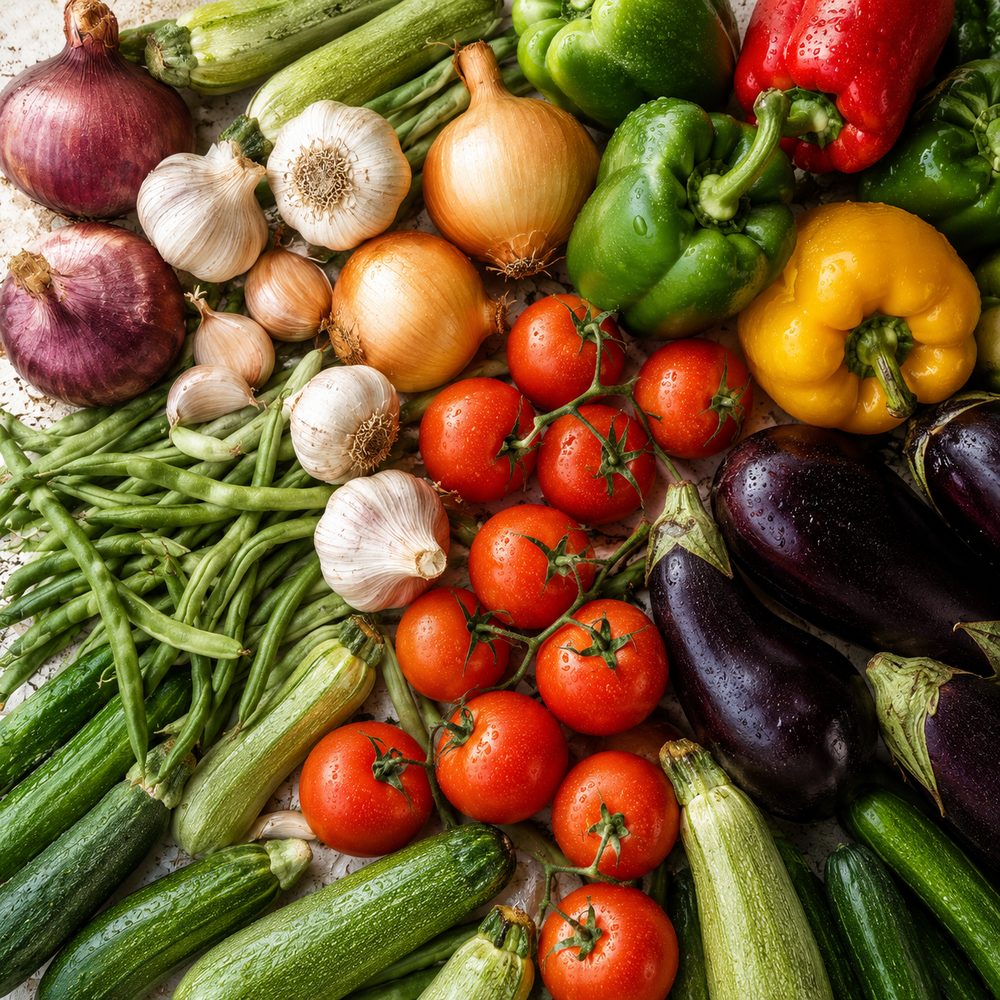
One row of the chart rewrites the whole game: at −18°C, biology effectively stops — IQF strawberries, okra, molokhia, and mixed vegetables hold 18–24 months, immune to ethylene, indifferent to season. This is why the frozen category behaves commercially like a different industry: no voyage subtraction, no co-loading matrix, no clearance-day anxiety — just an unbroken −18°C chain, verified by logger, from tunnel to shelf. Buyers whose fresh math keeps going negative — distant markets, small volumes, slow channels — usually aren’t failing at produce; they’re shopping in the wrong temperature.
FAQ
What temperature should each fruit and vegetable be stored at?
It varies by biology, not preference: citrus +3–5°C, strawberries and grapes at 0°C or just below, mangoes and sweet potatoes +10–15°C (they chill-injure below), cured onions and garlic near 0°C at low humidity, frozen products −18°C. The master chart above lists all values.
Why did my tropical fruit spoil in cold storage?
Chilling injury — mangoes, sweet potatoes, and lemons suffer physiological damage below their optimum ranges. Cold is not universally protective; each product has a floor as well as a ceiling.
Which products can share a container or cold room?
Only those matching on three axes: temperature band, humidity requirement, and ethylene compatibility. Classic conflicts: strawberries vs citrus (temperature), onions vs anything humid (humidity), ripening fruit vs greens and potatoes (ethylene).
How do I calculate if a fresh program is viable for my market?
Subtract harvest-to-loading days, voyage days, and clearance days from the product’s storage life; the remainder must cover your sales cycle with margin. When it doesn’t, change the logistics (air freight), the variety (Keitt-class shippers), or the temperature (frozen).
Sources
USDA Agriculture Handbook 66 — commercial storage of fruits and vegetables (ars.usda.gov) · UC Davis Postharvest Technology Center (postharvest.ucdavis.edu) · FAO — post-harvest management guidance (fao.org) · PEI Trade — cold-chain specifications across the Egyptian export basket · Container Handbook — GDV transport conditions per commodity (containerhandbuch.de).