
Egyptian oranges in China are the citrus trade’s fastest-growing story: a protocol lane that barely existed a decade ago now moves serious volumes every winter, built on gift-grade Navel, juice-value Valencia, and freight economics that survive even a 20+ day voyage. For Chinese and Southeast Asian importers, Egypt offers counter-season fruit at prices no closer origin matches. This guide covers the protocol, the specs that sell, and the logistics of the long lane. Part of the complete citrus guide.
Last updated: July 2026 · By the Nile Prime export team
Table of Contents
- The Protocol — What Makes This Lane Different
- What China Buys
- The Long Lane — Logistics That Work
- Egyptian Oranges in China — FAQ
- Ship the Protocol Lane Right
- Worked Example: Guangzhou Season
- The Protocol Stack
The Protocol — What Makes This Lane Different
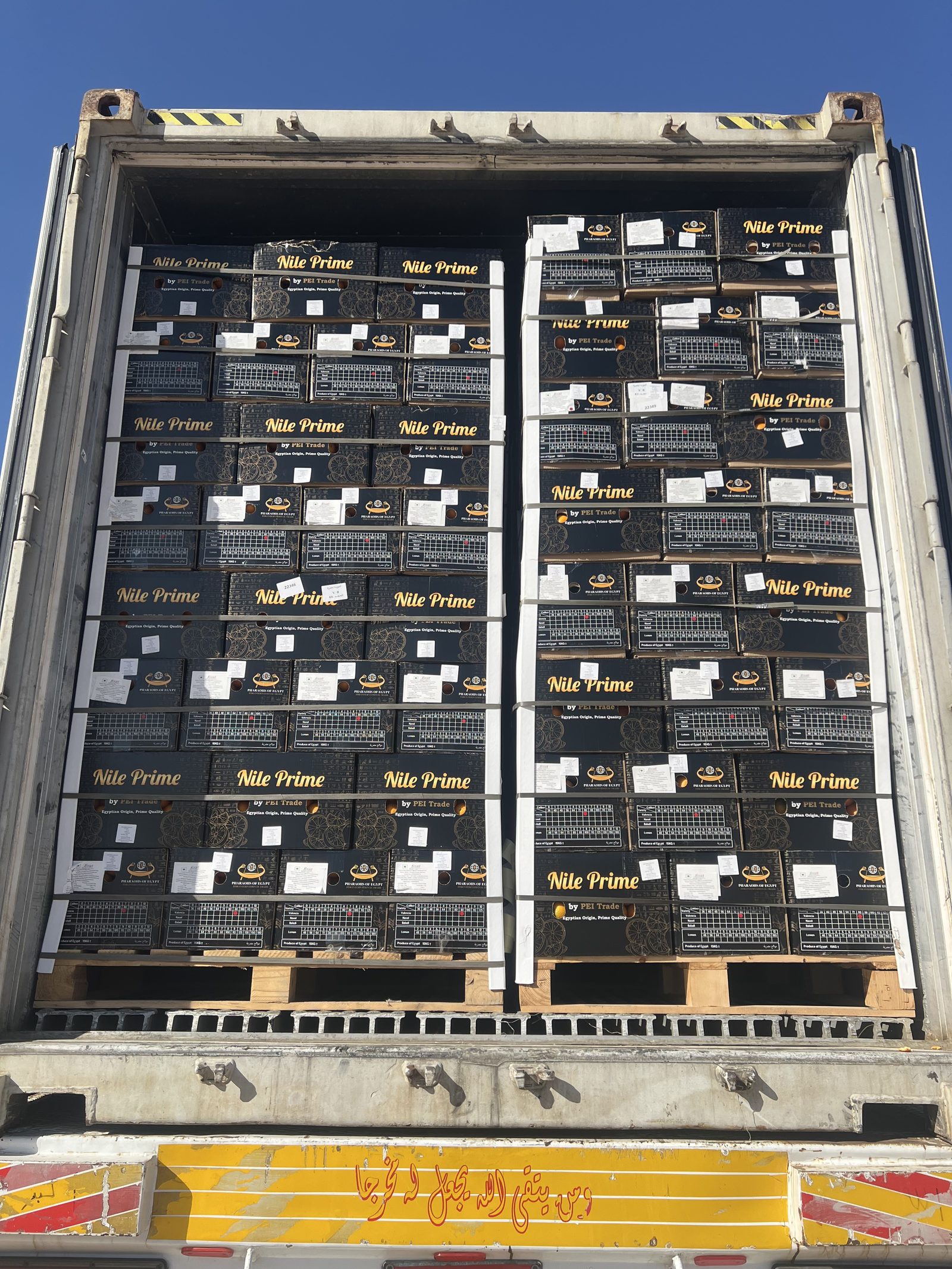
- Registered orchards & packhouses: only GACC-registered Egyptian facilities may ship — verify your exporter’s registration number before contracting.
- In-transit cold treatment: the phytosanitary protocol requires documented cold treatment during the voyage — calibrated probes, continuous logs, temperatures per the bilateral agreement.
- Documentation precision: Chinese customs reject on detail — label, invoice, and certificate must align perfectly.
Practical consequence: this is not a lane for improvised suppliers. The cold-treatment execution alone — probe placement, pre-cooling, unbroken logs — separates exporters who ship to China from exporters who talk about it.
What China Buys
| Segment | Product | Spec Notes |
|---|---|---|
| Gift & premium retail | Large Navel 40–56 | Deep color, flawless skin — appearance is the product |
| E-commerce & supermarket | Navel/Valencia 56–80 | Uniformity for packaged multi-fruit units |
| Wholesale & juice | Valencia 72–113 | The value engine — Egypt’s structural edge |
The Long Lane — Logistics That Work
| Item | Detail |
|---|---|
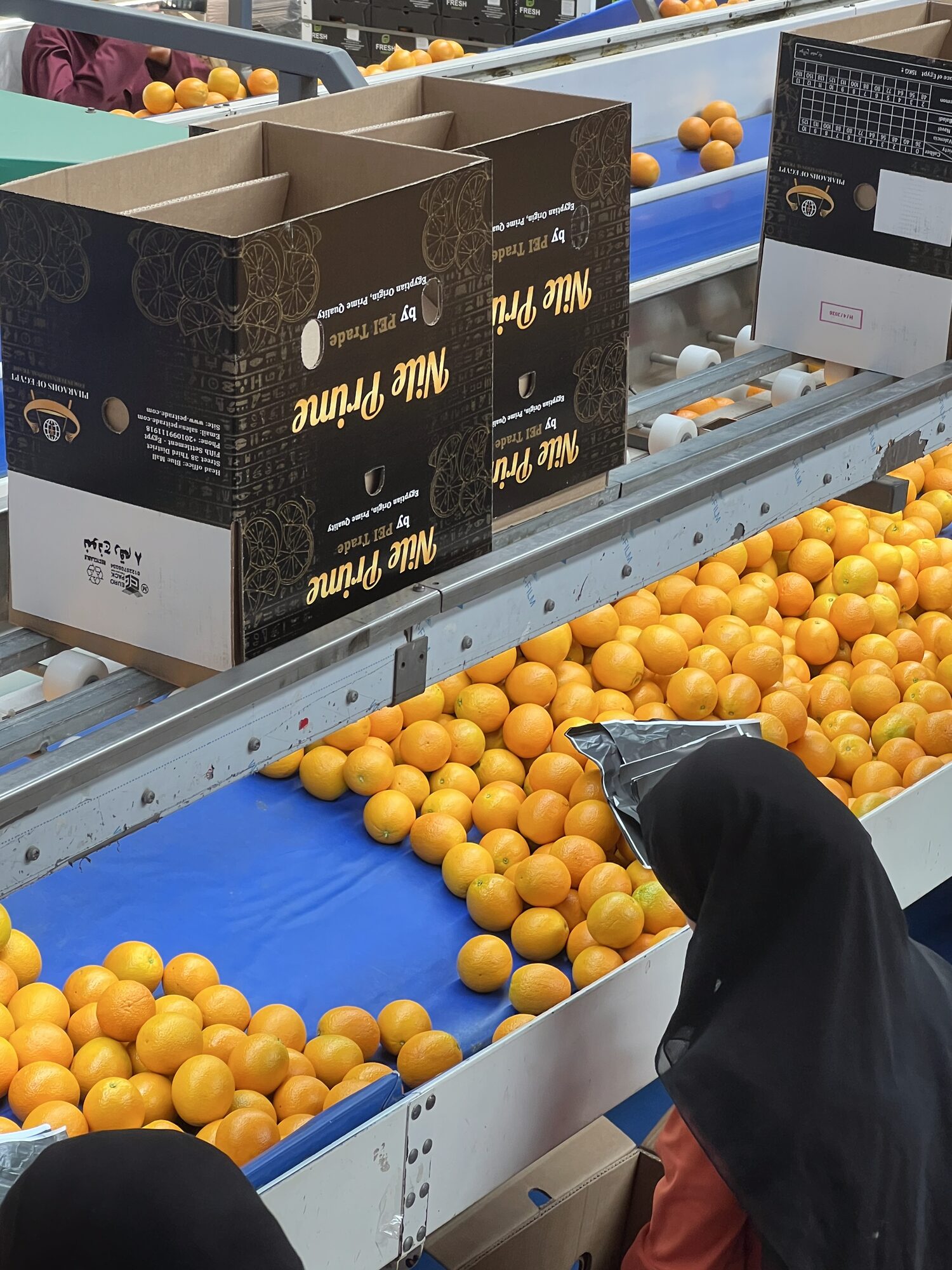
| Transit | 18–25 days to Shanghai/Shenzhen via Suez–Singapore routings |
| Settings | Cold-treatment temps per protocol, then holding — probes logged end to end |
| Fruit selection | Hard, well-colored, thick-skinned lots — the voyage forgives nothing soft |
| Timing | Dec–Apr arrivals; Chinese New Year demand planned 8–10 weeks back |
Chinese New Year is the lane’s Ramadan: gift-grade Navel demand spikes hard, and vessels that miss the window sell into a hangover. Work the dates backwards — and cross-check the citrus season calendar. The same protocol logic covers the growing Southeast Asian lanes (Vietnam, Malaysia, Indonesia) with local variations.
Worked Example: A Guangzhou Importer’s First Egyptian Season
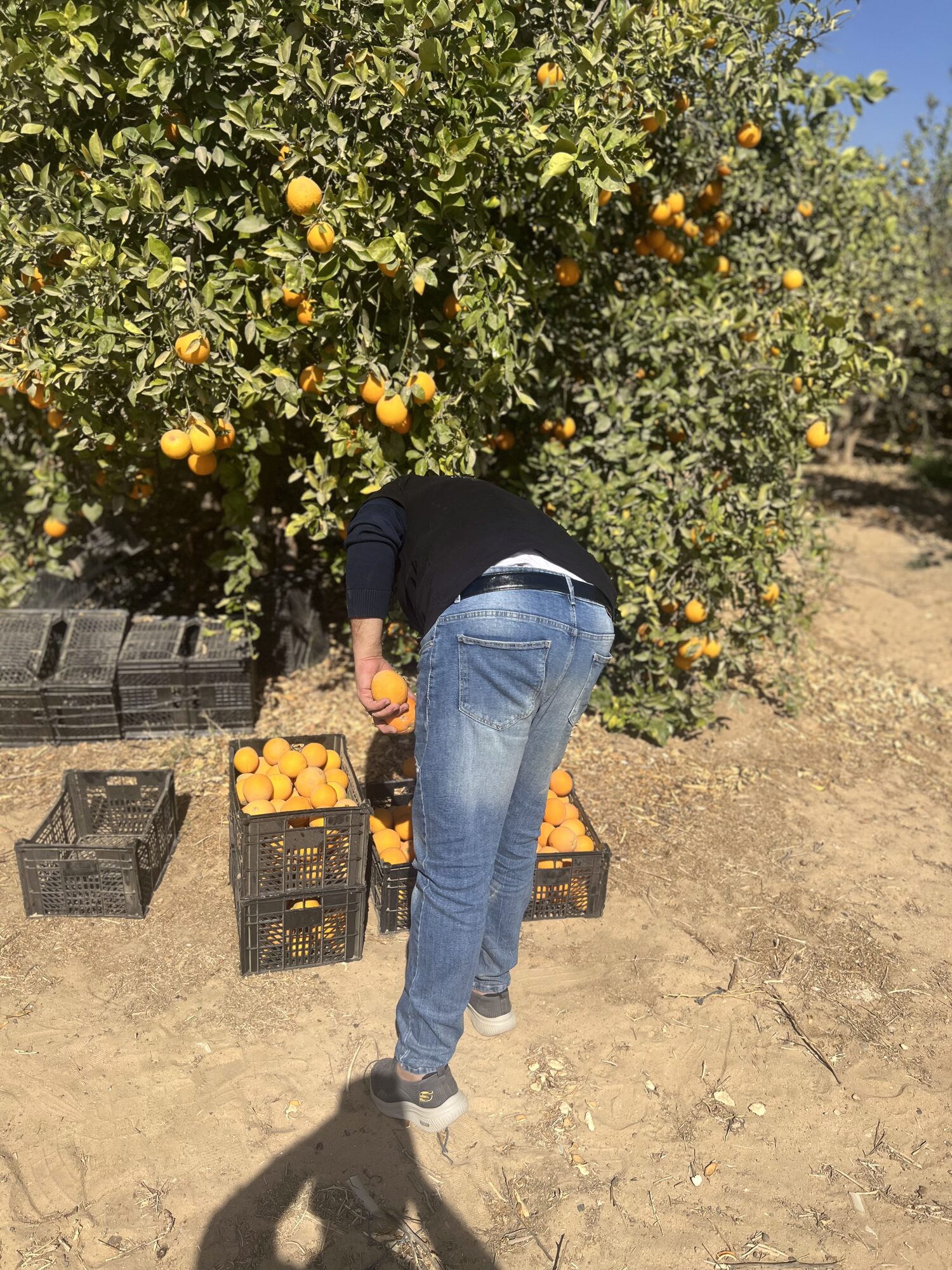
Model a hypothetical fruit importer at Guangzhou’s Jiangnan market adding Egyptian oranges alongside South African and Australian counter-season fruit. September — supplier qualification: only packhouses on the GACC-registered list for China may ship; the importer verifies the registration number, then contracts 10 containers of premium Navel, sizes 64–80 (Chinese wholesale favors big, cosmetically perfect fruit), individually wrapped, in display-grade cartons. December–February — sailings via Suez direct services land Nansha/Hong Kong in ~28–32 days; cold treatment protocol runs in-transit at the mandated pulp temperature, loggers audited on arrival. Chinese New Year window — the make-or-break: two containers timed to land 3 weeks before the holiday sell at the year’s best prices as gift-fruit demand peaks; one that would land after the holiday is deliberately not shipped — post-CNY demand craters. Scenario economics: the wrap-and-carton presentation adds real packing cost per box, but CNY-window pricing in this sketch returns it several times over. The importer is fictional; the GACC gate, the cold-treatment protocol, and the CNY calendar are the three real pillars every Egypt–China citrus program stands on.
The Protocol Stack — What Makes China Different
- GACC registration: both orchard and packhouse must appear on China’s approved-establishment lists — verify the numbers, not the claim.
- In-transit cold treatment: sustained low pulp temperature per protocol against fruit fly, recorded by calibrated probes; a failed logger means re-treatment or rejection at destination.
- Phytosanitary wording: the certificate must carry the protocol’s exact additional declarations; generic phytos bounce.
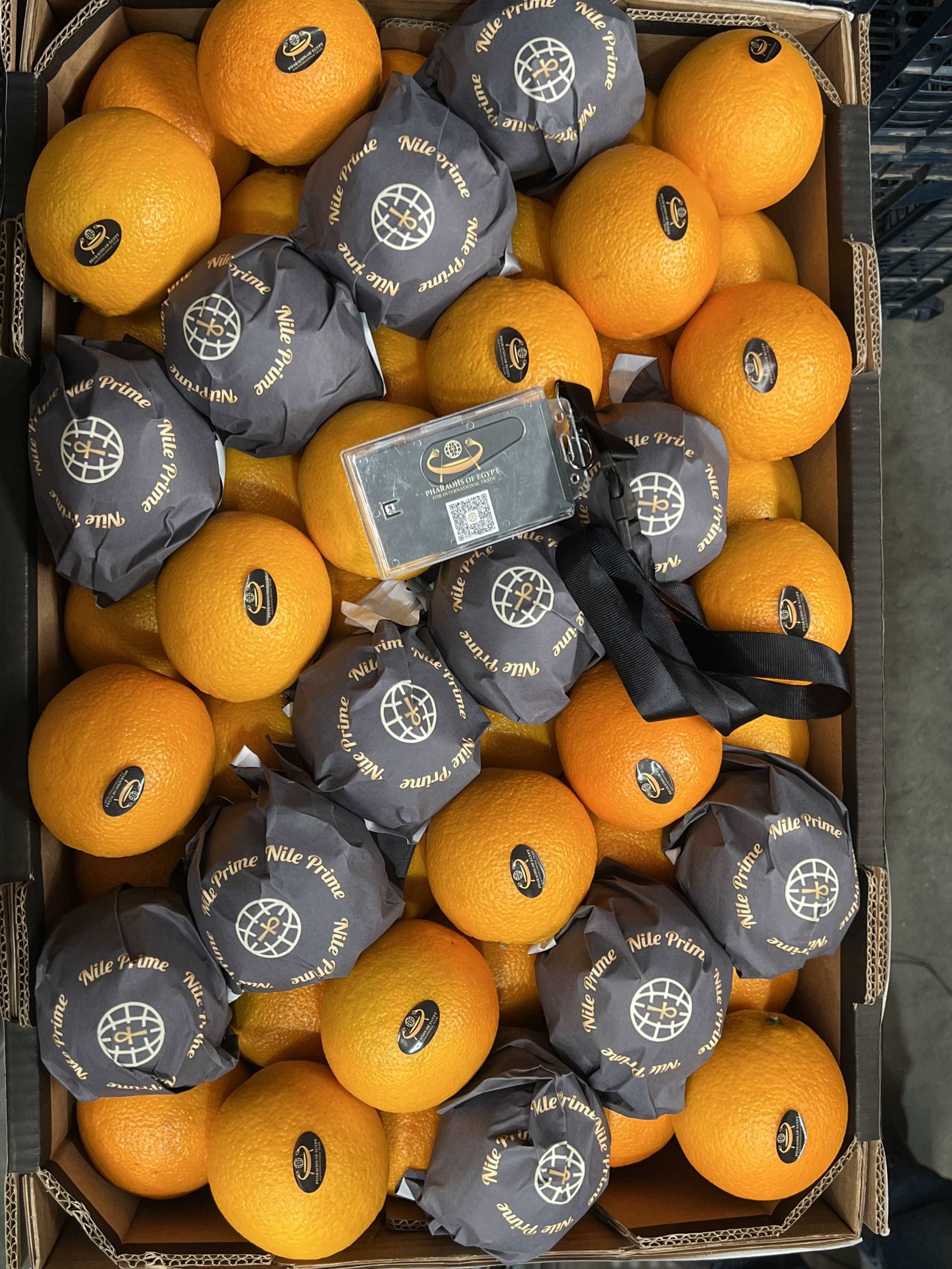
- Presentation tier: wrapped fruit, printed display cartons, and uniform high-color grades — Chinese wholesale punishes cosmetic variation harder than any Western market.
- Calendar targeting: land before Chinese New Year, not after; the demand cliff is absolute.
Egyptian Oranges in China — FAQ
Can Egyptian oranges be exported to China?
Yes — under a bilateral phytosanitary protocol requiring GACC-registered orchards and packhouses plus documented in-transit cold treatment. The lane has grown into one of Egyptian citrus’s fastest-expanding markets.
How long does shipping take from Egypt to China?
18–25 days to main Chinese ports via Suez and Singapore routings — comfortably within cured citrus shelf life when fruit is selected and cold-treated correctly.
What is in-transit cold treatment for China-bound citrus?
A protocol-mandated pest-control regime: fruit held at specified low temperatures for a set period during the voyage, verified by calibrated probes with continuous logs — executed by the exporter and carrier, checked at arrival.
When should Chinese importers book Egyptian oranges?
October–November for December arrivals, and Chinese New Year gift-grade programs 8–10 weeks before the holiday — registered-facility allocation commits early on this lane.
Ship the Protocol Lane Right
Nile Prime — the premium brand of PEI Trade — runs registered-facility programs with documented cold treatment: WhatsApp +20 109 911 1918 · [email protected] · Navel · Valencia.
Sources: Tridge — Egypt orange exports by destination · PEI Trade — Citrus Export Report.