
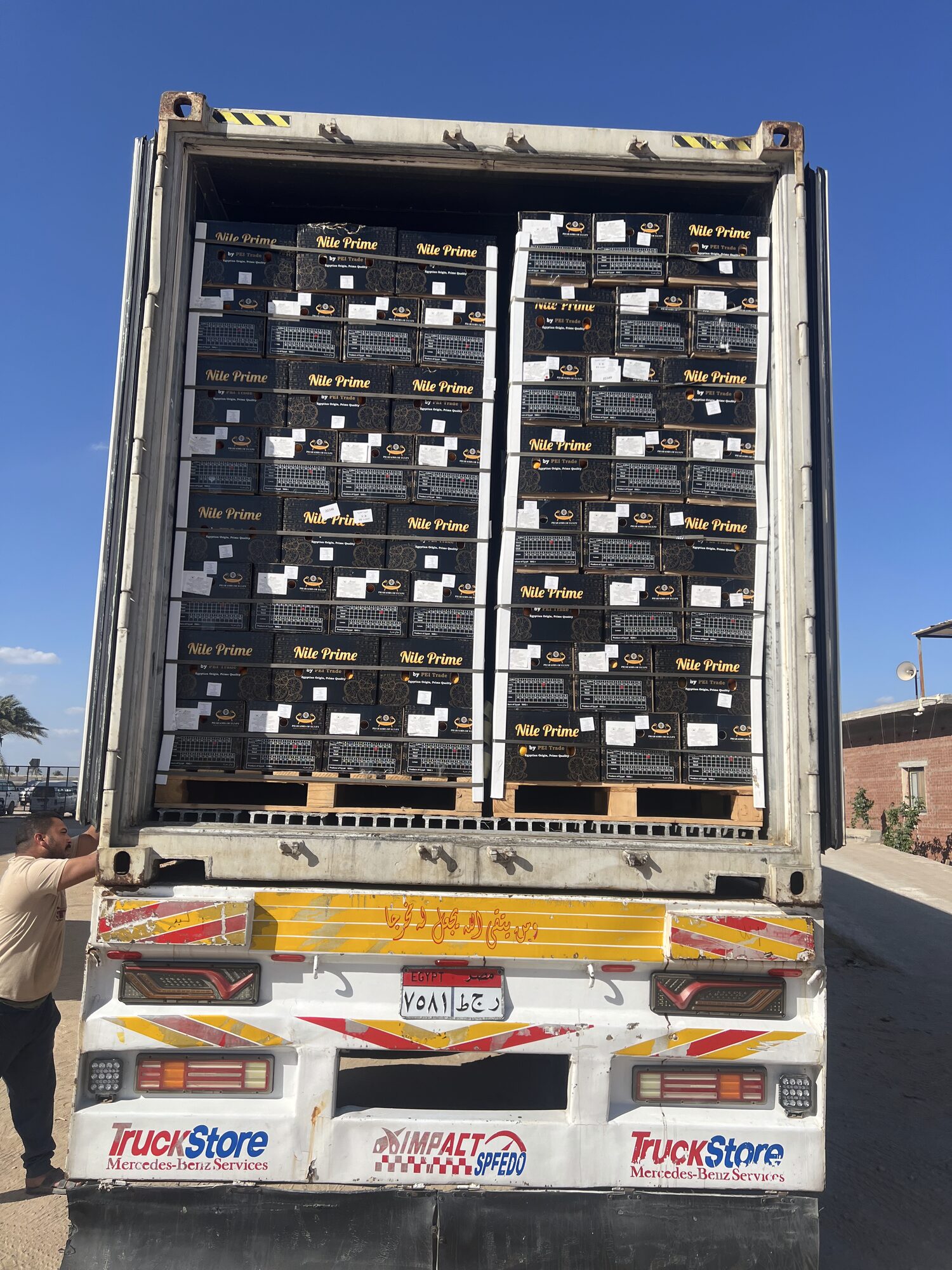
Egyptian citrus reaches Canada by reefer container, almost always through a Mediterranean transhipment hub, into Montreal or Halifax, with 18 to 26 days between loading in Egypt and discharge in Canada depending on the connection. The main products are Navel from late November, Valencia from late February into early summer, and Murcott mandarin in the middle of the winter. The Canadian importer carries most of the regulatory work, so this note sets out what the buyer side needs in place and what to agree with the exporter before the first booking.
Routing: Montreal, Halifax and the transhipment leg
Direct services from Alexandria or Damietta to Canada are rare. The normal pattern is a feeder or mainline leg to a western Mediterranean hub, then a transatlantic service. Montreal is the usual destination for Quebec and Ontario buyers and operates through the winter. Halifax, with rail onward to Toronto and Montreal, is the alternative when Montreal services are full or slow. Each transhipment adds a plug-off and plug-on, so ask for the carrier’s routing in writing and keep an eye on dwell time at the hub, which is where most of the extra days come from.
At this transit length, set point and pre-cooling matter more than on a 7-day European run. Navel is usually carried at 4 to 6°C and Valencia at a similar or slightly higher setting, with the pulp brought down before the doors close. The detail on how cartons and pallets are built for a long reefer run is in our note on citrus carton and pallet configuration.
What the Canadian importer needs
A Canadian importer of fresh fruit needs a Safe Food for Canadians licence from the Canadian Food Inspection Agency, and fresh produce dealers are generally expected to hold membership of the Fruit and Vegetable Dispute Resolution Corporation. Import conditions for each commodity and origin, including whether a phytosanitary certificate is required, are published in the CFIA Automated Import Reference System. Check the current entry for citrus from Egypt before the first order rather than relying on the paperwork from someone else’s shipment.
On the Egyptian side, the exporter supplies the phytosanitary certificate if required, certificate of origin, commercial invoice, packing list and bill of lading. The Canadian customs broker handles the entry.
Carton marking and labelling
Shipping cartons should carry the common name of the fruit, net quantity in metric units, country of origin and the packer’s identification. Consumer bags or prepacks sold at retail need bilingual English and French labelling, which is easier to print at the Egyptian packhouse than to apply by sticker in a Canadian warehouse. Confirm the exact text with your broker and send it to the exporter before carton printing.
What Canadian buyers usually specify
Most Egyptian citrus reaches Canada in 15 kg open-top telescopic cartons, with some programmes on 8 kg or 10 kg formats for retail. Wholesale buyers in Toronto and Montreal tend to ask for the middle counts on Navel and a tight colour standard, because Egyptian fruit sits on the same terminal floor as fruit from Spain, Morocco and the United States. Write down the count range, the Class, the wax and fungicide treatment, the degreening instruction and the arrival quality tolerance. Holding practice after arrival is covered in our note on holding Egyptian citrus after arrival.
If you import into Canada and want a routing and a quotation for Navel, Valencia or Murcott this season, message the Nile Prime desk on WhatsApp at +20 10 9911 1918.