
Air freight from Egypt for perishables is the premium lane: strawberries picked Tuesday selling in Gulf supermarkets Thursday, figs and premium mangoes reaching London while their sea-freight cousins are still being booked. It costs multiples of ocean freight and earns those multiples only on the right products. This guide covers Cairo Airport’s perishables operation, which crops fly and which never should, booking mechanics, ULD and packaging realities, and the cost math that decides air versus sea.
Table of Contents
- Which Products Fly — The Shelf-Life Arithmetic
- Cairo Airport’s Perishables Operation
- Booking, ULDs, and Packaging for Air
- The Cost Math: Air vs Sea Honestly
- Worked Example: A Strawberry Air Program to the Gulf
- The Five Air-Freight Mistakes
- FAQ
- Sources
Which Products Fly — The Shelf-Life Arithmetic
| Product | Air Case | Verdict |
|---|---|---|
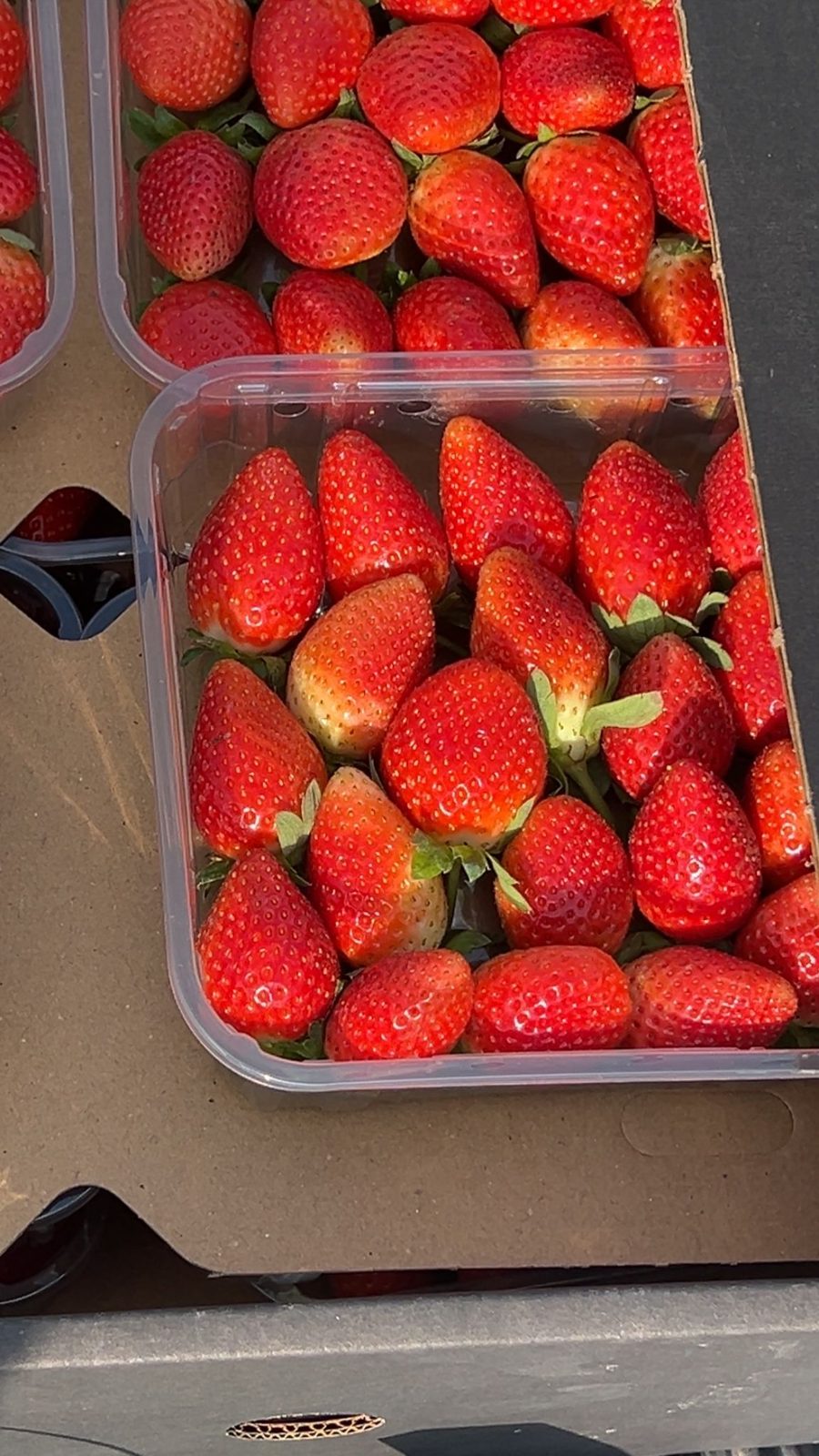
| Fresh strawberries | Days of shelf life; premium fresh programs | ✔ Core air product |
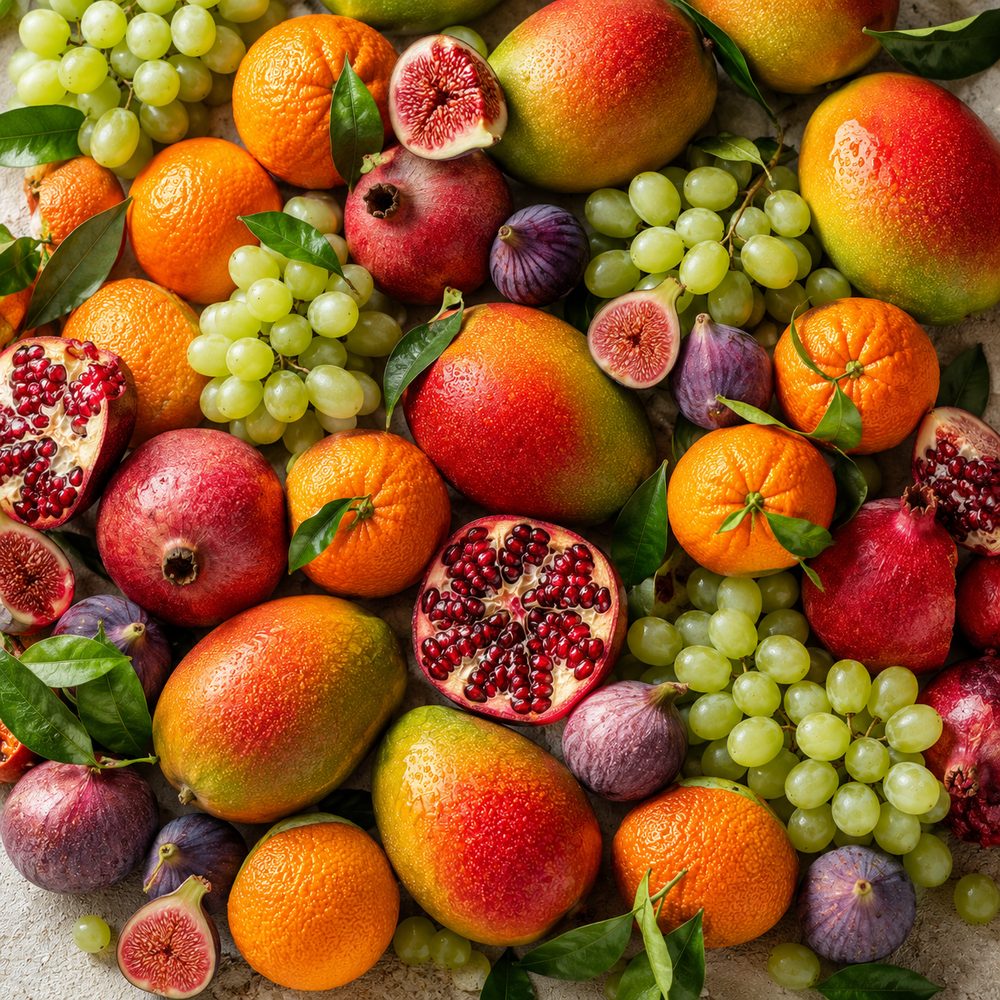
| Fresh figs | No sea option exists at all | ✔ Air only |
| Premium mangoes (Sedika, Ewais) | Tree-ripened; too delicate for 12 sea days | ✔ Air for premium tier |
| Guava, khalal dates, green almonds | Ultra-short windows, niche premiums | ✔ Air niches |
| Herbs and specialty greens | High value per kilo, days of life | ✔ Established air trade |
| Oranges, onions, potatoes | Weeks of tolerance, low value/kg | ✘ Never — sea always wins |
| Frozen anything | −18°C stability makes time irrelevant | ✘ Sea, without exception |
The rule underneath the table: air freight buys time, so it only pays on products where time is the binding constraint and the market pays for freshness. A kilo of strawberries can carry $2+ of air cost into a premium shelf price; a kilo of oranges cannot carry $0.20 of it. Product-by-product windows sit in the season calendar.
Cairo Airport’s Perishables Operation
Cairo International (CAI) runs Egypt’s perishables air trade through its cargo terminals, with cold rooms for pre-flight staging, EgyptAir Cargo’s freighter and belly capacity, and the Gulf and European carriers’ daily widebodies — Emirates, Qatar, Turkish, Lufthansa and others — whose belly holds carry much of the traffic. Practical realities that shape programs: belly capacity is seasonal and contested (passenger schedules set it, and summer tourism peaks squeeze cargo space exactly when mango season needs it); direct flights beat cheap connections for the most delicate products, because every transshipment is an hour on a hot tarmac somewhere; and the origin cold chain matters more than the flight — fruit that waited four warm hours at the terminal ages more than it will in the entire flight. Exporters with established airport routines — pre-cooled trucks, late cut-off slots, cold-room booking — are selling that infrastructure as much as the fruit.
Booking, ULDs, and Packaging for Air
- Chargeable weight: air prices by the greater of actual and volumetric weight (length×width×height ÷ 6000 in cm/kg) — produce is dense enough that actual weight usually governs, but tall ventilated packs can tip volumetric.
- ULDs: cargo flies in unit load devices — PMC pallets (~4,500 kg capacity) and LD3-class containers; your cartons must stack stably to ULD contours, which is why air cartons are shallower and stronger than sea cartons.
- Packaging: no reefer surrounds the cargo mid-flight — insulation does the work: pre-cooled fruit, insulated liners, gel packs for the most delicate lines, ventilation balanced against moisture loss.
- Booking rhythm: standing weekly allocations for programs (space guaranteed, rates contracted) vs ad-hoc bookings (spot rates, standby risk) — programs win peak-season space wars.
- Cut-offs: perishables cut-offs run hours before departure; the packhouse-to-airport schedule is engineered backward from them.
The Cost Math: Air vs Sea Honestly
Illustrative orders of magnitude (rates move constantly — treat these as shapes, not quotes): Cairo–Dubai air freight for perishables might run $1.20–2.00/kg all-in; Cairo–London $1.80–2.80/kg. Sea freight for the same kilo, at $3,000–5,000 per reefer carrying ~20 tonnes, computes to $0.15–0.25/kg. Air is thus 8–12× sea on freight — but the comparison that matters is landed margin per kilo sold: air strawberries selling at double the price of sea-risked alternatives, with near-zero waste and a week more shelf life at retail, can out-earn the cheap kilo decisively. Run the numbers per the landed cost guide — and let the product’s price ceiling, not the freight bill, make the decision.
Worked Example: A Strawberry Air Program to the Gulf
A hypothetical premium Riyadh retailer builds a winter strawberry program: 2 tonnes twice weekly, December–February. The engineering: fruit picked at dawn, field-heat removed by 9 a.m., punnets packed by noon into insulated air cartons, trucked cold to CAI for an evening widebody, cleared in Riyadh next morning, on shelves within 48 hours of harvest. The contract: a standing Tuesday/Friday allocation with the airline booked by the exporter’s forwarder for the whole season — because December space vanishes into ad-hoc bidding wars. The math in this sketch: fruit cost $2.20/kg + air $1.60 + handling/clearance $0.40 = $4.20 landed, retailing at SAR pricing equivalent to $9+/kg in the premium fresh section — margins impossible for sea-risked fruit, funded entirely by the two days between field and shelf. The discipline: one missed flight equals one empty shelf weekend, so the program carries a backup booking protocol and a standing agreement on substitute flights. Air programs are unforgiving — and, for the right product, unmatched.
The Five Air-Freight Mistakes
- Flying sea products: air-freighting oranges because a buyer is impatient burns margin nothing can recover.
- Skipping pre-cooling: warm fruit in an insulated box is an oven; insulation preserves temperature — it doesn’t create it.
- Cheap multi-stop routings: the $0.30/kg saved on a connection costs hours of tarmac exposure at a hub built for suitcases, not strawberries.
- Ad-hoc booking in peak weeks: programs without standing allocations discover that December space belongs to whoever contracted in October.
- No airport-to-shelf plan: fruit that flew six hours and then waited nine at destination clearance wasted the entire premium — destination handling per the clearance guide is half the program.
FAQ
Which Egyptian products are worth air freighting?
Fresh strawberries, figs, premium mango varieties (Sedika, Ewais), guava, khalal dates, green almonds, and fresh herbs — products with days of shelf life and premium price ceilings. Citrus, onions, potatoes, and all frozen goods should always sail.
How much does air freight from Egypt cost?
Illustratively $1.20–2.00/kg to the Gulf and $1.80–2.80/kg to Europe, versus roughly $0.15–0.25/kg by reefer sea freight. Air pays only where the product’s freshness premium exceeds the roughly 8–12× freight multiple.
How fast can Egyptian strawberries reach export shelves by air?
A disciplined program delivers within 48 hours of harvest: dawn picking, same-day pre-cooling and packing, evening departure from Cairo, next-morning destination clearance and delivery.
What packaging does air-freight produce need?
Shallow, strong cartons stacking to ULD contours, insulated liners over pre-cooled fruit, and gel packs for the most delicate lines. There is no refrigeration in flight — packaging preserves the cold the packhouse created.
Sources
IATA — Perishable Cargo Regulations (iata.org) · Cairo Airport Cargo — terminal and carrier information (cairo-airport.com) · EgyptAir Cargo — freighter network (egyptair-cargo.com) · PEI Trade — air and sea program coordination for Egyptian perishables · ICAO — air cargo standards (icao.int).