
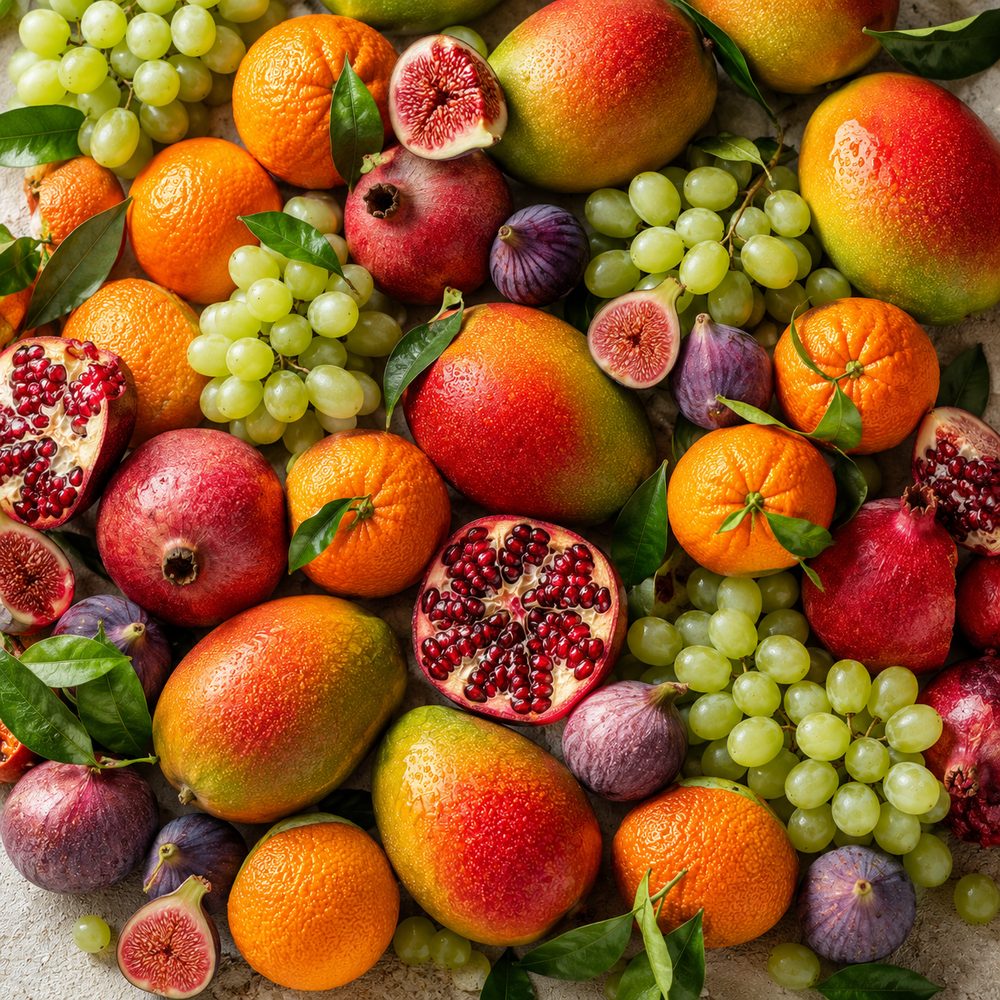
Egyptian figs export is one of the trade’s best-kept summer secrets: a July–September window of Sultani and Black Mission figs from Sinai and the northwest coast, sold into premium Gulf and European channels where fresh figs command prices most fruit never sees — precisely because almost nobody can ship them. Fresh figs are the least forgiving fruit in the entire export basket, and this guide covers the varieties, the air-freight-only logistics, the dried-fig parallel trade, and how buyers qualify suppliers for a fruit that lives days, not weeks.
Last updated: July 2026 — the Egyptian fig season is open now.
Table of Contents
- Why Egyptian Figs — and Why So Few Exporters
- Varieties and Regions: Sultani, Black Mission, and the Sinai Advantage
- Logistics: Why Fresh Figs Fly or Die
- The Dried Fig Parallel Trade
- Worked Example: A London Premium Program, Week by Week
- Buying Egyptian Figs: The Qualification Checklist
- FAQ
- Sources
Why Egyptian Figs — and Why So Few Exporters
The fig paradox: Egypt is among the world’s largest fig producers — hundreds of thousands of tonnes yearly, concentrated along the northwest coast and Sinai — yet exports a tiny fraction, because fresh figs punish every weakness in a supply chain simultaneously. A ripe fig has 2–5 days of life, bruises under its own weight, ferments in a warm hour, and cannot be picked early to compensate (unripe figs never ripen off the tree — sugar stops accumulating at picking). The result: the fresh-fig export market belongs to the handful of operations that built harvest-to-air-freight pipelines measured in hours — and to the buyers who pay premium prices for access. For everyone else, the crop flows to local markets and the drying yards. That scarcity is the commercial opportunity: importers who secure a reliable Egyptian fig line own a shelf their competitors literally cannot stock.
Varieties and Regions: Sultani, Black Mission, and the Sinai Advantage
| Variety | Character | Window | Best Channel |
|---|---|---|---|
| Sultani | The Egyptian classic — greenish-yellow skin, honeyed amber flesh | July–September | Gulf premium retail, Middle Eastern diaspora |
| Black Mission type | Dark skin, dense sweetness, slightly better handling | July–August | European fine retail and food service |
| Adriatic types | Green skin, red flesh, delicate | July–August | Restaurant trade, garnish |
| Drying cultivars | High-sugar, low-moisture fruit | Aug–Sep harvest, sold year-round | Dried trade — see below |
Region matters as much as variety: the Sinai and northwest-coast orchards — sandy soil, marine air, wide day-night temperature swings — produce the concentrated sweetness the premium trade pays for, and their relative isolation simplifies the pest-pressure picture. Ask any serious fig exporter where the fruit grows before asking anything else; the answer sorts the field fast.
Logistics: Why Fresh Figs Fly or Die
- Air freight only: no sea protocol exists for fresh figs at commercial quality — the fruit’s 2–5 day life cannot survive any voyage. Full mechanics in the air freight guide.
- Dawn harvest, same-day flight: picked cool at first light, pre-cooled to ~2–4°C within two hours, packed by noon, on an evening widebody from Cairo — the entire chain runs inside one day.
- Single-layer packaging: figs never stack — shallow trays of 8–12 fruit in molded inserts, 1–2 kg per tray, in ventilated air cartons. Any packaging that stacks fruit on fruit ships jam.
- Cold chain without chilling: 2–4°C holding; colder injures flavor, warmer starts fermentation — the narrowest temperature window in the basket, per the storage chart.
- Destination speed: pre-cleared paperwork and same-morning delivery per the clearance guide — a fig that lands Friday and clears Monday was expensive compost all weekend.
The Dried Fig Parallel Trade
Alongside the fresh sprint runs a calmer, larger business: dried Egyptian figs — sun-dried on the northwest coast, sorted and packed for year-round shipment by ordinary sea freight in dry containers. The dried trade obeys commodity rules, not sprint rules: moisture content (typically under 24%), sorting grades by size and color, aflatoxin testing to destination limits, and retail formats from 200 g pillow packs to 10 kg bulk. For importers, dried figs are the low-risk entry to the category — normal logistics, long shelf life, steady Ramadan-driven demand across the Middle East and diaspora markets — and several houses run both trades, using the dried line’s year-round cash flow to fund the fresh line’s summer infrastructure. A buyer who starts with dried containers and graduates to fresh air pallets replays the classic small-buyer staircase in fig form.
Worked Example: A London Premium Program, Week by Week
A hypothetical London fine-food distributor builds a fig program for restaurants and premium grocers. May: qualification — two Egyptian houses claim fresh-fig capability; only one, on a video call, can show the packing shed, the pre-cooling room, and last season’s air waybills. One passes. June: structure — a standing Tuesday/Friday allocation of 300 kg per flight, July through mid-September, priced weekly against a floor-plus-market formula; trial shipment terms per the trial guide. July, week one: first 300 kg lands Heathrow at an illustrative $9/kg landed; restaurants take half at $14/kg equivalents the same day, retail punnets absorb the rest by Saturday. Waste in this sketch: 4% — the single-layer packing held. August: volumes step to 500 kg per flight as confidence builds; one flight bumped by summer passenger load teaches the backup-booking lesson every air program learns once. Mid-September: the season closes with the distributor’s fig shelf having run ten weeks — ten weeks his competitors offered Turkish fruit intermittently or nothing. Season margin on roughly 7 tonnes: the strongest per-kilo line in his fruit book. The scarcity did the marketing.
Buying Egyptian Figs: The Qualification Checklist
- Fresh-fig track record specifically — air waybills from last season; general fruit exporters cannot improvise this product.
- Hours-to-cold verified: the field-to-2°C number is the whole quality story; “same morning” is the only right answer.
- Single-layer packing shown on video — trays, inserts, and carton spec before any commitment.
- Standing flight allocations for the season, with a backup-flight protocol in writing.
- Weekly pricing mechanism — fig supply moves with heat waves; a fixed season price will be broken by one side or the other.
- For dried figs: moisture spec, aflatoxin certificates per lot, and current-crop declaration — the commodity disciplines of the dry-goods trade.
FAQ
When is the Egyptian fig season?
Fresh Egyptian figs run July through mid-September, peaking in August. Dried figs from the late-summer harvest ship year-round, with demand peaking before Ramadan.
Can fresh figs be shipped by sea from Egypt?
No — fresh figs hold 2–5 days of shelf life and survive no sea voyage at commercial quality. The fresh trade is exclusively air freight on same-day harvest-to-flight pipelines; only dried figs travel by container.
What makes Egyptian figs competitive against Turkish figs?
Season overlap with differentiated varieties (Sultani’s honeyed profile), Sinai and coastal growing conditions, and air-lane proximity to Gulf markets. In the fresh niche, reliability of supply matters more than origin rivalry — the market is undersupplied every summer.
How are export figs packed?
Single-layer shallow trays of 8–12 fruit in molded inserts, 1–2 kg per tray, in ventilated air-freight cartons at 2–4°C. Figs are never stacked — the fruit cannot bear weight.
Sources
FAO — world fig production statistics (fao.org) · UC Davis Postharvest — fig handling and storage parameters (postharvest.ucdavis.edu) · IATA — perishable cargo regulations (iata.org) · PEI Trade — Egyptian specialty fruit export programs · Egyptian Ministry of Agriculture — horticultural production data (agri.gov.eg).