
Importing Egyptian mangoes to Asia is the trade’s newest frontier: Singapore, Malaysia, Hong Kong, and the Maldives-to-Japan premium arc all consume mangoes year-round, and Egypt’s July–October window slots into Asian supply calendars with surprisingly little competition. The lane is young, the protocols vary country by country, and the buyers who build it now are writing the terms. This guide maps the market-by-market entry requirements, the Sokhna shipping advantage, variety strategy for Asian palates, and a worked Singapore program.
Last updated: July 2026 — the Egyptian mango season is open now.
Table of Contents
- Why Asia, Why Now
- Market by Market: Requirements and Openings
- The Sokhna Advantage on Asian Lanes
- Variety Strategy for Asian Palates
- Worked Example: Building the Singapore Lane
- FAQ
- Sources
Why Asia, Why Now
Three currents converge on this lane. The calendar gap: Asia’s own giants — India, Thailand, the Philippines — peak March–June; Australian fruit arrives December–February; the July–October quarter runs on thin Vietnamese and Taiwanese supply plus expensive airfreight remnants. Egypt’s season sits precisely in the hole. The freight geometry: from Sokhna, south of Suez, Egyptian containers reach Asian hubs without the Canal transit — Singapore in roughly 12–16 days, well inside Keitt’s shelf window. The premium drift: Asian retail’s appetite for novel premium fruit (the market that made Japanese strawberries and Taiwanese pineapples into gift economies) rewards origins with a story — and Nile-grown mangoes have one. The lane’s youth is the point: unlike the saturated Gulf trade, Asian buyers still answer new-supplier emails.
Market by Market: Requirements and Openings
| Market | Entry Reality | Opening |
|---|---|---|
| Singapore | Liberal — phyto + SFA food safety compliance, no special protocol | The natural first door; re-export hub to the region |
| Hong Kong | Similarly open; documentary basics | Premium retail + gateway to Greater Bay wholesale |
| Malaysia | Phyto + halal-adjacent retail preferences favor Egyptian origin | Volume second market once Singapore proves the fruit |
| UAE transshipment | Established | Re-export leg reaching India-adjacent islands and East Asia |
| China | Protocol market — GACC registration + cold treatment, per the China citrus template | The big prize; mango access follows the citrus playbook |
| Japan / Korea | Strict quarantine; protocol negotiations govern | Watch-list markets — premium ceiling justifies patience |
The Sokhna Advantage on Asian Lanes
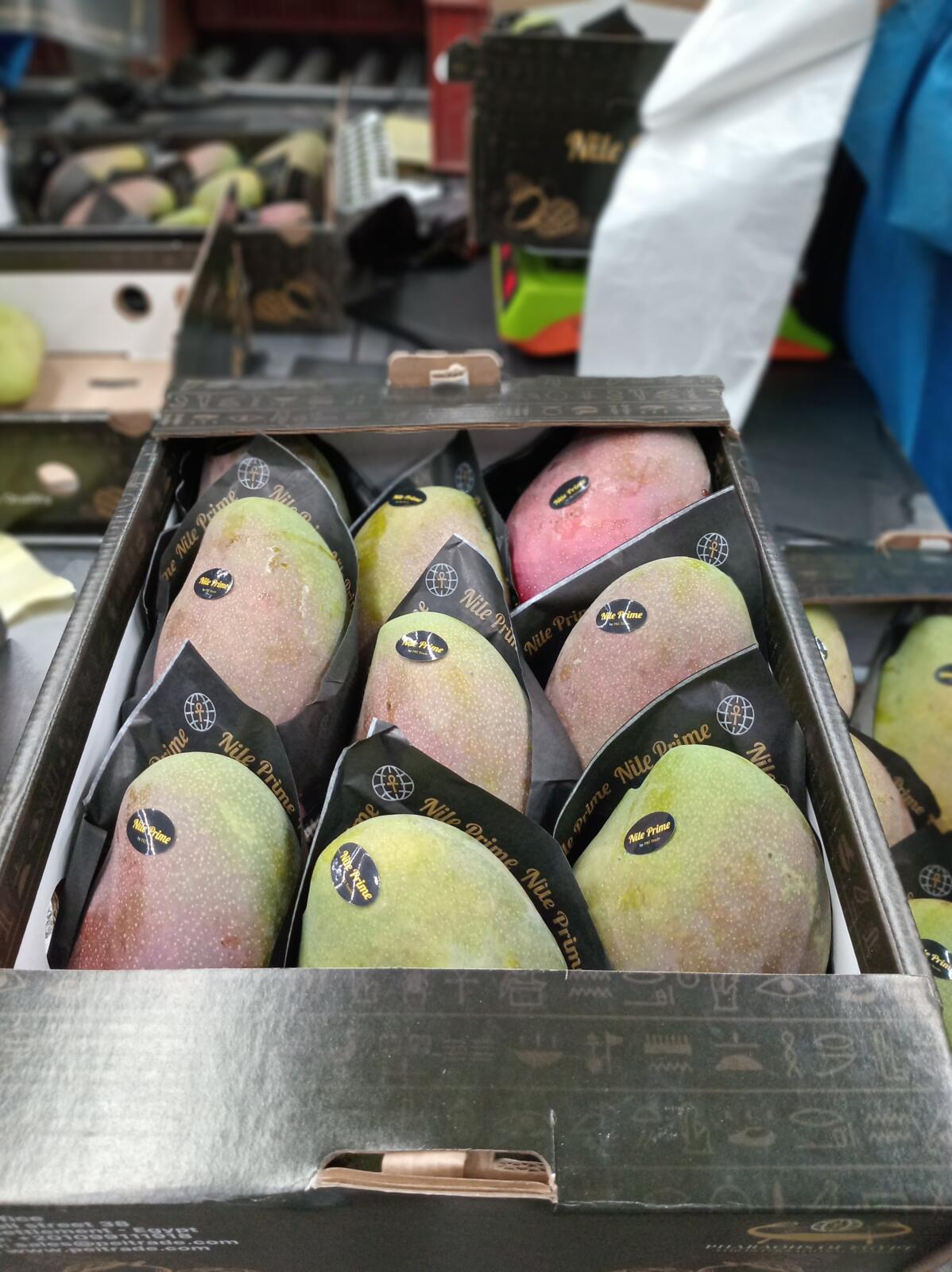
Every Asian sailing from Sokhna starts with a structural head start: the container is already in the Red Sea, skipping the Canal queue that every European competitor’s transshipped cargo must join. Practical transits: Jebel Ali connections put Egyptian fruit into Singapore and Port Klang in 12–16 days; direct services, where seasonal, compress it further. The cold-chain spec is the standard mango regime — +10 to +12°C, never colder, per the container guide — with one Asian-lane addition: humidity and condensation management matter more on voyages crossing the equatorial belt, so vent settings and door-area stowage deserve explicit contract language. Air freight (Cairo–Singapore ~9 hours via Gulf hubs) carries the Sedika tier for the gift-fruit and hotel trade at rates the air guide frames.
Variety Strategy for Asian Palates
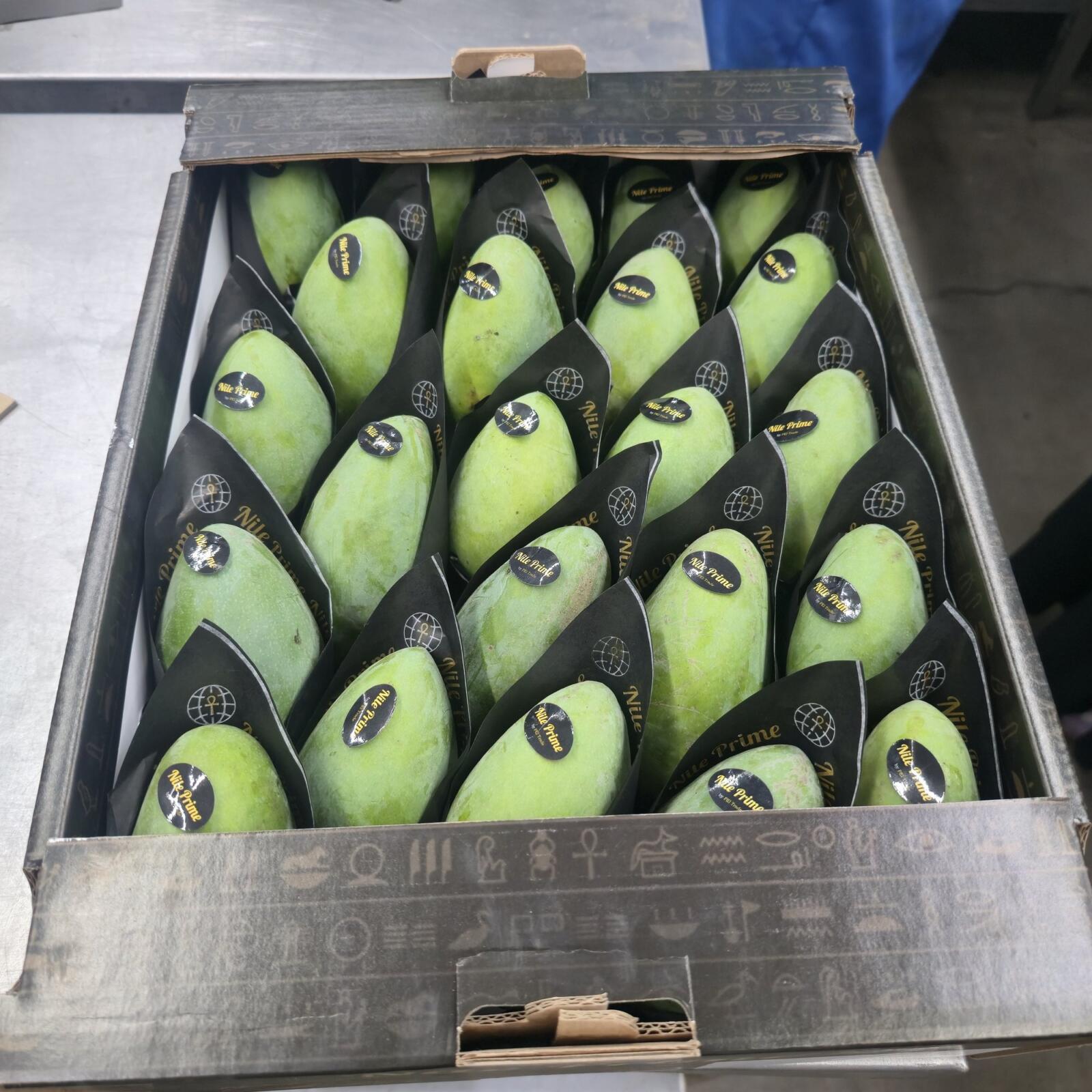
Asian mango preference splits by tradition: Southeast Asia’s benchmark is the honey-sweet, aromatic, soft-fleshed profile (Thai Nam Dok Mai, Philippine Carabao) — closer to Egypt’s Ewais and Sedika than to firm Western-style fruit; East Asian premium retail prizes appearance, size, and gift-box presentation — large, blemish-free Keitt and Naomi, individually cradled, fit the format. The winning program runs both: sea-freight Keitt as the volume floor in wholesale and supermarket channels, air-freight Ewais/Sedika flighted into the premium tier with origin storytelling. One cultural note that surprises Western-trained exporters: several Asian markets happily buy green-stage mangoes for salads and pickling (the som tam and rojak economies) — a channel for early-harvest and size-outlier fruit that European lanes would discount, detailed in the varieties guide.
Worked Example: Building the Singapore Lane
A hypothetical Singapore fine-fruit importer — hotels, premium grocers, and a re-export book to Kuala Lumpur — tests Egypt. Year one, July: one air pallet of Sedika (400 kg) for the hotel trade as a proof of flavor; landed cost is brutal, the fruit sells out in three days, and two hotels list it by name. August: first sea container of Keitt via Jebel Ali connection — 16 days, arrival quality clean, ripened in his banana rooms; supermarket price point lands 15% under Australian counter-season fruit with better eating quality in this sketch. September–October: three more containers; the KL re-export leg absorbs a third of each. Year two: the program doubles, adds Naomi in gift trays for Mid-Autumn Festival timing — the calendar synergy nobody planned but everyone enjoys — and negotiates a season frame with the exporter, whose Asian book is still small enough that a 10-container commitment buys first-refusal allocation. That is the frontier-lane premium: terms and attention that the crowded Gulf lane stopped offering years ago. The playbook transfers wholesale from the Gulf guide — only the transit times and the festivals change.
FAQ
Which Asian markets are easiest for Egyptian mangoes?
Singapore and Hong Kong — open regimes needing only standard phytosanitary and food-safety compliance — followed by Malaysia. China requires GACC protocol registration; Japan and Korea remain strict-quarantine watch-list markets.
How long does shipping take from Egypt to Singapore?
Roughly 12–16 days by sea from Sokhna via Jebel Ali connections — inside Keitt’s shelf window at the standard +10–12°C regime. Air freight via Gulf hubs runs about 9 hours for premium varieties.
Which Egyptian mango varieties suit Asian markets?
Ewais and Sedika match Southeast Asia’s honey-aromatic preference by air; large blemish-free Keitt and Naomi fit East Asian premium and gift-box retail by sea. Green-stage fruit finds salad and pickling channels several Asian cuisines maintain.
Why enter the Asia lane now?
The July–October window faces minimal competing supply, Sokhna geometry beats European rivals on transit, and the lane’s youth means exporters still offer first-mover buyers allocation priority and flexible terms the mature Gulf trade no longer does.
Sources
Singapore Food Agency — import requirements (sfa.gov.sg) · GACC — China market access registry (customs.gov.cn) · FAO — Asian mango consumption and trade data (fao.org) · PEI Trade — Egyptian mango programs on emerging lanes · Suez Canal Economic Zone — Sokhna Asian services (sczone.eg).