
Pallets, ISPM-15, and packaging materials are the least glamorous line in a produce shipment and one of the few that can stop a container at any border on earth: an unstamped pallet triggers fumigation, re-palletizing, or outright refusal in dozens of countries, and a wrong pallet footprint quietly wastes 8% of every container you book. This guide covers the ISPM-15 rules, Euro versus standard pallet math, container loading counts, and the carton and liner choices that keep Egyptian produce sound through three weeks at sea.
Table of Contents
- ISPM-15: The Stamp That Crosses Borders
- Euro vs Standard: The Footprint Decision
- How Many Pallets Fit — The Container Math
- Cartons, Liners, and the Cold-Chain Interface
- Worked Example: The Unstamped Pallet That Held 24 Tonnes Hostage
- The Packaging Compliance Checklist
- FAQ
- Sources
ISPM-15: The Stamp That Crosses Borders
ISPM-15 is the international phytosanitary standard for wood packaging: any solid-wood pallet, crate, or dunnage crossing borders must be heat-treated (or fumigated) against wood pests and stamped with the IPPC mark — the wheat-symbol logo, country code, producer number, and treatment code (HT for heat treatment) branded on at least two sides. Customs and quarantine services worldwide check it; the EU, China, Australia, and most Gulf states enforce it strictly. Three practical rules: buy pallets only from certified treaters whose stamp registrations are current; reject repaired pallets with unstamped replacement boards — one new untreated plank technically breaks compliance; and plastic pallets escape ISPM-15 entirely (no wood, no rule), which is why high-frequency lanes increasingly run plastic despite higher unit cost. The stamp costs cents at origin; its absence costs days and thousands at destination.
Euro vs Standard: The Footprint Decision
| Pallet | Footprint | Fits per 40′ container | Natural Markets |
|---|---|---|---|
| Euro pallet (EUR/EPAL) | 1200 × 800 mm | Up to ~23–24 (mixed orientation) | Europe — retail DCs are built around it |
| Standard/ISO (“industrial”) | 1200 × 1000 mm | ~20–21 | Gulf, Asia, general trade |
| Plastic export pallets | Either footprint | Same counts | High-frequency and hygiene-sensitive lanes |
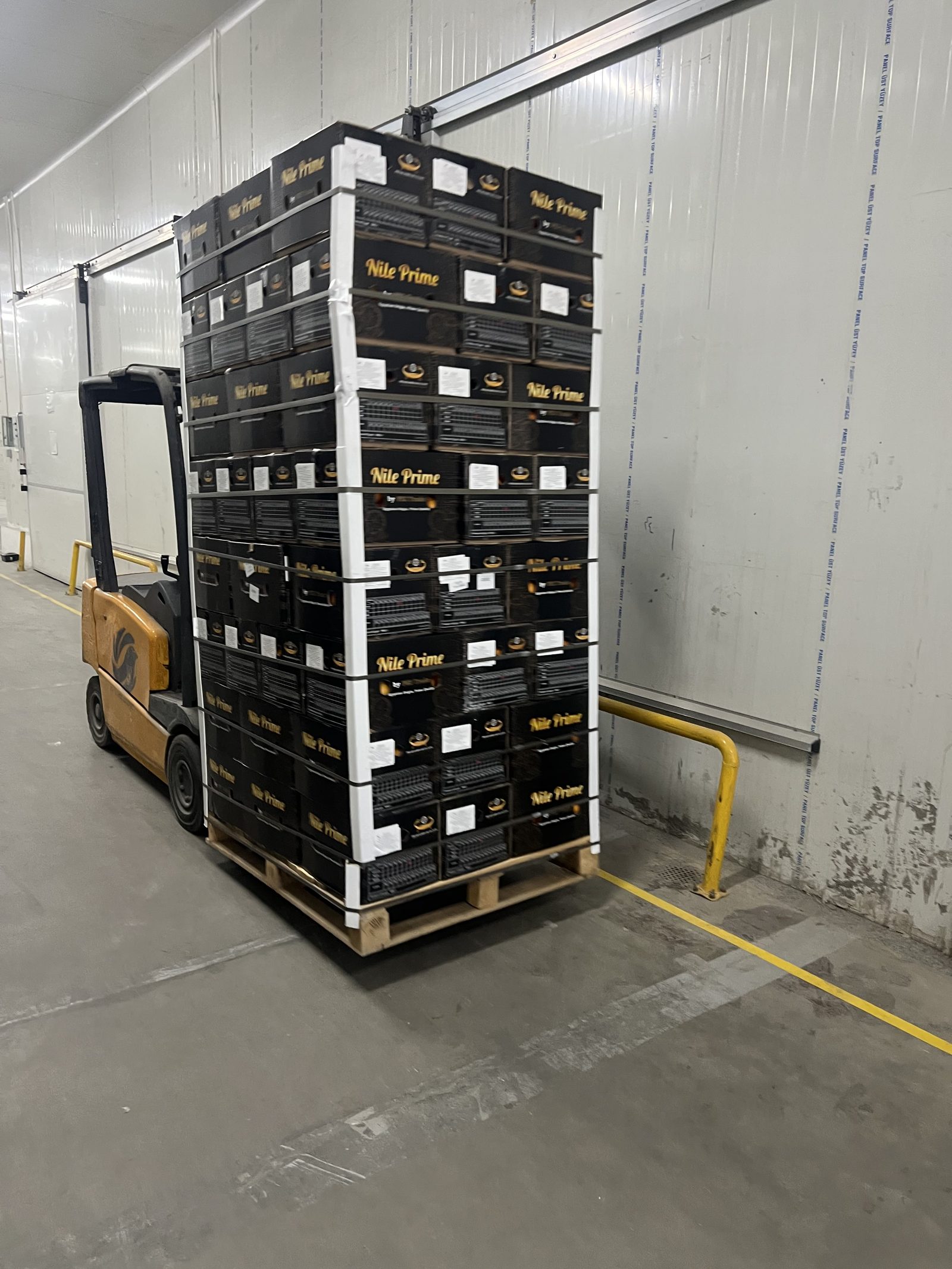
The choice is the destination’s, not the exporter’s: European retail distribution centers automate around the 800 mm Euro footprint, and a container of standard pallets arriving at a Euro-built DC gets re-palletized at your cost and delay. Gulf and Asian wholesale markets generally run the 1000 mm standard happily. Specify the pallet in the contract with the carton count per pallet — because the pallet decision cascades into carton design: cartons must tile the footprint edge to edge (five 400×300 cartons per Euro layer, for instance) without overhang (crushing risk) or underhang (wasted cube and unstable stacks).
How Many Pallets Fit — The Container Math
A 40-foot reefer’s internal floor (~11.6 m × 2.29 m) takes 20 standard pallets or up to 23–24 Euro pallets in mixed orientation — but produce loads rarely max the floor, because airflow outranks cube: reefer stowage needs the T-floor working, gaps managed, and stacks below the red load line, per the reefer guide. Practical planning numbers for Egyptian trade: citrus in 15 kg cartons runs ~20 pallets/1,600 cartons/24 tonnes; strawberries lighter; onions in bags often ship floor-loaded (no pallets) in ventilated boxes to use full cube — a legitimate choice that trades handling speed at destination for ~10% more payload. Whichever configuration, agree it in writing: “20 ISPM-15 Euro pallets, 80 cartons each, stretch-wrapped, corner-boarded” is a spec; “palletized” is a future argument.
Cartons, Liners, and the Cold-Chain Interface
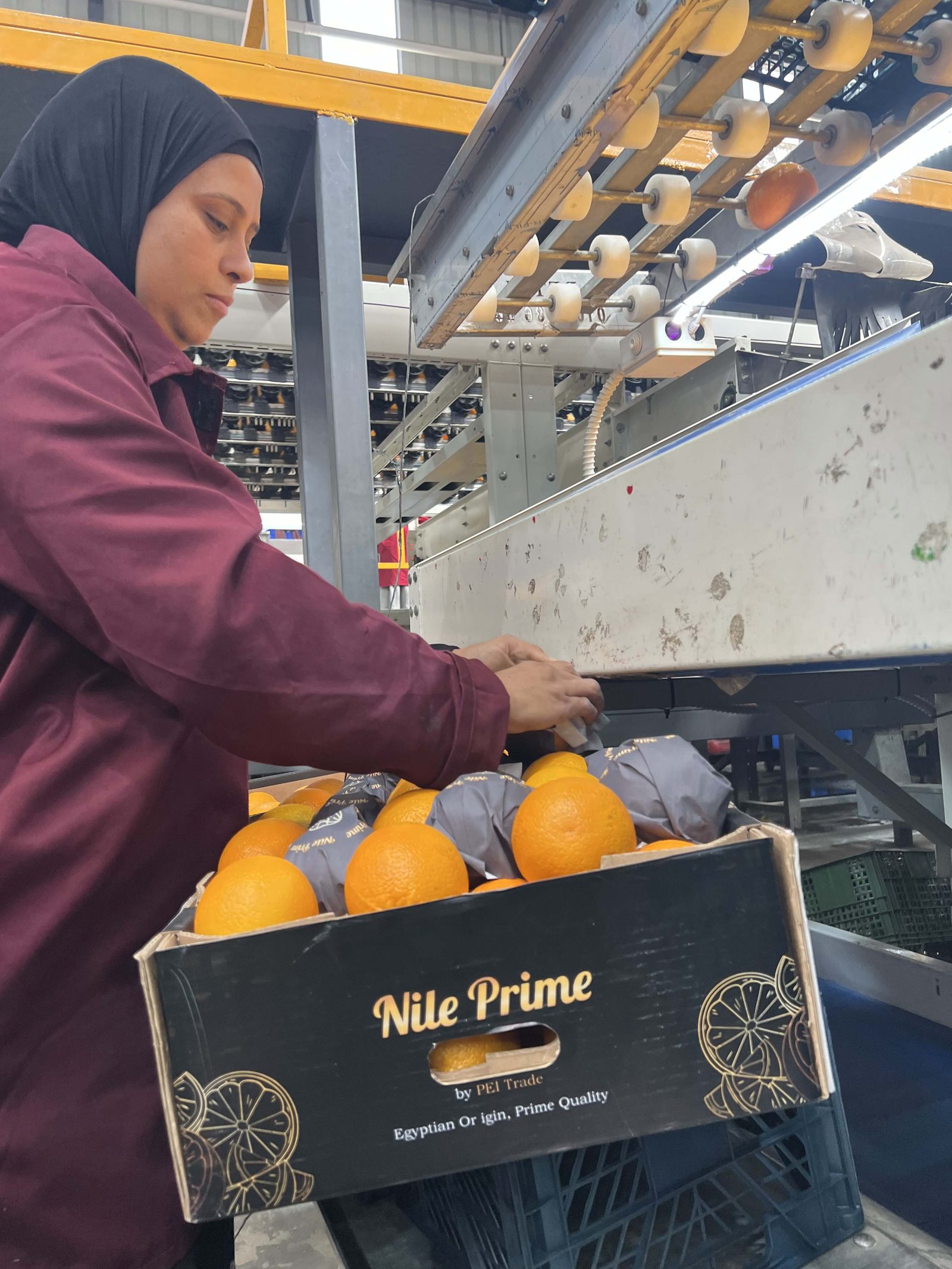
- Wet-strength board: reefer humidity runs high by design; cartons must hold stacking strength at 90%+ RH for weeks — the difference between virgin wet-strength board and cheap recycled liner shows up as collapsed bottom tiers at destination.
- Ventilation alignment: carton vent holes must align vertically through the stack so the reefer’s air actually passes through the fruit — misaligned vents insulate the cargo from its own refrigeration.
- Stretch wrap vs netting: wrap stabilizes but blocks airflow if run solid — produce pallets wrap with vent gaps or netting instead.
- Corner boards: cents each, and the main defense of carton edges — where stacking strength lives — through handling.
- Liners and gel packs: air-freight territory, per the air freight guide; sea reefer cargo wants air contact, not insulation.
Worked Example: The Unstamped Pallet That Held 24 Tonnes Hostage
A hypothetical container of Egyptian citrus arrives in a strict-enforcement market. Quarantine’s wood-packaging inspection finds nineteen correctly stamped pallets — and one repaired pallet whose replacement boards carry no IPPC mark. The options quarantine offers, none good: fumigate the entire container (two days, fees, and fumigant near fresh fruit), destroy the offending pallet and re-stack its cargo under supervision (a day of supervised labor at port rates), or re-export the container. The importer chooses supervised re-stacking: ~$800 in fees and labor, one day of demurrage exposure, and a delivery-window penalty from his retail customer. Total damage in this sketch: roughly $2,300 — caused by one plank worth fifty cents, installed by a pallet-repair shop the exporter’s packhouse had switched to that month to save $0.30 per pallet. The exporter now photographs every pallet stamp at loading as part of the standard evidence set; the buyer now specifies “new, fully stamped ISPM-15 pallets only — no repaired units” in every contract. Both fixes cost nothing. That is packaging compliance in one story: free to do right, expensive in a specifically stupid way to do wrong.
The Packaging Compliance Checklist
- ISPM-15 stamps visible on two sides of every pallet — photographed at loading.
- No repaired pallets with unstamped boards; new pallets for export, or certified plastic.
- Pallet footprint matched to destination (Euro for EU retail; standard elsewhere unless specified).
- Cartons tile the footprint without overhang; vents aligned through the stack.
- Wet-strength board specified for reefer cargo; corner boards fitted.
- Stretch wrap with airflow gaps or netting — never solid-wrapped produce in reefers.
- Configuration written into the contract: pallet count, cartons per pallet, wrap spec.
- Floor-loading decisions (onions, bagged goods) agreed with the destination’s handling reality in mind.
FAQ
What is ISPM-15 and does it apply to my shipment?
ISPM-15 is the international standard requiring all solid-wood packaging crossing borders — pallets, crates, dunnage — to be heat-treated or fumigated and stamped with the IPPC mark. It applies to virtually every containerized produce shipment; plastic pallets are exempt.
How many pallets fit in a 40-foot reefer container?
Twenty standard (1200×1000 mm) pallets or up to 23–24 Euro (1200×800 mm) pallets in mixed orientation — though produce stowage often loads slightly below maximum to preserve the airflow the refrigeration depends on.
Euro pallet or standard pallet for produce exports?
Follow the destination: European retail distribution centers are automated around Euro pallets and will re-palletize anything else at your cost; Gulf and Asian markets generally run standard pallets. Specify it in the contract.
What happens if customs finds an unstamped pallet?
Options at the destination’s discretion: fumigation of the container, supervised destruction and re-stacking of the offending pallet, or refusal of entry — plus the demurrage the delay generates. Prevention costs cents; the event costs thousands.
Sources
IPPC — ISPM-15 standard text and country implementation (ippc.int) · EPAL — Euro pallet specifications (epal-pallets.org) · Container Handbook — packaging and stowage engineering (containerhandbuch.de) · PEI Trade — export packing specifications for Egyptian produce · FAO — wood packaging phytosanitary guidance (fao.org).