
A produce sales contract is the document that decides every future argument before it happens — and most first-time import deals run on a proforma invoice and optimism instead. Produce contracts differ from general goods contracts in exactly the ways fruit differs from machinery: quality is biological, tolerances are inevitable, time is destructive, and the evidence spoils with the cargo. This guide builds the complete clause architecture — spec, tolerances, payment, delivery, claims, and dispute resolution — with the exact language traps that generate produce litigation.
Table of Contents
- Why Produce Contracts Are Different
- The Specification Clauses — Where Precision Lives
- Commercial Clauses: Price, Payment, Delivery
- Claims and Evidence Clauses — The Peacekeepers
- Worked Example: The Two-Page Contract That Paid for Itself
- Dispute Resolution That Actually Functions
- FAQ
- Sources
Why Produce Contracts Are Different
Machinery either meets drawings or doesn’t; fruit exists on distributions. A contract pretending otherwise — “premium quality oranges” — is a dispute with a signature line, because premium means different things in Alexandria, Rotterdam, and the moment a market price drops mid-voyage. Produce contracting’s core craft is converting biology into numbers with tolerances: not eliminating variation (impossible) but pricing and bounding it in advance so that arrival day is arithmetic, not argument. The second difference is time: remedies that work for durable goods (return, replacement, cure periods) mostly fail for cargo losing value hourly — so produce contracts front-load evidence rules and price-adjustment ladders instead. Everything below follows from those two facts.
The Specification Clauses — Where Precision Lives
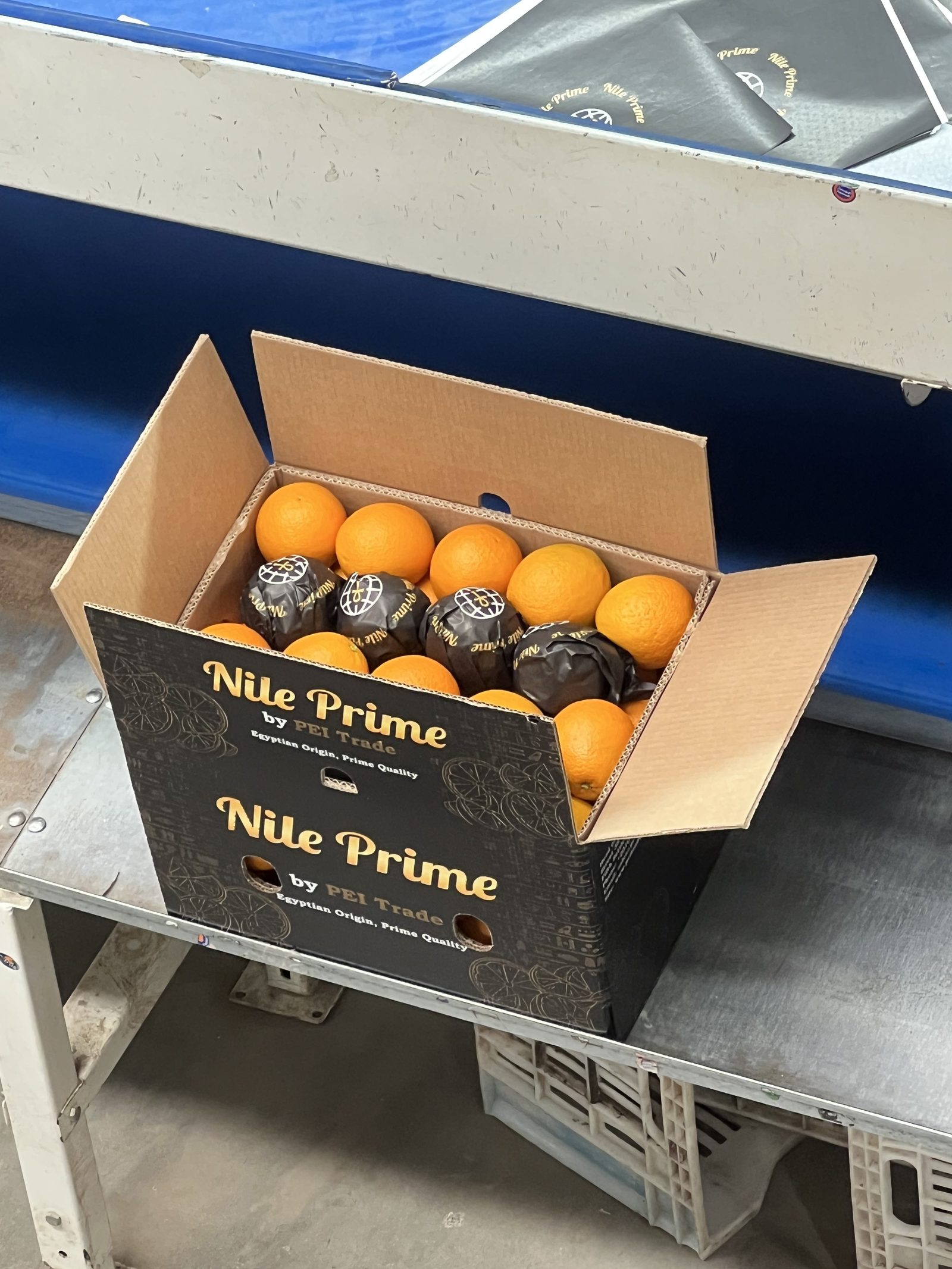
- Product and variety: “Egyptian Navel oranges, Washington Navel” — botanical precision, since varieties price differently.
- Size and count: per the trade’s units — counts per 15 kg carton for citrus, millimeter calibers for onions and grapes — with the permitted mix stated (“counts 56–72, no single count exceeding 40%”).
- Quality metrics with numbers: minimum brix, maximum defect percentages by defect class, color stage at loading, firmness where measurable — every adjective replaced by an instrument reading.
- Tolerances: the honesty clause — “up to 5% of fruit outside size specification and 3% with minor peel defects is not a breach” — which converts inevitable variation from ammunition into arithmetic.
- Packing: carton spec, net weight per carton with tolerance, pallet configuration per the packaging guide, and labeling text.
- Cold chain: setpoint, vent settings, pre-cooling requirement, and logger placement — the reefer guide parameters written as obligations.
Commercial Clauses: Price, Payment, Delivery
Price with its incoterm and currency (“USD $X per carton FOB Alexandria, Incoterms 2020”) — and for season frames, the review mechanism and currency threshold clause. Payment structure exactly as agreed — advance percentages, document-release triggers, bank details with a written-confirmation-of-changes clause that pre-empts the email-fraud scenario from the T/T guide. Delivery as shipment windows rather than dates (“loading week 50, ±4 days”), with the notification cascade: booking confirmation, loading photos, document scans within 48 hours of B/L. And force majeure written for agriculture — weather events, harvest failures, and port disruptions defined with a notification duty and a volume-reduction mechanism, not just a cancellation escape; the difference matters the first time a heatwave compresses a mango window.
Claims and Evidence Clauses — The Peacekeepers
The clauses that keep relationships out of court: notice window (claims within 48 hours of devanning, with evidence standard defined — photographs with carton labels visible, logger download, seal number); surveyor mechanism (a named independent survey firm both parties accept in advance, with cost allocation); tolerance-then-remedy ladder (within tolerance: no claim; above tolerance: price adjustment per an agreed formula; catastrophic: survey-determined settlement) — the ladder converts the classic screaming match into a lookup table; logger primacy (the calibrated recorder outranks recollections); and mitigation duty (the buyer sells what’s sellable rather than letting sound fruit rot as leverage). The full evidence protocol lives in the claims guide — the contract’s job is making that protocol contractually binding before anyone needs it.
Worked Example: The Two-Page Contract That Paid for Itself
A hypothetical Doha importer signs his first Egyptian onion program — and, having been burned before on a handshake deal, insists on a two-page contract with numbers: golden onions 60–80 mm, fully cured with necks closed, max 4% outside caliber, max 2% sprouting/soft, 25 kg net bags ±2%, ventilated containers through April, 30/70 against documents, claims within 48 hours with photos and joint survey by a named firm, price adjustment at 1.5× the value of out-of-spec product above tolerance. Mid-season, the test arrives: a February container lands with 7% oversize and 3.5% soft bulbs. Under the handshake regime this is a week of angry calls, threats, and a poisoned relationship. Under the contract it is forty minutes of counting: oversize exceeds tolerance by 3 points, softness by 1.5 points; the survey confirms; the formula prices the adjustment at $840; the exporter credits it against the next shipment with a note tightening their grading instruction. The relationship’s next container ships on schedule. Total drafting cost of the contract in this sketch: two hours and one lawyer’s review. The clause architecture didn’t prevent the quality slip — nothing prevents biology — it converted the slip from a relationship crisis into an invoice line. That is the entire function of produce contracting.
Dispute Resolution That Actually Functions
For disputes the ladder can’t settle: escalation first (a mandatory negotiation period between named senior people — most produce disputes die here when the contract forces the phone call); arbitration over courts for anything international — faster, enforceable across borders under the New York Convention, and available in specialized forms: many fresh-produce contracts reference established trade-association arbitration rules, whose arbitrators know what a reefer logger is without expert testimony; governing law stated explicitly, with the practical note that enforcement reality matters more than doctrinal preference — an arbitration clause enforceable in both countries beats an elegant one enforceable in neither; and proportionality sense: the contract should make small disputes cheap to resolve (the formula ladder) precisely so the expensive machinery is reserved for the rare catastrophic case. A contract whose dispute clause has never been invoked is not unused — it’s working.
FAQ
What must a produce sales contract include?
Variety-precise product spec, sizes and counts in trade units, quality metrics as numbers (brix, defect percentages), explicit tolerances, packing and cold-chain obligations, price with incoterm, payment structure, shipment windows, claims procedure with evidence standards, and dispute resolution.
Why do produce contracts need tolerance clauses?
Because fruit varies biologically — a contract without tolerances makes every natural deviation a technical breach, weaponizing arrival inspections. Stated tolerances (e.g., 5% outside size spec) convert inevitable variation into pre-priced arithmetic.
How long should a produce import contract be?
Two to four pages covers a container or season program comprehensively. The goal is numbers replacing adjectives, not length — a two-page contract with brix floors and defect percentages beats twenty pages of “premium quality” boilerplate.
Should disputes go to arbitration or court?
Arbitration, for international produce trade — enforceable across borders under the New York Convention and available through trade bodies whose arbitrators understand perishables. Structure the contract so small disputes resolve by formula and only catastrophic ones reach the machinery.
Sources
International Chamber of Commerce — model international sale contracts and Incoterms 2020 (iccwbo.org) · UNCITRAL — CISG and the New York Convention (uncitral.un.org) · UNECE — fresh produce quality standards for specification drafting (unece.org) · PEI Trade — contract-based export programs from Egypt · COFREUROP — European fruit and vegetable trade rules (cofreurop.org).