
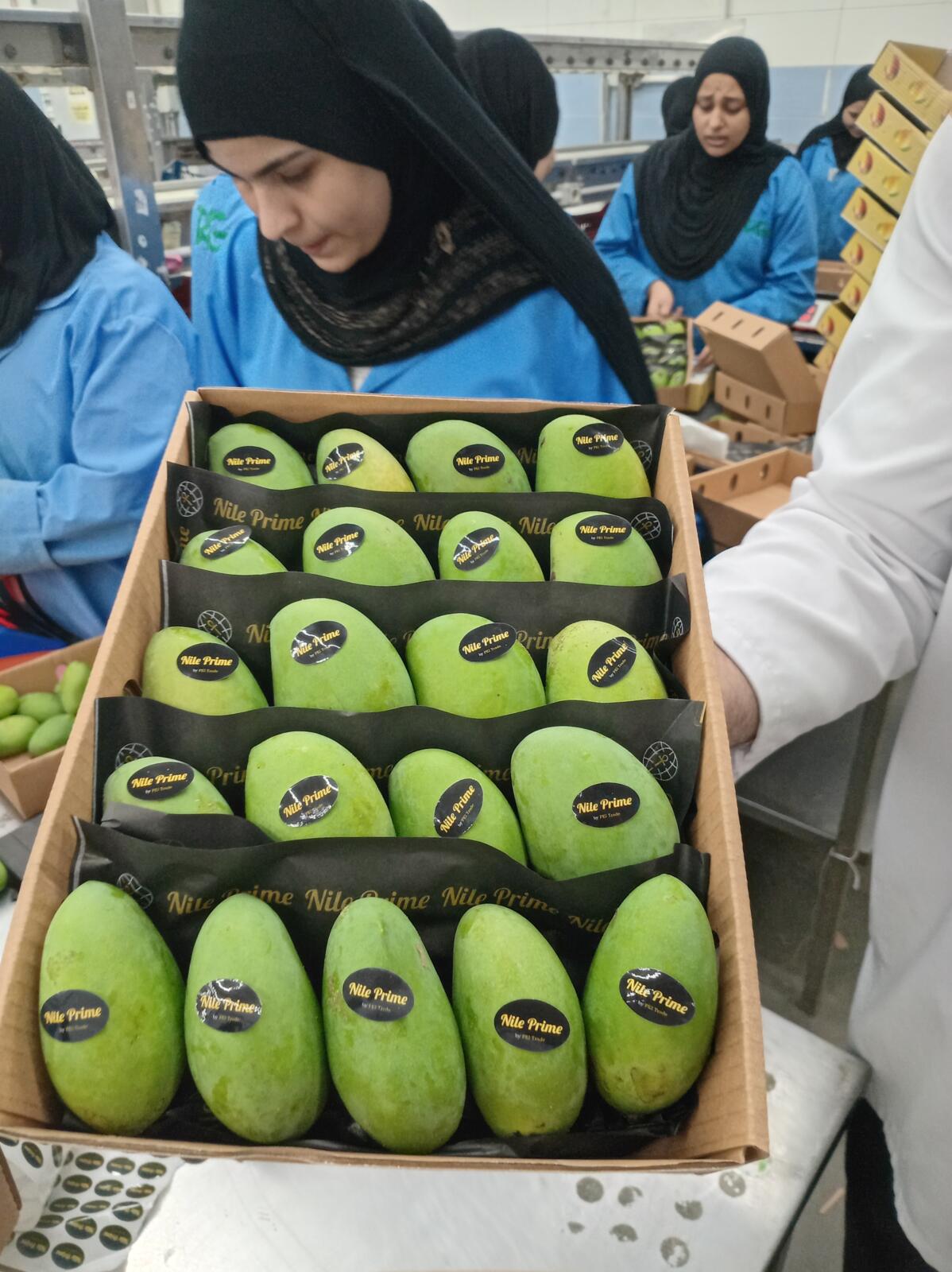
A mango container can be perfectly packed and still be held at destination. The reason is almost never the fruit itself. It is a certificate with the wrong wording, a treatment that the destination country does not recognise, or a residue result above the importing market’s limit. These are avoidable problems, but only if the buyer knows what to ask for before loading rather than after arrival.
The phytosanitary certificate
Every commercial fresh mango consignment leaving Egypt travels with a phytosanitary certificate issued by the plant quarantine authority under the Ministry of Agriculture and Land Reclamation. The format follows the IPPC model set out in ISPM 12, and it declares that the consignment was inspected and is considered free from the quarantine pests of the importing country.
Three fields on that certificate cause most problems. The first is the declared place of production, which must correspond to a registered orchard or pest free production site, not simply to the exporter’s address. The second is the additional declaration box, where destination specific wording is entered. The third is the treatment section, which must be completed if the destination requires one. If the buyer’s import permit specifies particular wording, that wording has to be supplied to the exporter before the certificate is issued. Amending a phytosanitary certificate after issue is slow and sometimes impossible.
Fruit fly and why destinations differ
The pest of concern for mango out of Egypt is fruit fly, principally the peach fruit fly and the Mediterranean fruit fly. Destinations manage this risk in one of three ways. Some accept inspection alone, which covers most Gulf, African and Central Asian markets. Some require a pest free area or pest free place of production declaration supported by trapping data. Some require a mandatory treatment.
Where treatment is required, the recognised options are hot water immersion, vapour heat treatment or irradiation. The standard hot water schedule for mango immerses the fruit at approximately 46.1 degrees Celsius for 65 to 90 minutes depending on fruit weight, followed by hydrocooling. This is done at an approved facility under supervision, and the treatment certificate must travel with the shipment. Treatment has a cost and a shelf life consequence, so it should be priced into the offer at the quotation stage rather than discovered later.
Residues and maximum residue limits
Residue compliance is a separate track from phytosanitary compliance and is often overlooked. The European Union sets maximum residue limits under Regulation 396/2005, and those limits differ from the Codex values used as a default in several other markets. The United Kingdom, the Gulf states under GSO standards, and Russia each maintain their own lists. A residue that is legal in one destination can be a rejection in another.
Practical control comes from three habits. Agree the destination MRL list in the contract, so both sides are working from the same reference. Require a residue analysis from an accredited laboratory on the harvest lot, dated before loading, not a generic annual certificate. And check the spray record against the pre harvest interval for each active substance used. Buyers who want the wider paperwork picture can read our note on carton labelling and traceability, which explains how a lot code links back to the field block.
What to check before the container sails
Confirm the import permit is issued and its conditions are in the exporter’s hands. Confirm the additional declaration wording matches the permit. Confirm any required treatment is booked at an approved facility and the certificate will be issued in the shipper’s name. Confirm the residue report references the correct lot. Finally, confirm the certificate of origin and the commercial documents carry the same lot references as the phytosanitary certificate, because mismatched numbers are a common cause of delay at clearance. If a dispute does arise on arrival, the documentation trail is what settles it, as we explain in our guide to how arrival claims are documented.
Nile Prime prepares the full compliance file for each mango shipment, including phytosanitary certificate, treatment certificate where required, residue analysis and certificate of origin. To confirm the requirements for your destination before you contract, message our export team on WhatsApp at +20 10 9911 1918.