
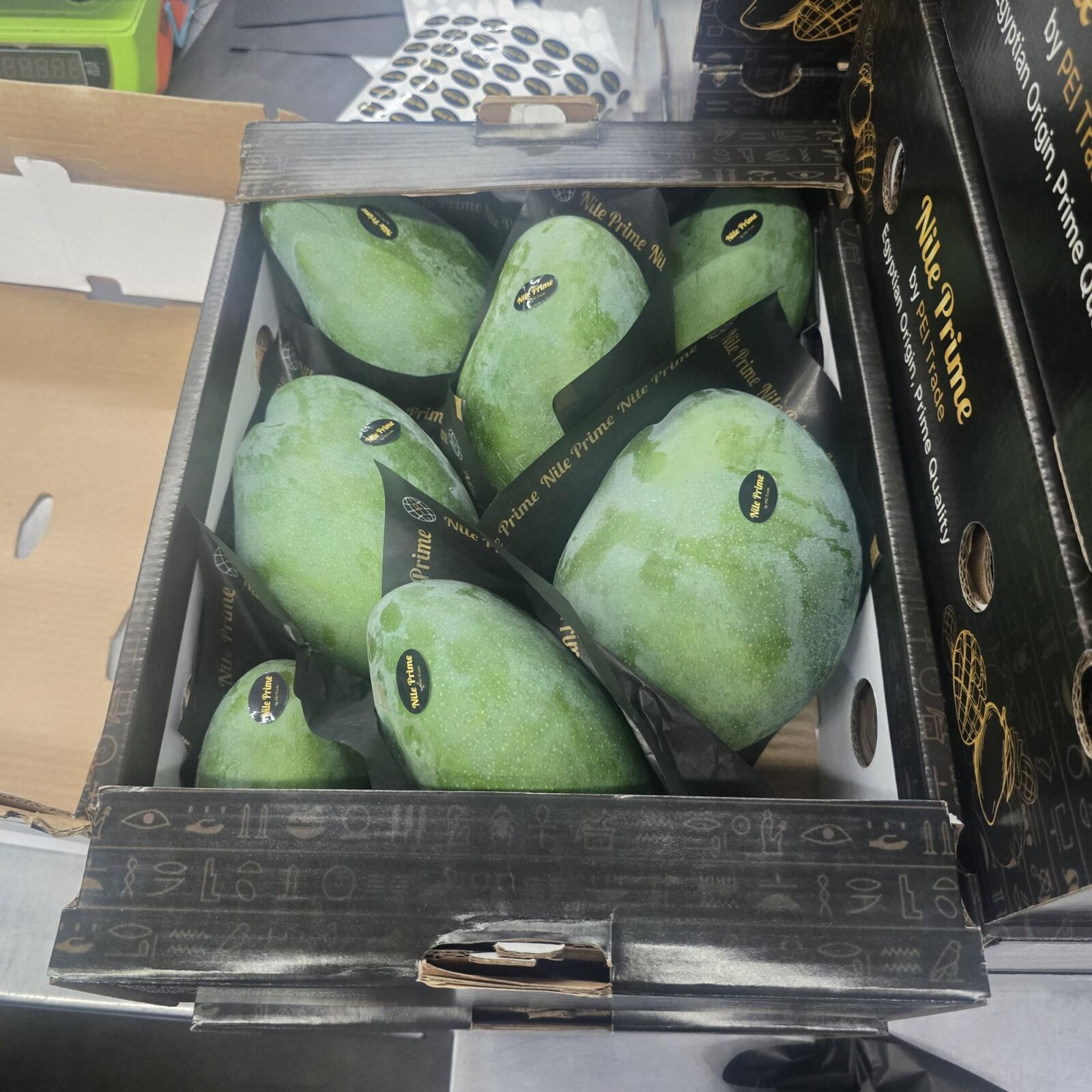
Most disagreements about mango pricing turn out to be disagreements about packing. A 4 kg single layer carton and a 10 kg bulk carton of identical Keitt fruit can differ by a meaningful margin per kilogram, and neither price is wrong. The pack determines labour at the packhouse, cartons per pallet, damage risk in transit and, above all, which shelf the fruit can eventually sit on. Deciding the format first makes every later conversation shorter.
The 4 kg single layer carton
This is the reference pack for premium Egyptian mango into the Gulf and European markets. Fruit sits in one layer, each piece in a foam net sleeve, on a moulded pulp or plastic tray. Counts run from 6 to 12 pieces depending on calibre, which for Keitt normally means 350 to 700 g fruit and for Kent 300 to 600 g. Single layer packing keeps pressure off the shoulders, so arrival bruising is low and the carton can go straight to a display without repacking.
Carton dimensions are typically 400 by 300 by 100 mm. On a 100 by 120 cm export pallet that gives ten cartons per layer and eight to ten layers, so 80 to 100 cartons per pallet, 320 to 400 kg. The format costs more per kilogram in packaging and labour, and it is the one to choose when the fruit is going to a supermarket or a specialist wholesaler.
The 6 kg two layer carton
Two layers of fruit with a separator tray between them. Counts run 12 to 20 pieces. This is the working format for traditional wholesale markets and for buyers who repack at destination. Packaging cost per kilogram falls, pallet efficiency improves, and the fruit still arrives in defined position rather than loose. The compromise is that the lower layer carries some load, so it wants firmer fruit and a slightly earlier picking maturity. If you are ordering for a market where fruit moves within days of arrival, this format usually gives the best cost per saleable kilogram.
Retail punnets and pre-pack
Some European and Gulf retail programmes call for two or three pieces in a flow wrapped tray or a vented punnet, with a barcode and country of origin printed at source. This has to be agreed at contract stage because it changes the packhouse line, the labelling artwork and the lead time. Fruit for retail pre-pack needs tighter calibration, since a 2 piece punnet with visibly different sizes will be rejected on the shelf. Expect a longer approval cycle for artwork. Our note on carton labelling and traceability covers what has to appear on each unit.
Bulk cartons and processing formats
For juice, pulp and industrial buyers, 10 kg loose cartons or field crates keep cost to a minimum. Grading is looser, cosmetic defects are accepted within limits, and the fruit is priced on flesh yield rather than appearance. This is the right route for buyers whose end product never shows the whole fruit, and it should not be compared on price with a retail pack.
Matching pack to variety
Keitt, with its large calibre and long shelf life, works well in both 4 kg and 6 kg formats and is the safest choice for longer sea transits. Kent suits 4 kg retail presentation. Naomi, which colours attractively and sizes evenly, does well in punnets and premium single layer packs. The variety comparison in our guide to choosing the right Egyptian mango variety goes through the eating and handling differences in full, and the Keitt specification sheet lists counts against calibre.
All formats are packed under GLOBALG.A.P and BRC certified conditions and loaded at Alexandria, Damietta or Ain Sokhna on FOB or CFR terms under Incoterms 2020. To price a specific pack, tell the Nile Prime team the variety, count, format and destination on WhatsApp at +20 10 9911 1918 and we will send a written offer with pallet configuration and transit time.