
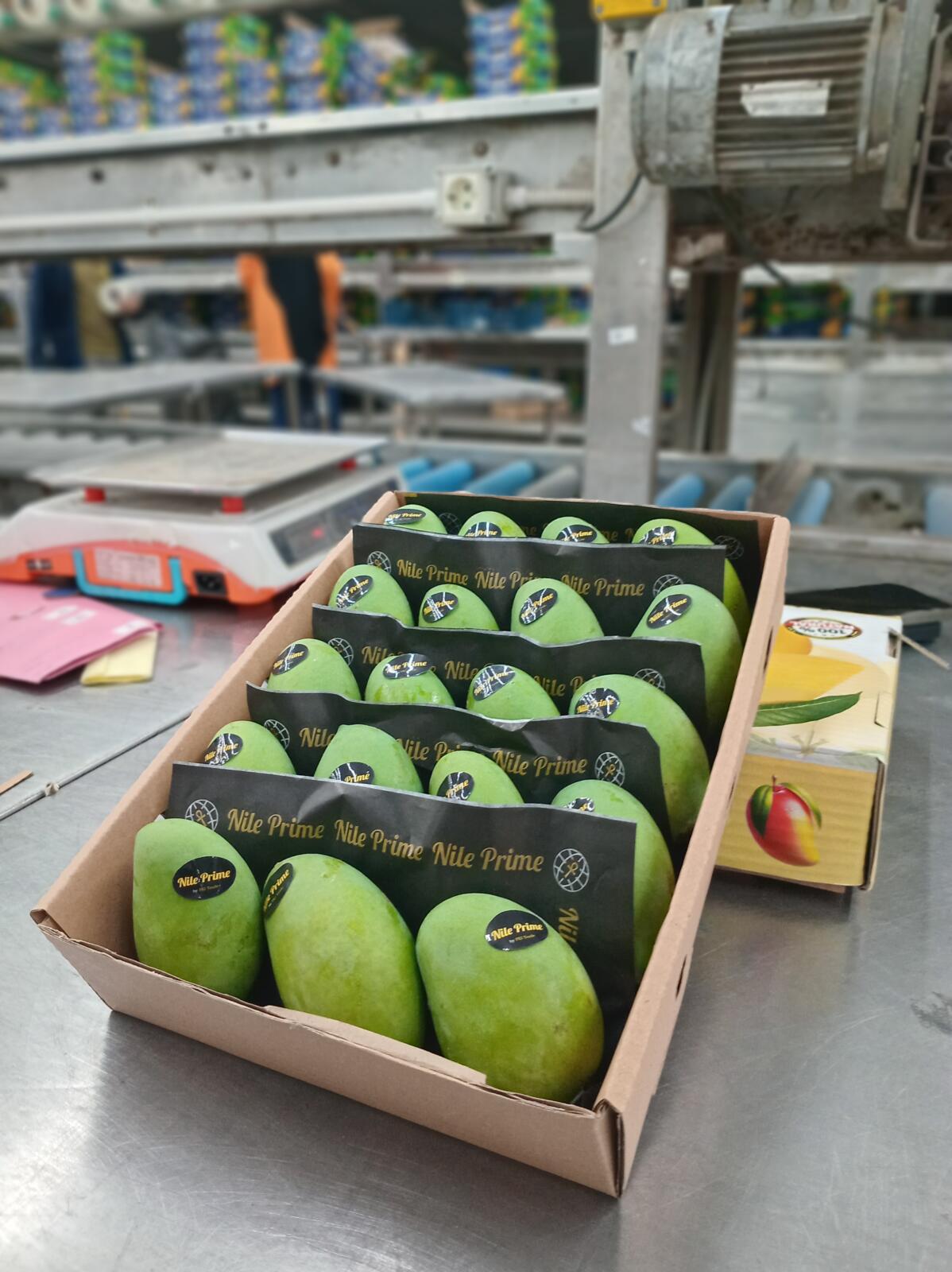
Labelling is the part of a mango shipment that buyers think about least and rely on most. When a container arrives and something is wrong, the information printed on the carton and the pallet card is what decides whether the problem can be traced to a picking day and a farm block within an hour, or whether it turns into a month of correspondence. It is worth agreeing the label layout before the first booking rather than after the first claim.
What belongs on the carton
A compliant export carton for the European Union and the Gulf carries the product name and variety, the country of origin stated as Product of Egypt, the class or grade, the size code or count, the net weight, the packer and exporter identification, and the lot or batch code. For consignments moving into EU retail, the GLOBALG.A.P Number of the producer is normally requested as well, and many buyers ask for it printed rather than supplied separately.
The lot code is the piece that does the real work. Ours encodes the packing date, the packhouse line and the farm block, which means a single carton photographed at destination can be tied back to a specific day of picking. Where a buyer has their own coding standard, we print to that standard instead. What matters is that the code is unique at the level of a picking day, not at the level of a whole shipment.
Pallet level identification
Each pallet carries a card showing the pallet number, the total carton count, the net and gross weight, the variety and count, the lot codes contained, and the destination. On programmes where cartons from more than one packing day sit on the same pallet, the card lists every lot present. Buyers who load mixed counts should insist on this, because a pallet card that lists only one code on a mixed pallet is worse than no card at all.
Why the detail matters at arrival
Two situations show the value. The first is a partial quality issue, where softness or bruising appears in some cartons and not others. If the affected cartons carry a common lot code, the cause is upstream at the packhouse or the orchard. If they are spread across every lot but concentrated in the lower layers of the load, the cause is handling or temperature in transit. That distinction decides who is responsible, and it can only be made if the labelling supports it.
The second is a regulatory hold. When an inspection authority questions a consignment, the traceability chain from carton code to phytosanitary certificate to farm registration has to be produced quickly. Shipments that carry the full chain are usually released. Shipments that do not can sit while the paperwork is reconstructed, and mango does not tolerate waiting.
The documentation and code trail we run is described in our guide to importing Egyptian mango for the first time, and how the same records are used when something goes wrong is covered in our note on mango quality claims and arrival disputes.
Agree the label before the season, not during it
Printed cartons take lead time. A buyer who wants their own brand, their own size codes or a specific language on the panel should confirm the artwork before packing starts, because changing a carton specification in the middle of a season means either a stock run of the old print is wasted or a shipment goes out on generic cartons.
Nile Prime prints buyer branded and generic cartons from its own stock and issues lot level traceability records with every consignment out of Alexandria, Damietta and Sokhna. To review a label layout or request a specimen carton panel for your market, message us on WhatsApp at +20 10 9911 1918.