
Egyptian lemon export serves the one citrus category where demand never sleeps and supply regularly breaks: lemons are a year-round kitchen staple from London to Jakarta, and every winter some Mediterranean supplier — Turkish frost, Spanish drought, Argentine strike — leaves a gap that Egyptian adalia lemons and seedless limes can fill within a fortnight. This guide covers varieties and the near-year-round window, juice-content economics, degreening and waxing, and a worked program built on the category’s defining trait: crisis readiness. Supplier rankings live in the lemon companies guide.
Table of Contents
- The Category: Acid Citrus Never Sleeps
- Varieties and Windows
- Juice Content: The Number the Trade Runs On
- Degreening, Waxing, and the Color Question
- Worked Example: The Second-Source Strategy
- FAQ
- Sources
The Category: Acid Citrus Never Sleeps
Sweet oranges are seasonal pleasure; lemons are infrastructure — food service, beverage, retail, and industrial demand run twelve months with almost no elasticity, which gives the category its distinctive economics: supply shocks price violently (a Turkish frost can double European lemon prices in three weeks) and reliable second sources earn structural premiums. Egypt’s position fits the role: near-year-round harvest across adalia lemon flushes plus summer-strong seedless lime, Mediterranean and Red Sea port access serving both Europe and the Gulf, and cost economics that undercut Spanish fruit in normal years and rescue the market in abnormal ones — the pattern the companies guide’s Doha example dramatizes from the buyer’s side.
Varieties and Windows
| Type | Window | Notes |
|---|---|---|
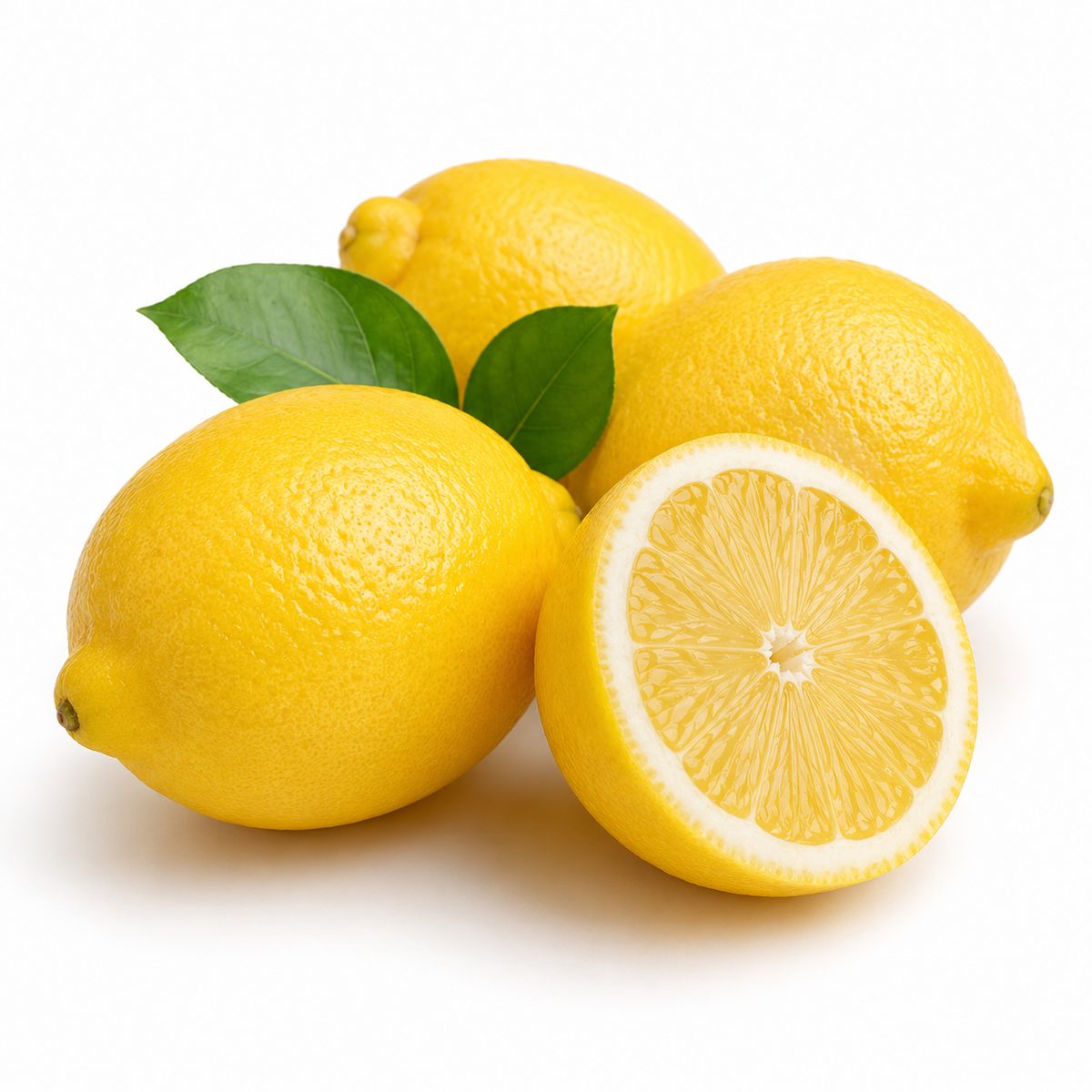
| Adalia lemons (main crop) | Aug–Mar core, flushes extend nearly year-round | The volume export lemon; sizes 100–162 per 15 kg |
| Summer flush lemons | May–Sep | The counter-window when Spain rests — premium months |
| Seedless lime | Jun–Nov strong | Growing Gulf and EU trade; green-skin retail preference |
| Baladi lime | Summer | Regional trade; intense aroma, small fruit |
Juice Content: The Number the Trade Runs On
Lemons are bought by the squeeze: the trade’s benchmark is minimum ~30% juice by weight (the UNECE standard’s floor), and professional buyers specify and test it — a beautiful lemon at 25% juice is a food-service complaint in waiting. Juice content moves with flush, size, and season: mid-size fruit (113–138 count) typically out-juices jumbo; early-flush fruit needs verification before commitment; and the question “what juice percentage do you pick at, and how do you test?” filters lemon specialists from citrus generalists in one sentence — the same one-question sorting that curing provides in sweet potatoes. Contracts per the contract standard write the floor, the sampling method (per-lot pressed sample), and the tolerance.
Degreening, Waxing, and the Color Question
Lemons ship green-tinged and yellow in transit — managed deliberately: degreening (ethylene at controlled temperature and humidity) converts chlorophyll without touching internal quality; waxing seals moisture and adds the shelf gloss retail expects; and the craft is calibration — a lemon degreened for a 5-day Gulf sail wants different treatment than one facing 14 days to Rotterdam, because over-degreened fruit ages fast and under-degreened fruit arrives street-market green to shelves that demand sunshine. Cold chain runs +10–13°C (lemons chill-injure below ~10°C — the storage chart’s lesson that citrus is not one temperature), and limes invert the color rule entirely: green is the product, degreening is damage, and 8–10°C holds the color the shelf is paying for.
Worked Example: The Second-Source Strategy
A hypothetical UK food-service supplier moves 8 containers of lemons monthly, historically all-Spanish. After one frost winter costs him two contract penalties, he engineers redundancy: June — an Egyptian house qualified on the juice question, a summer-flush trial container lands at 31.5% average juice, arrival color exact. September — a standing arrangement signs: 2 of his 8 monthly containers go Egyptian year-round at market-linked pricing, plus a surge clause — Egypt covers up to 6 containers within 21 days if his primary origin fails, priced at frame plus a stated crisis premium. January, the payoff — a Spanish cold snap cuts his primary allocation 40%; the surge clause activates, four extra Egyptian containers ship inside three weeks, and his contracts hold while competitors shop the spot panic at +60%. The arithmetic in this sketch: the standing 25% Egyptian share cost him perhaps 2% in blended-price terms across normal months — the surge capability it bought saved multiples of that in one bad January. In lemons, the second source is not a discount strategy; it’s insurance that happens to come with fruit.
FAQ
When are Egyptian lemons available?
Nearly year-round: the adalia main crop runs August–March with flushes extending across the calendar, and the summer months — when Spanish supply rests — are Egypt’s premium window. Seedless limes run strongest June–November.
What juice content should export lemons have?
Minimum ~30% juice by weight is the trade benchmark; professional contracts specify the floor, per-lot pressed-sample testing, and tolerances. Mid-size fruit typically out-juices jumbo counts.
What temperature do lemons and limes ship at?
+10–13°C for lemons (chilling injury below ~10°C) and 8–10°C for limes, whose green color — the product itself — degreening or warmth would destroy.
Why add an Egyptian lemon supplier if my primary origin works?
Because lemon supply breaks somewhere most winters, and demand cannot wait. A standing Egyptian share with a surge clause converts crisis weeks from margin disasters into executed contracts — insurance priced in fruit.
Sources
UNECE — citrus quality standard FFV-14, juice minima (unece.org) · FAO — lemon and lime trade statistics (fao.org) · UC Davis Postharvest — citrus degreening parameters (postharvest.ucdavis.edu) · PEI Trade — Egyptian citrus export programs · Egyptian Agricultural Export Council (aecegypt.com).