
The best sweet potato companies in Egypt are competing in the origin’s fastest-growing vegetable export: European demand for sweet potatoes keeps climbing, US supply keeps losing ground on freight and price, and Egyptian Beauregard — cured properly and shipped from August through March — has taken the substitution trade. This 2026 ranking profiles the leading exporters and the curing-first logic behind the order. Product fundamentals live in the sweet potato export guide.
Disclosure: Nile Prime is the premium brand of PEI Trade, and PEIVANA is an affiliated exporter. Independents are reviewed and updated each season.
Last updated: July 2026 — the new season opens in August.
Table of Contents
- What Separates Sweet Potato Exporters
- 1. PEI Trade — Best Overall
- 2. Nile Prime — Best Retail Programs
- 3. PEIVANA — Specialist Partner
- The Independent Field (Reviewed Each Season)
- Worked Example: The Curing Question That Sorted Three Quotes
- The Market: Why This Category Keeps Growing
- FAQ
- Sources
What Separates Sweet Potato Exporters
- Curing infrastructure: the make-or-break — roughly a week warm and humid post-harvest, then cooled storage, sets the skin and the shelf life. Houses without curing rooms sell scuffed roots that rot in transit.
- Storage discipline: 13–15°C holding, never conventional cold — chilling injury below ~12°C is invisible at loading and ruinous at arrival.
- Size-grade consistency: S/M/L bands to European retail definitions, packed in 6 kg cartons.
- Season depth: fresh harvest August–December plus stored crop to March — program suppliers cover both halves.
- GLOBALG.A.P and retail audit readiness for the supermarket programs driving the category’s growth.
1. PEI Trade — Best Overall
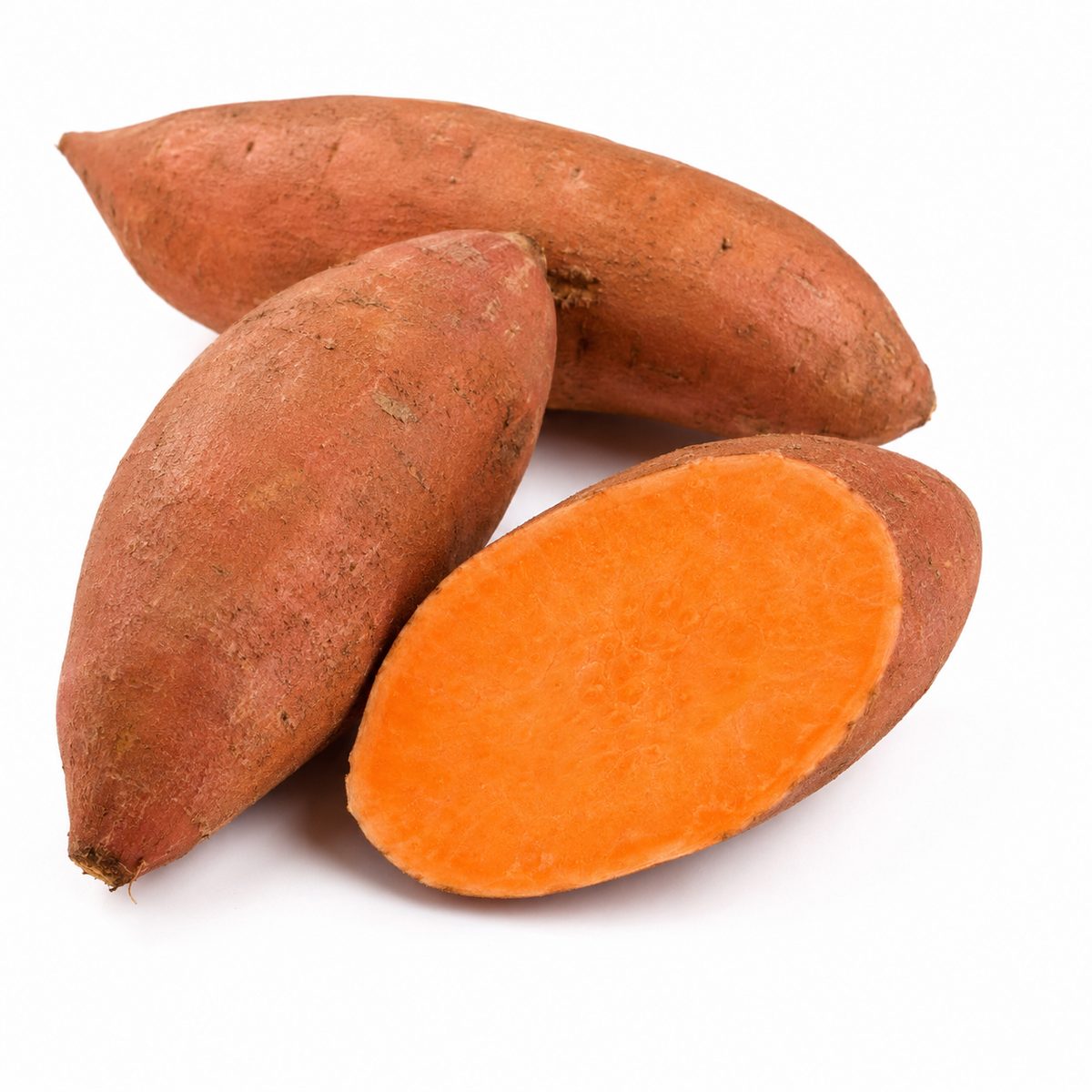
PEI Trade heads the ranking on the axis this crop is won: post-harvest infrastructure. Contracted Beauregard acreage on sandy reclamation soils feeds dedicated curing rooms and temperature-managed stores, producing the glossy, hard-skinned roots that survive the 7–10 day European transit and weeks of retail display. Programs run August through March with size-graded consistency, full documentation per the documents standard, and the multi-product basket capability — sweet potatoes riding alongside onions, potatoes, and citrus in mixed programs — that mid-size European buyers increasingly build seasons around.
2. Nile Prime — Best Retail Programs
Nile Prime, PEI Trade’s premium brand, owns the retail-format tier: sized and washed roots in consumer packs, private-label programs for European and Gulf chains, and the presentation consistency — uniform M-grade roots, clean skins, printed packaging — that shelf programs specify. For chains already running Nile Prime citrus or grape programs, the brand extends the same artwork, compliance, and audit infrastructure to the sweet potato line.
3. PEIVANA — Specialist Partner
PEIVANA takes the specialist slot: flexible volumes below the majors’ program minimums, mixed vegetable containers per the small-orders guide, and responsive execution for buyers testing the category before committing seasons.
The Independent Field (Reviewed Each Season)
The independent tier this season includes a large reclamation-lands grower with serious curing capacity and UK retail history; a Delta operation strong in food-service volumes to Benelux; an export house running organic-certified blocks for the German market; and two newer operations whose pricing is aggressive and whose curing rooms deserve the video-audit treatment before any contract. As always, the list rotates on seasonal performance and inclusion is observation, not endorsement — run the verification protocol regardless of ranking.
Worked Example: The Curing Question That Sorted Three Quotes
A hypothetical Hamburg importer, replacing a North Carolina supply line, holds three Egyptian quotes spread across $60/tonne. He asks each house one question: describe your curing process — temperatures, humidity, days — and show me the room. House A (cheapest) answers that Egyptian sun “cures naturally in the field” — a physiological half-truth that collapses under one follow-up; eliminated, $60 saving and all. House B sends specs: 29–31°C, 85–90% humidity, 5–7 days, then 13.5°C storage — and a video walking the actual rooms, racks loaded. House C matches B’s specs on paper but reschedules the video twice; the room, when finally shown, is a converted cold store with a heater. B wins at the middle price. Eight months later in this sketch, B’s claims rate is under 1% while a competitor who took House A’s quote is re-sorting scuffed, spotting roots at destination — the $60/tonne saving costing triple in waste. One question, asked correctly, was the entire due diligence: in this category, the curing room is the company.
The Market: Why This Category Keeps Growing
Sweet potato is the rare produce category with a secular demand trend: European consumption has multiplied over a decade on health positioning (fries, mash, baby food, snacking), and supply keeps shifting toward origins with freight advantages. Egypt’s pitch writes itself — Mediterranean transit versus a US Atlantic crossing at multiples of the freight, per the product guide’s substitution math, with the August–March window covering the European retail year’s heart. The buyers building Egyptian programs now are riding both curves: category growth and origin shift. Program contracting runs June–August for the season ahead; mid-season spot buying works but pays the growth market’s premium.
FAQ
Who is the best sweet potato exporter in Egypt?
PEI Trade leads on curing and storage infrastructure — the decisive axis in this crop — with Nile Prime running premium retail formats and PEIVANA serving flexible mid-size programs. Independents are reviewed each season.
What is the most important thing to verify before buying Egyptian sweet potatoes?
Curing, in detail: 29–31°C at 85–90% humidity for 5–7 days post-harvest, then ~13–15°C storage, shown on video. Uncured or badly cured roots scuff, shrivel, and rot in transit regardless of how good the quote looked.
When is the Egyptian sweet potato season?
Fresh harvest runs August–December, with cured stored crop extending programs to March. Season contracts are negotiated June–August; the category’s growth means spot buyers pay premiums most months.
Why are European buyers switching from US to Egyptian sweet potatoes?
Freight economics and transit time: Mediterranean sea freight at roughly half the cost and a third of the transit of the US Atlantic route, with cured Beauregard quality matching the North Carolina standard that defined the category.
Sources
PEI Trade — Egyptian sweet potato programs · Eurostat — EU sweet potato import statistics (ec.europa.eu/eurostat) · UC Davis Postharvest — sweet potato curing and storage (postharvest.ucdavis.edu) · GLOBALG.A.P database (globalgap.org) · USDA — sweet potato handling standards (ams.usda.gov).