
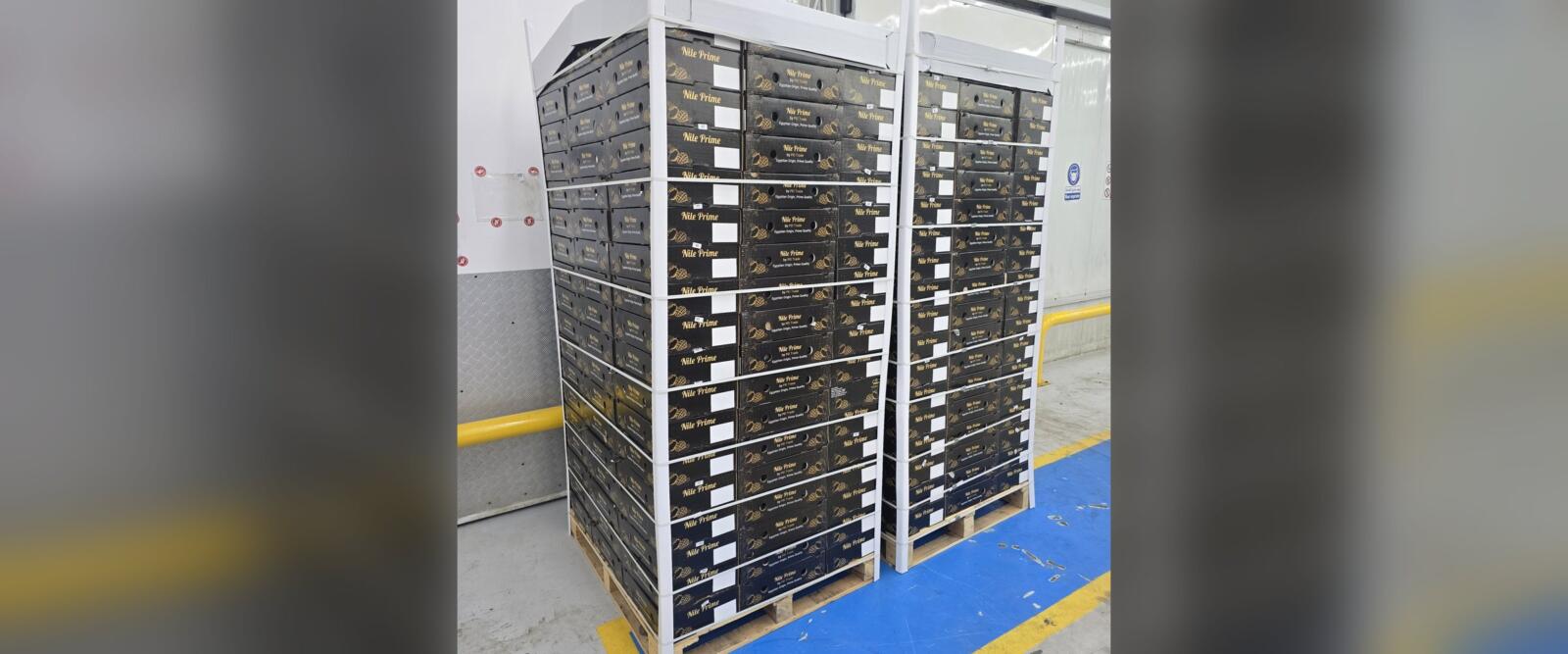
Egyptian mango can arrive in excellent condition and still disappoint on the shelf if it is mishandled in the first 48 hours after unloading. The variety, grade and reefer settings we control at origin only get a buyer part of the way. What happens in the destination warehouse decides how the fruit eats and how long it sells. This guide sets out how distributors can protect condition and manage shelf life once a Nile Prime container lands.
Receiving and the first condition check
Fruit shipped mature green needs an inspection at the door, not a day later. Check pulp temperature on several cartons across the load and confirm it matches the reefer set point recorded on the data logger. Look for uniform color break, intact foam sleeves and dry cartons. A load that arrives cold and firm is normal and desirable for green-shipped mango, so resist the urge to judge ripeness at unloading. Record any variance against the packing list before the fruit moves into storage.
Holding temperature before ripening
Egyptian mango holds well at 10 to 13 Celsius while awaiting sale or ripening. Below about 10 Celsius the fruit risks chilling injury, which shows as dull skin, uneven ripening and gray flesh, so a cold room set for apples or citrus is the wrong home for mango. Keep humidity high, around 85 to 90 percent, to prevent shrivel. If the fruit will move quickly, a short hold at holding temperature is all that is needed before it goes to the ripening room.
Ripening rooms and ethylene
For programs that sell ready-to-eat, a controlled ripening room brings the fruit to a consistent stage. Warm the pulp to 18 to 22 Celsius, apply ethylene at 100 parts per million for 24 to 48 hours with adequate air circulation, and vent carbon dioxide so it stays below one percent. Naomi and Kent respond predictably to this cycle, developing full color and aroma. Fruit destined to ripen naturally on the shelf can skip the room and simply sit at room temperature, as noted in our Egyptian Kent mango specification.
Shelf life and rotation
Once ripe, mango moves fast. At retail temperature ripe fruit holds two to four days, so rotate on a strict first-in first-out basis and pull soft or leaking fruit promptly to protect the display. Distributors who stagger ripening batches rather than treating a whole container at once keep a steady supply of ready fruit without a glut of overripe stock. The reefer discipline that makes this possible starts at origin and is described in our guide to shipping Egyptian mango by sea.
Talk to us before your first container
We are happy to share pulp temperature targets and a ripening plan matched to your variety and market before your fruit sails. Message our export desk on WhatsApp at +20 10 9911 1918 with your destination and the varieties you plan to run.