
Egyptian garlic export trades on the same calendar weapon as its onion sibling: a February–June fresh season that lands exactly when Chinese stored crop — the world’s default — is oldest and freight from Asia is longest. For European, Gulf, and Brazilian buyers, Egyptian fresh and semi-dry garlic offers the year’s best flavor window at competitive landed costs. This guide covers types, timing, specs, and packing. Part of our vegetables hub.
Last updated: July 2026 · By the Nile Prime export team
Table of Contents
- Types & Windows
- Specs & Packing
- The China Question, Answered Honestly
- Egyptian Garlic Export — FAQ
- Take the Spring Window
- Where Egyptian Garlic Grows
- The Processing Ladder
- Buyer’s Checklist
- Reading the Price vs China
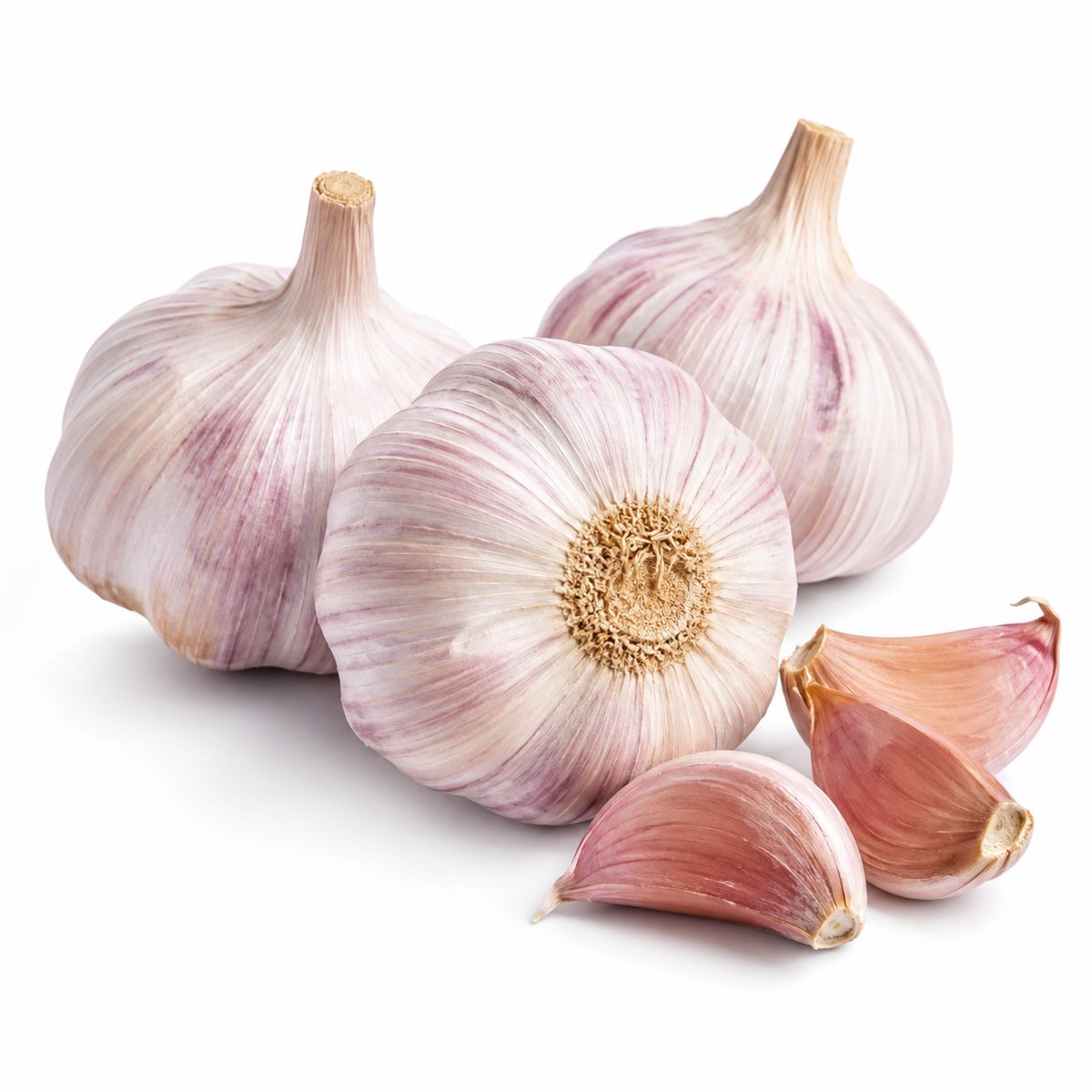
Types & Windows
| Type | Window | Character | Best For |
|---|---|---|---|
| Fresh green garlic | Feb–Mar | Uncured, mild, premium early | Gulf & EU specialty retail |
| Semi-dry | Mar–May | Partially cured, strong flavor | The volume core — wholesale everywhere |
| Dry (cured) | May onward | Fully cured, stores months | Retail nets, distant markets, Brazil lane |
| Red vs white types | Across season | Egyptian red — pungent, prized regionally; white — export standard | Spec per market preference |
Specs & Packing
| Parameter | Standard |
|---|---|
| Bulb sizes | 4–4.5 / 4.5–5 / 5–5.5 / 5.5+ cm graded |
| Condition | Clean, tight skins, trimmed roots/stems per spec |
| Packing | 10 kg cartons or mesh bags; 5 kg retail mesh; 200–500 g consumer nets (private label) |
| Transport | Fresh/semi-dry: reefer +0–2°C · dry: ventilated in cool months |
| Compliance | GLOBALG.A.P, phytosanitary, MRL per destination — full document set |
The China Question, Answered Honestly
China dominates world garlic — on price, nobody competes with its stored crop most of the year. Egypt’s play is the window: February–June, Egyptian fresh and semi-dry garlic is new harvest against Chinese bulbs that are 8+ months old — fresher flavor, better condition, and for European buyers a 10–12 day lane instead of 30–40. Buyers who position Egyptian garlic as the premium-fresh spring alternative — rather than a year-round China substitute — win with it every season. Book December–January for the February opening.
Where Egyptian Garlic Grows — and Why It Matters
The crop concentrates in the mid-Delta and Middle Egypt — Beni Suef and Minya above all, where heavier soils and winter chill build the dense, pungent bulbs the trade wants. Egyptian red-type garlic from these zones carries the strong flavor regional cuisines demand, while white export types head to markets that buy on appearance. Region matters commercially because harvest timing staggers a few weeks between zones, letting integrated exporters stretch the fresh window at both ends — and because soil-borne quality (clean, unstained wrappers) follows the field, not the packhouse. A supplier who names their sourcing districts unprompted is signaling real supply control.
Beyond the Bulb — The Processing Ladder
Fresh bulbs are only the base of the trade. Peeled garlic in vacuum packs feeds Gulf and European food service — labor-intensive work Egyptian costs make viable. Frozen garlic paste and IQF peeled cloves run through the same freezing plants as the vegetable range, shipping year-round at −18°C. Dried flakes, granules, and powder serve the spice trade in ambient containers. Each step up the ladder multiplies value per tonne and detaches the sale from the fresh calendar — and for buyers, a processed-garlic contract is the classic low-risk entry to a new supplier: no cold-chain drama, long shelf life, quality verifiable per lot. The frozen guide covers the freezing side’s standards.
Garlic Buyer’s Checklist
- Type and district named (red vs white, sourcing zone) — not just “Egyptian garlic”.
- Bulb size band (4–4.5 / 4.5–5 / 5–5.5 / 5.5+ cm) with tolerance percentages.
- Curing state honest: fresh, semi-dry, or fully cured — each ships and stores differently.
- Moisture and staining tolerances for cured lots; sprouting guarantee windows for storage.
- For peeled/processed: plant certifications, per-lot micro tests, packaging spec.
- The universal layer: 10-point verification before the first wire.
Reading the Price Against China
Chinese garlic sets the world’s reference price, so every Egyptian offer gets read against it — correctly only when the calendar is respected. Between February and June, compare fresh Egyptian bulbs against Chinese stored crop plus 30–40 days of freight and months of storage age: the Egyptian premium buys new-harvest quality that professional kitchens and quality retail pay for. From late summer, cured Egyptian garlic competes closer to head-on and the spread narrows. Anti-dumping regimes on Chinese garlic in several markets (the US notably) add a regulatory layer that periodically redirects demand toward alternative origins — weeks when Egyptian offers firm quickly. The disciplined buyer tracks both clocks: the freshness calendar and the trade-policy one.
Egyptian Garlic Export — FAQ
When is the Egyptian garlic season?
Fresh green garlic from February, semi-dry through March–May as the volume core, and cured dry garlic from May onward — landing exactly when Chinese stored crop is oldest.
How does Egyptian garlic compare with Chinese garlic?
China wins on year-round price; Egypt wins the spring window on freshness — new-harvest bulbs against 8+ month stored crop — plus a 10–12 day European lane versus 30–40 from Asia.
How is Egyptian garlic packed for export?
Graded bulbs (4–5.5+ cm) in 10 kg cartons or mesh, 5 kg retail mesh, and 200–500 g consumer nets with private label available — reefer at 0–2°C for fresh and semi-dry.
When should importers book Egyptian garlic?
December–January for the February fresh opening — the premium early window is small and commits first, with semi-dry volume following through spring.
Take the Spring Window
Nile Prime — the premium brand of PEI Trade — ships fresh, semi-dry, and cured programs, consolidating with onions in the same containers: WhatsApp +20 109 911 1918 · [email protected] · Egyptian garlic — specifications.
Sources: Tridge — Egypt garlic intelligence · PEI Trade.