
Egyptian olives export rests on a remarkable fact: Egypt is among the world’s largest table olive producers — most of its huge crop is eaten, not pressed, which built exactly the processing culture table-olive buyers need: green Picual and Manzanilla-style fruit, black oxidized olives, and the spiced styles the region loves, packed from bulk barrels to retail jars. This guide covers styles, specs, and the trade’s rhythm. Part of our vegetables hub.
Last updated: July 2026 · By the Nile Prime export team
Table of Contents
- Styles & What Buys Them
- Specs & Packing
- Why Buyers Add Egyptian Olives
- Egyptian Olives Export — FAQ
- Add Olives to Your Container
- From Grove to Jar
- Calibers & the Price Ladder
- Where Egyptian Olives Win
- Buyer’s Checklist
- Why the Cost Gap Holds
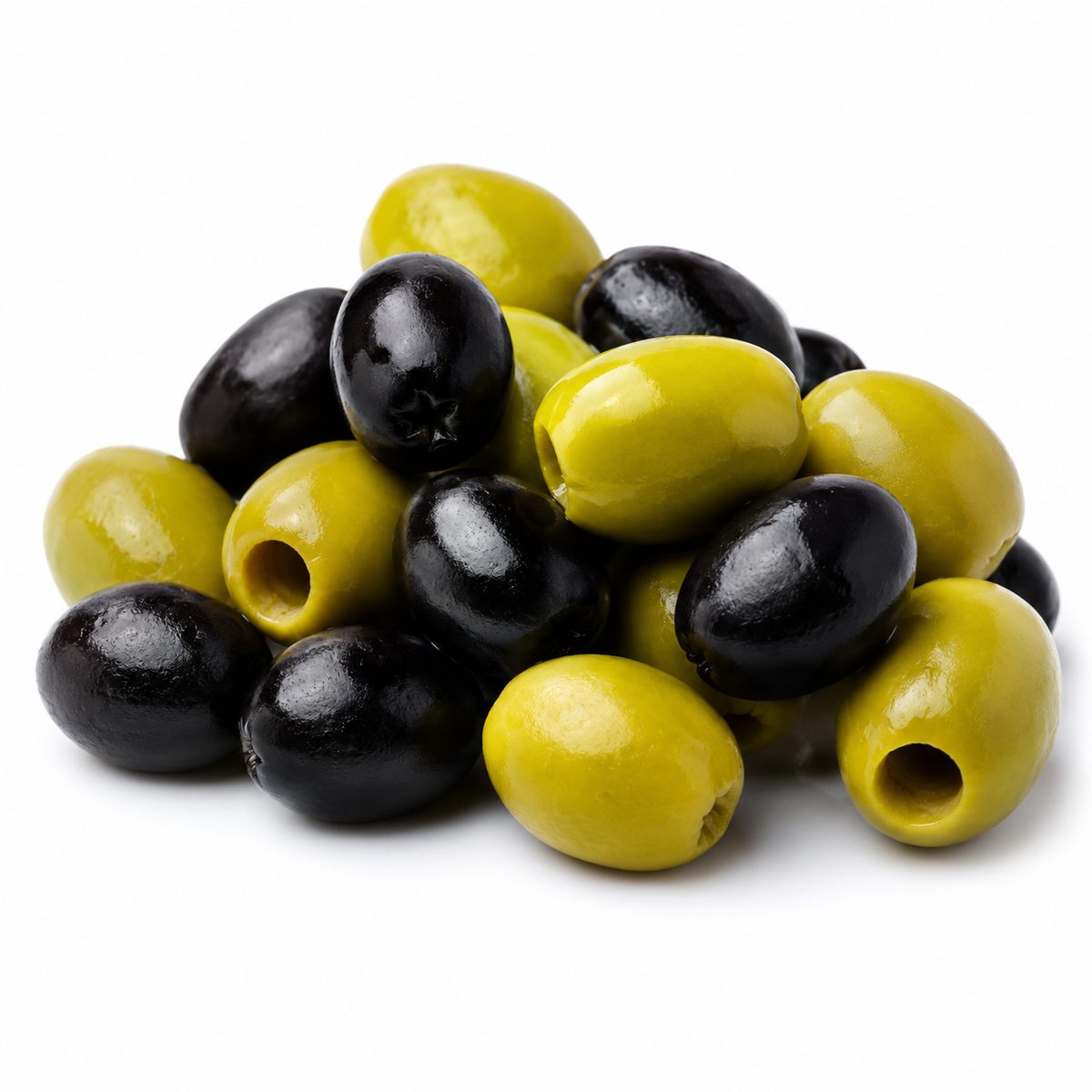
Styles & What Buys Them
| Style | Description | Main Demand |
|---|---|---|
| Green whole/pitted | Picual, Manzanilla-type, brine-cured | Gulf, EU retail & food service |
| Black oxidized | Uniform black, firm — pizza & salad industry | EU food industry, Gulf |
| Natural black/dark | Tree-ripened, traditional cure | Regional & diaspora premium |
| Stuffed & spiced | Pimento, lemon, chili, thyme styles | Retail jars — private label favorite |
| Sliced/wedged | Processed cuts for industry | Pizza chains, ready meals |
Specs & Packing
| Parameter | Standard |
|---|---|
| Calibers | Counted per kg (e.g. 200/220, 260/290) — stated per contract |
| Cure & brine | Lactic fermentation or oxidized; salt %, pH per spec |
| Bulk formats | Barrels/drums 150–220 kg; pails 10–20 kg |
| Retail formats | Jars & pouches 200 g–1 kg — private label standard |
| Shelf life | 12–24 months by style & format |
| Transport | Ambient dry containers — no cold chain — year-round shipping |
| Compliance | HACCP/ISO 22000 processing; lab analysis per lot |
Why Buyers Add Egyptian Olives
Three reasons the line grows: cost — Egyptian table olives undercut Spanish and Greek equivalents at matched caliber and style; logistics simplicity — ambient shipping, long shelf life, perfect consolidation cargo alongside pulses; and private label economics — retail jars packed at Egyptian costs transform the margin math on a category shelf. October–December is harvest and new-cure season; contract then for the year’s production, ship on your own schedule after.
From Grove to Jar — The Processing That Decides Quality
Table olives are a fermentation product, and the cure decides everything the buyer later tastes. Green Spanish-style fruit is lye-treated to strip bitterness, then lactic-fermented in brine for weeks — the classic crisp, tangy profile; the quality tells are firm flesh, clean brine, and pH discipline in the records. Black oxidized olives take the California route: cured, then oxygenated to uniform black and heat-sterilized — the firm, mild fruit the pizza industry consumes by the ton. Natural black olives skip the shortcuts: tree-ripened fruit slow-cured in brine or salt, delivering the deep, complex profile traditional markets pay for and impatient processors can’t fake. When auditing an Egyptian supplier, the fermentation room tells the truth: tank hygiene, brine records, pH and salt logs per batch. A packer who shows them unprompted is selling olives; one who can’t is selling risk.
Calibers & the Price Ladder
| Caliber (fruits/kg) | Trade Name | Typical Use |
|---|---|---|
| 140/160 – 160/180 | Extra large / Jumbo territory | Premium jars, deli counters — top of the ladder |
| 200/220 – 240/260 | The commercial core | Retail jars, food service |
| 280/300 – 320/350 | Small grades | Slicing lines, pizza industry — priced on yield |
| Broken/pitted grades | Industrial | Toppings, pastes, tapenade |
Caliber inflation is the trade’s oldest trick — a “200/220” barrel that cups out at 260 is margin stolen quietly. Professional buyers count-check per delivery and write caliber tolerances into the contract with price adjustments attached.
Where Egyptian Olives Win
Gulf retail and food service take the widest range — green, spiced, and natural styles for cultures that eat olives daily. European industry buys black oxidized and sliced grades where the Egyptian discount against Spanish fruit converts directly to margin on every pizza. Private-label retail across both regions is the growth engine: jars packed at Egyptian costs undercut Mediterranean-packed equivalents by enough to fund the whole category’s promotion budget. Russia and Eastern Europe buy value-grade greens and blacks in volume. The US remains Spanish-dominated at retail but open at industrial grades — a lane the biggest Egyptian packers are actively building.
Olive Buyer’s Quick Checklist
- Cure type and fermentation records (pH, salt %) per batch — in writing.
- Caliber count-verified with tolerance and price adjustment clauses.
- Defect percentages per grade (blemish, soft fruit, pit fragments for pitted).
- SO₂/preservative and additive declarations per destination law.
- HACCP/ISO 22000 processing scope covering the olive line specifically.
- For private label: artwork compliance review before material purchase — the private-label guide covers the full flow.
Why the Cost Gap Exists — and Holds
Egypt’s olive advantage is structural, not cyclical. The country planted olives massively across the desert reclamation programs — it now ranks among the top table-olive producers on earth — and unlike Spain or Greece, the crop was never built around oil: Egyptian varieties and harvest practices target the table trade specifically, so the fruit arrives at the fermentation tanks selected for it. Labor for hand-harvest costs a fraction of EU rates, brining infrastructure has scaled with the groves, and ambient logistics erase any freight penalty. Spanish packers increasingly buy Egyptian raw fruit to fill their own jars — the clearest possible signal of where the cost curve sits. For buyers, the practical conclusion: the discount at matched caliber and style is durable enough to build private-label programs on, provided the fermentation and food-safety audit passes first.
Egyptian Olives Export — FAQ
Does Egypt export table olives?
Yes — Egypt is among the world’s largest table olive producers, exporting green, black oxidized, natural, and spiced styles from bulk barrels to private-label retail jars.
How do Egyptian olives compare with Spanish or Greek?
At matched caliber and style, Egyptian table olives price meaningfully below Mediterranean-EU equivalents — the core reason food industry and private-label retail keep shifting volume to the origin.
How are Egyptian olives shipped?
Ambient dry containers — no cold chain — in barrels and drums for industry or jars and pouches for retail, with 12–24 months of shelf life enabling year-round scheduling.
When should buyers contract Egyptian olives?
October–December, during harvest and new-cure season — fixing the year’s calibers and styles at source, then drawing shipments on your own calendar.
Add Olives to Your Container
Nile Prime — the premium brand of PEI Trade — supplies bulk and private-label olive programs: WhatsApp +20 109 911 1918 · [email protected] · Egyptian olives — specifications.
Sources: Tridge — Egypt olive intelligence · PEI Trade.