
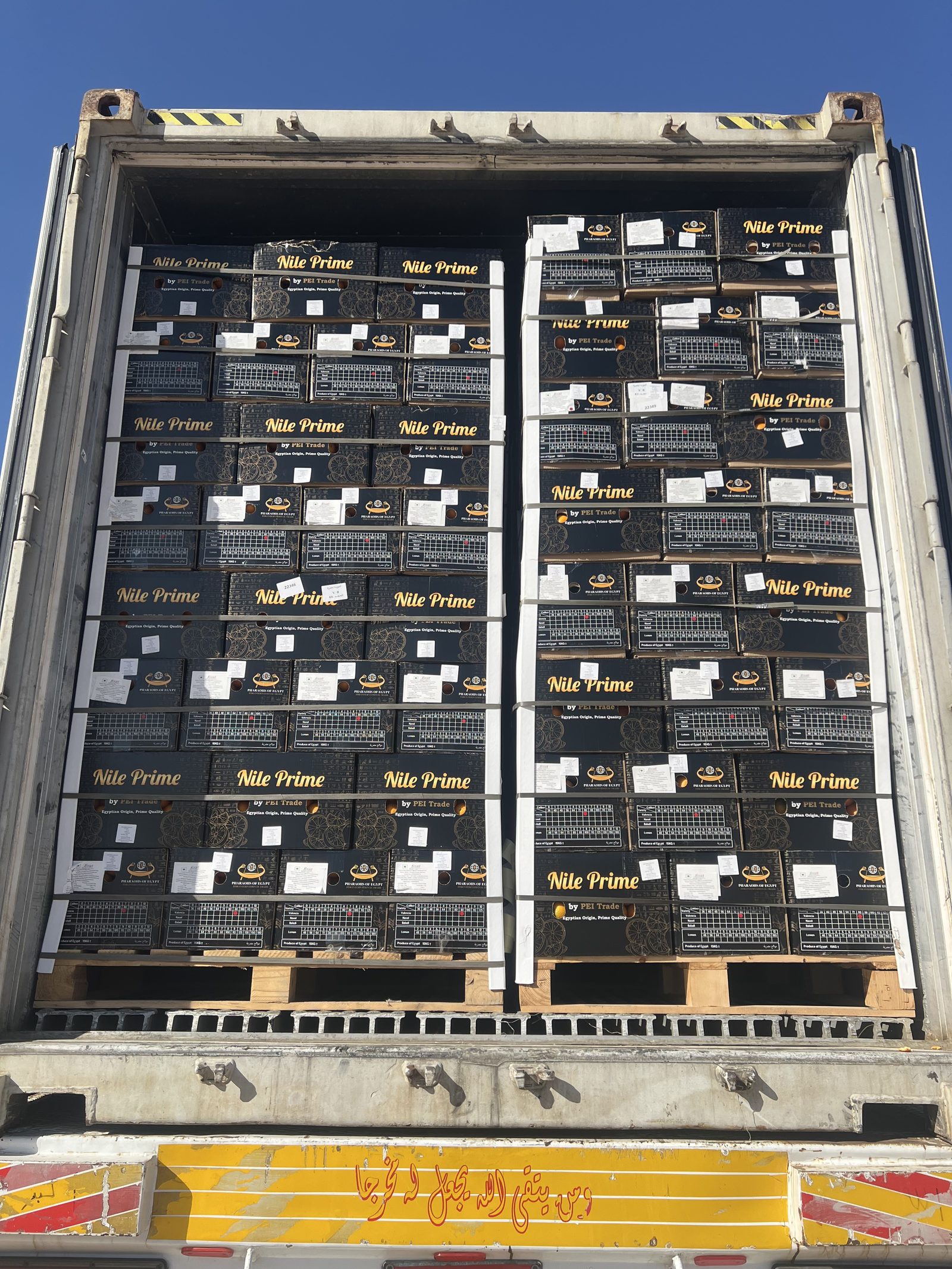
Russia is the single largest destination for Egyptian oranges, and it buys on a different specification from northern Europe. Exporters who send an EU-configured load to a Russian buyer usually get a complaint about the pack rather than the fruit. The differences are consistent enough to be worth setting out before the 2026/2027 season loads.
What the market buys
Navel first, from late October through January, then Valencia from January into April or May. Volume is concentrated on large and mid sizes. Counts in the 56 to 88 range move most easily, and the very small counts that suit a GCC net-bag programme are harder to place. Colour matters commercially, which is why degreened fruit finds a readier market here than it does with buyers who insist on natural colour break.
Grade expectations sit at Class I with a practical tolerance. Russian wholesale buyers will accept some rind marking that a UK retail programme would reject, but they are unforgiving on decay and on fruit that arrives soft. The combination means the fruit should be picked at proper maturity, handled carefully and cooled properly, rather than graded cosmetically. See our note on maturity standards on Egyptian citrus for the Brix and acid thresholds.
Packing
The dominant format is the 15 kg telescopic carton, loose packed, which is heavier than the 15 kg tray-packed or the 10 kg cartons common in EU retail programmes. Mesh bags of 2 kg or 3 kg inside a master carton appear on some retail programmes. Wooden cases have largely gone.
Carton board grade is worth attention because the cartons are stacked high and travel a long way. A board specification that survives a ten-day Mediterranean transit will not necessarily survive the longer Black Sea or Baltic lane plus onward road movement. Specify a double-wall or a heavier single-wall board and a vent area that supports cooling through a full pallet. Our reference on citrus carton and pallet configuration covers cartons per pallet and stow patterns.
Routing and transit
Two practical routes. The Black Sea lane runs Alexandria or Damietta to Novorossiysk, with transit typically in the region of eight to twelve days port to port depending on service and transhipment. This is the main gateway and feeds the southern and central Russian markets by road.
The Baltic lane runs to St Petersburg, longer at roughly two to three weeks, and serves the northwest. Onward movement into Belarus, Kazakhstan and the wider CIS is generally by road from a Russian port or by rail on longer hauls.
Set point for orange transit is normally 4 to 5 degrees Celsius with fresh air exchange open, which is standard citrus practice. The longer lane makes pre-cooling non-negotiable. Fruit loaded warm on a twelve-day sailing arrives with decay that would not have appeared on a five-day one. See pre-cooling Egyptian citrus and pomegranate.
Documents and compliance
A phytosanitary certificate issued by the Egyptian plant protection authority, a certificate of origin, commercial invoice, packing list and bill of lading. Russian import requirements include compliance with the applicable Eurasian Economic Union technical regulations and the relevant residue limits, which differ in places from EU limits. Do not assume that a consignment cleared for the EU is automatically compliant for the EAEU, and vice versa.
Labelling should carry the required information in Russian for retail-destined fruit. This is an item that is regularly missed on a first shipment.
Commercial practice
Both fixed price and consignment operate on this lane, and the choice matters more here than on a short lane because the transit is long enough for the market to move between loading and arrival. Payment practice varies widely by buyer, and currency movement is a real risk factor that should be addressed in the contract rather than discovered at settlement. Our comparison of fixed price and consignment on Egyptian citrus sets out what each model transfers.
Booking for 2026/2027
Navel volume for November and December is being committed now. Buyers who want specific counts and a fixed weekly cadence should confirm before October, because the peak weeks allocate on programme first.
For Egyptian citrus specifications, pack options and a quotation on the Russian and CIS lanes, message the Nile Prime desk on WhatsApp at +20 10 9911 1918.