
Citrus waxing replaces the natural wax that washing strips off the peel, and without it an Egyptian orange loses water and gloss within days of packing. The coating is a thin food-grade layer applied after washing and brushing, and it does three measurable things: it cuts moisture loss, it restores shine, and it carries any permitted postharvest fungicide evenly across the fruit. What it does not do is improve fruit that went into the line in poor condition. Buyers should treat the coating as a specification item with a named product, not as a detail left to the packhouse.
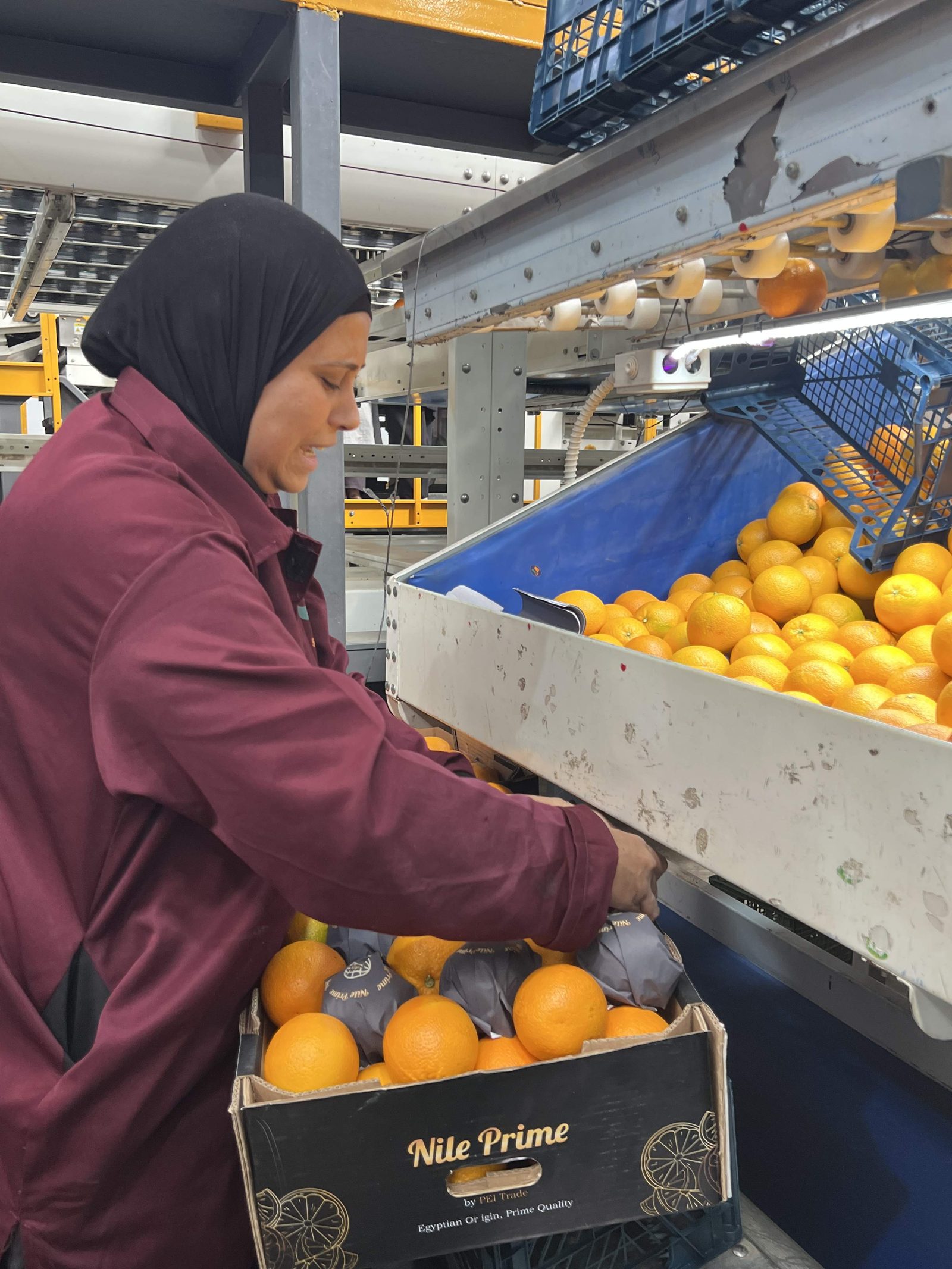
The line sequence: wash, brush, coat, dry
Fruit enters a water bath or spray wash, moves over a brush bed that removes soil and loose peel debris, then passes an applicator that lays down the coating either as a spray or by a foam roller. A drying tunnel at 40 to 50 C sets the coating in roughly one to two minutes. The whole sequence takes under five minutes. Fruit that skips the drying tunnel arrives tacky and picks up carton fibre, which is one of the more common cosmetic complaints on Egyptian citrus and is a line fault, not a fruit fault.
Coating types and what each one is for
| Coating | Base | Main effect | Restriction to check |
|---|---|---|---|
| Carnauba | Plant wax, water emulsion | High gloss, moderate moisture barrier | Widely accepted, check organic status |
| Shellac | Resin, insect derived | Highest gloss, strong moisture barrier | Not vegan, restricted in some retail specs |
| Wood rosin blends | Resin | Gloss, gas barrier | Check permitted status by destination |
| Uncoated, washed only | None | No added gloss, faster weight loss | Usual route for organic programmes |
Coating and weight loss in transit
Uncoated citrus loses noticeably more weight over a two to three week transit than coated fruit at the same temperature and humidity. On a long lane this shows up twice: as shrivel at the stem end and as a shortfall between the invoiced net weight and the weight on the receiving scale. Buyers running organic or uncoated programmes should build a shrink allowance into the contract rather than raise it as a claim on arrival. Where a coating is used, it does not remove the need for cold chain discipline, and carrying temperature still does most of the work.
Declaration and labelling
Coated citrus generally has to be declared. In the EU and UK this means a statement on the carton or the accompanying documentation identifying that the fruit is treated and naming the substances used. Gulf markets vary in how strictly this is enforced at the border but retail buyers increasingly ask for the same declaration. The practical step is to get the coating supplier data sheet from the packhouse before the first container and check it against the destination positive list, not after a consignment is already on the water.
Four lines to put in the specification
- The coating type by name, or an explicit no-coating instruction
- Any postharvest fungicide carried in the coating, with the maximum residue level you accept
- A requirement for the coating supplier data sheet with the first shipment
- The declaration wording to appear on the carton, in the destination language where required
Citrus waxing sits alongside two other line decisions that change how the fruit presents on arrival. Degreening affects peel colour and shelf life, and sizing decides the carton format. Our Egyptian citrus export guide covers the season structure, and Egyptian orange sizes and packing sets out counts, cartons and pallet configurations.
Nile Prime is the exporter, not a neutral reviewer. Coating practice varies between Egyptian packhouses and the details above describe standard commercial practice rather than a single universal protocol.
Set the coating clause before the season opens
Tell us the destination market and whether you need coated, uncoated or organic fruit, and we will confirm what the line can run and send the supporting documentation with the offer. WhatsApp +20 10 9911 1918.