
The Egyptian mango season is now in its final fortnight of meaningful volume. Keitt is the only variety still packing in quantity, the size curve has settled into the small end of the range, and packhouse lines that ran mango six days a week through July are being stripped and set up for citrus and pomegranate. Anyone still holding an unconfirmed September mango position should treat this week as the decision point rather than assume the fruit will be there in three weeks.
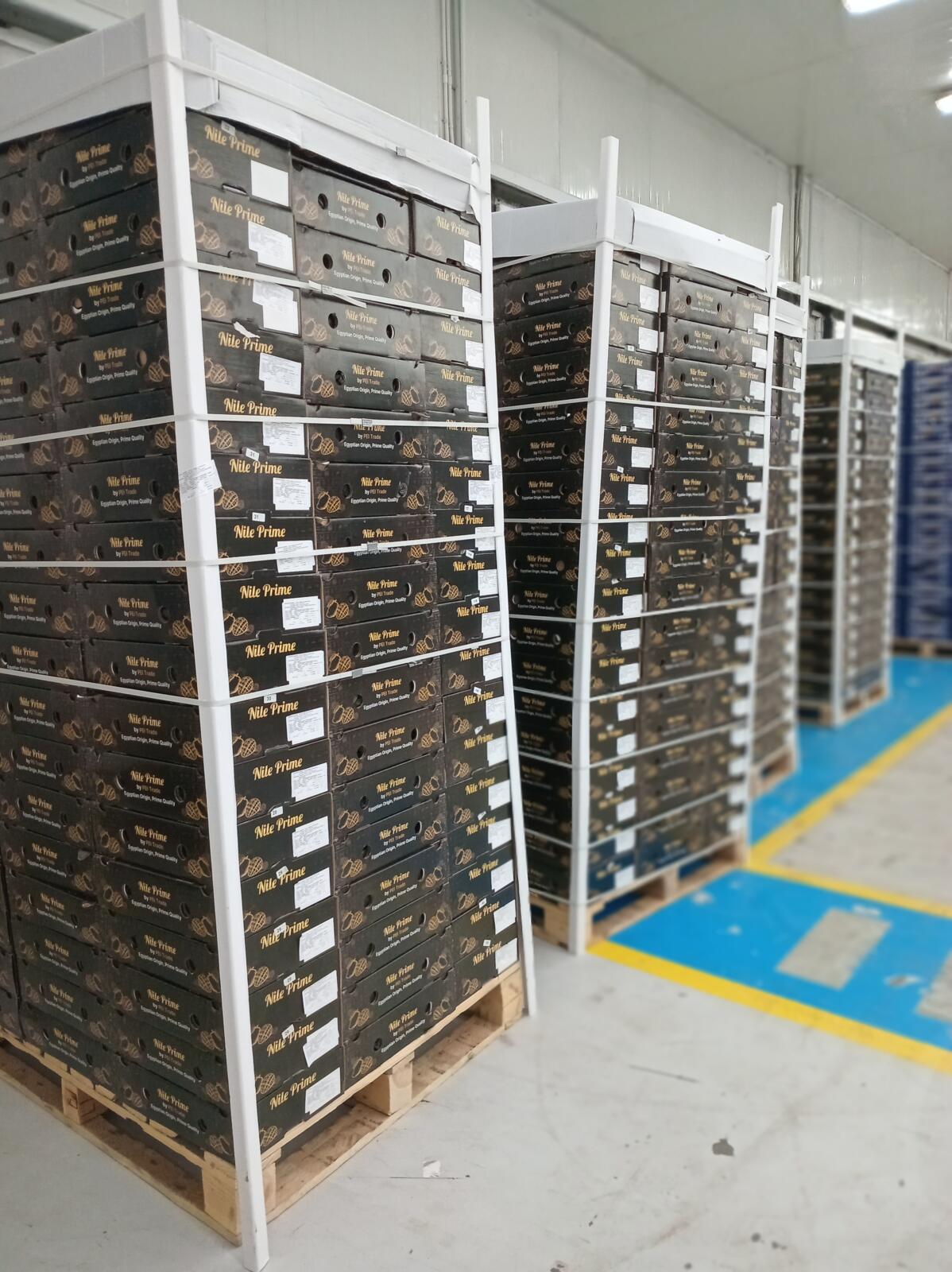
Keitt sizing: counts 8 and 9 now the bulk of the pack
The Keitt size curve has flattened further since the week of 26 August. Counts 8 and 9 in the 4 kg carton, roughly 450 to 550 g per fruit, are where most of the pack now falls. Counts 5 and 6 are being made up from selected orchards rather than run off the line, and a buyer asking for a full container of large counts should expect either a premium or a partial fill. This is normal for a Keitt tail and is a function of fruit load and orchard age rather than a quality problem. The mechanics are covered in our note on why the Egyptian mango size curve moves between seasons.
Quality on the tail: firmer fruit, more lenticel marking
Late Keitt arrives firmer and holds better than mid-season fruit, which is the reason it suits the longer lanes. The trade-off is cosmetic. Lenticel spotting and light scarring are more visible on tail fruit because the skin has been on the tree through the hottest weeks of the season. Class I tolerances still apply, but a buyer packing to a retail specification should look at the grade standard rather than assume mid-season appearance. Our grading reference sets out how each defect is assessed in skin defects on Egyptian mango.
September positions and the last sailings
Loading continues into the first half of September for Gulf and Mediterranean lanes, where port-to-port transit is under ten days. For destinations at fourteen days or more, the practical cut-off is the first week of September, because fruit picked at the very end of the tail does not carry a long transit as reliably. Cold store stock will cover some September demand, but stock fruit has already spent days on the clock and should be bought with the arrival date, not the loading date, in mind.
Freight and equipment
Reefer equipment is easier to source this week than it was in July, because mango volume out of Alexandria and Damietta is falling faster than citrus volume is arriving. That window is short. From the second half of September the citrus programme starts competing for the same plugs and the same sailings, and reefer bookings tighten again. Anyone with September or October volume across both crops should be booking now rather than waiting for the citrus season to open.
What the packhouse changeover actually means
Changeover is not a single day. Sizing cups, cushioning, carton stock and cold room set points all change between mango and citrus, and a line running both in the same week runs slower on each. The practical effect for a buyer is that lead time from confirmation to gate-in stretches by two to three days through the transition. Confirmations placed this week are still comfortably inside the window; confirmations placed in mid-September will sit behind the first citrus programmes.
Nile Prime is the exporter, not a neutral market reporter. The observations above come from our own packing and booking this week and are not a substitute for a quotation.
Close your September position
Send the count range, carton format, discharge port and the week you want to arrive, and we will confirm what is packable against the current Keitt tail and what should move to the citrus programme instead. WhatsApp +20 10 9911 1918.