
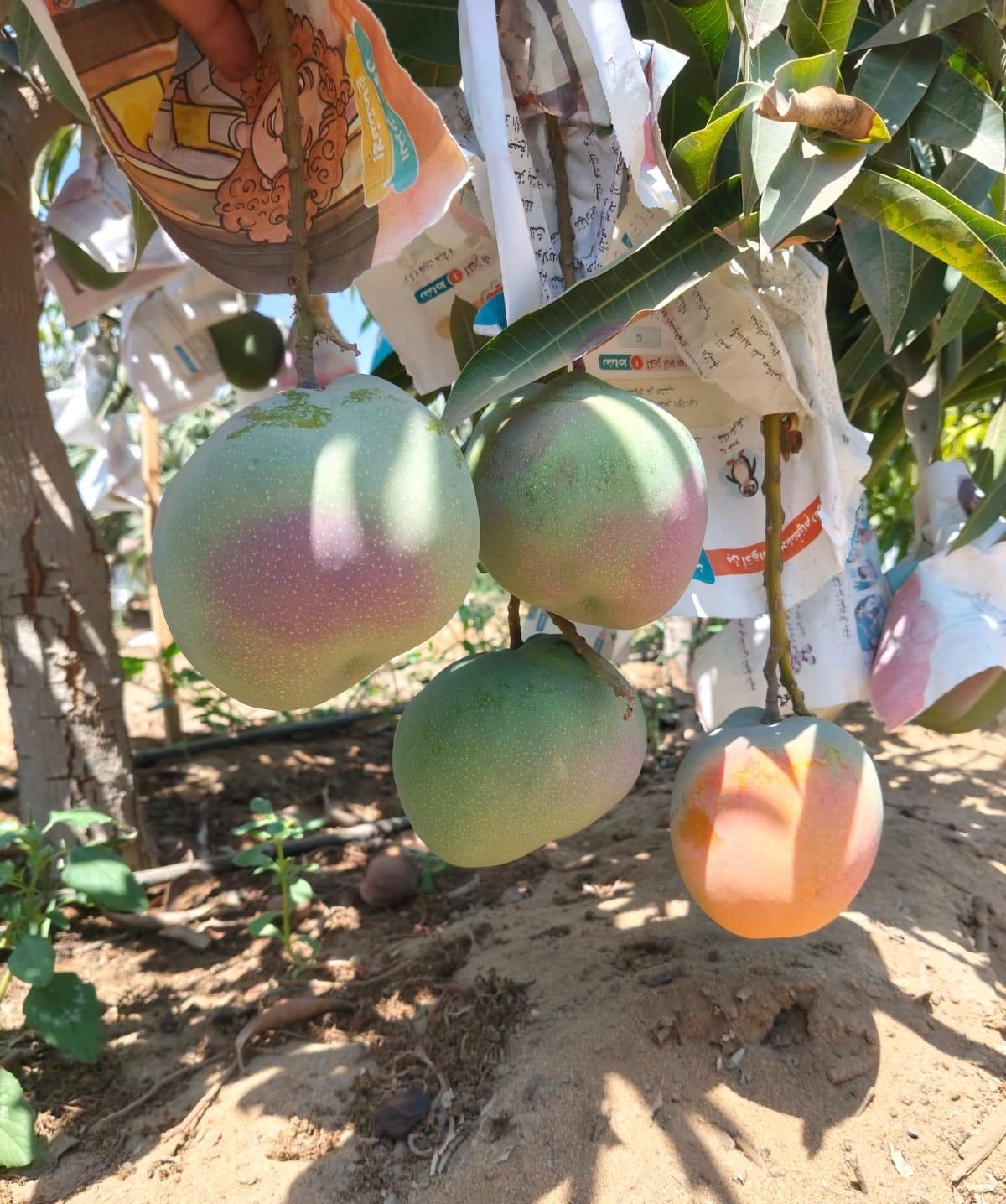
Mid August is the point in the Egyptian mango season where the planning question changes. Until now the conversation has been about securing volume during peak. From here it becomes about how long the origin can hold, what the fruit looks like on the tail of the crop, and when to line up the next supply source so shelves are not left empty in October. Buyers who leave that decision until the last container has shipped tend to pay for it twice, once on the mango they cannot get and once on the replacement they buy in a hurry.
Where the season stands
Kent has largely finished. Keitt is the season, and it will carry the programme through to the close. Harvest continues across Ismailia, Sharqia and the reclaimed areas, with picking gradually moving to the later blocks and the higher-elevation plantings that mature last. Volume holds reasonably well through the second half of August, begins tapering in the second week of September, and finishes in most years during the first half of October. Fruit remains available in cold store for a period after that, though the commercial character of it is different.
For the current week-by-week position, see our market update for the week of 8 August 2026.
What tail-of-season fruit looks like
Late Keitt is not simply the same fruit arriving later. Three things shift. Sizing tends to move upward on the last picks, with a heavier proportion of counts 6 to 8 and fewer of the small counts that retail programmes often want. Dry matter and brix generally rise, which is good for eating quality and slightly reduces the margin for error on maturity at harvest. And the fruit is more sensitive to handling, because it has spent longer on the tree in high ambient temperatures and comes into the packhouse with more field heat to remove.
The practical consequence for a buyer is that late-season loads reward tighter pre-cooling and shorter dwell time between harvest and loading. If you are buying to a fixed count, confirm availability against the shifting size curve rather than assuming the peak-season distribution will still apply. The sizing and carton count reference sets out how each count maps to fruit weight.
Booking positions for September and October
September sailings should be fixed now. Two things tighten at once in the last third of the season. Fruit becomes selective, so allocation goes first to programme buyers with a contracted schedule rather than to spot enquiries. And reefer equipment out of Alexandria and Damietta comes under pressure from the early citrus build, which starts positioning containers for the winter season while mango is still moving. Booking two to three weeks ahead of the intended sailing is realistic for September, and four weeks is safer for anything intended to load in the first half of October.
Where volume flexibility matters more than a fixed schedule, the trade-offs are covered in our note on contracting a season programme against buying spot containers.
Planning the handover
The Egyptian window closes as Brazilian, West African and later Peruvian supply build for the northern hemisphere autumn and winter. The gap between the two, when it opens, usually falls in late October and early November. Buyers who run continuous mango programmes handle it in one of three ways. Some extend Egyptian supply with controlled-atmosphere or cold-stored fruit for a few weeks, accepting a firmness and shelf-life trade-off. Some shift to another origin a fortnight before the Egyptian tail runs out, overlapping deliberately so the transition is not abrupt. Some accept a short gap and use the period for a promotion on another line.
Whichever route you take, decide it in August rather than October. Where the Egyptian window sits relative to competing origins is mapped in our global mango supply calendar.
What to confirm now
Fix your remaining volume for the season, agree the count distribution you can accept as sizing moves up, confirm sailing dates and the carrier for September, and put the last shipment date in writing with the exporter. Then set the date at which your next origin starts. Those five decisions are what separates an orderly close to the season from a scramble.
To confirm late-season Keitt availability, fix September and October positions, or receive a quotation on remaining volume, contact the Nile Prime export team on WhatsApp at +20 10 9911 1918.