
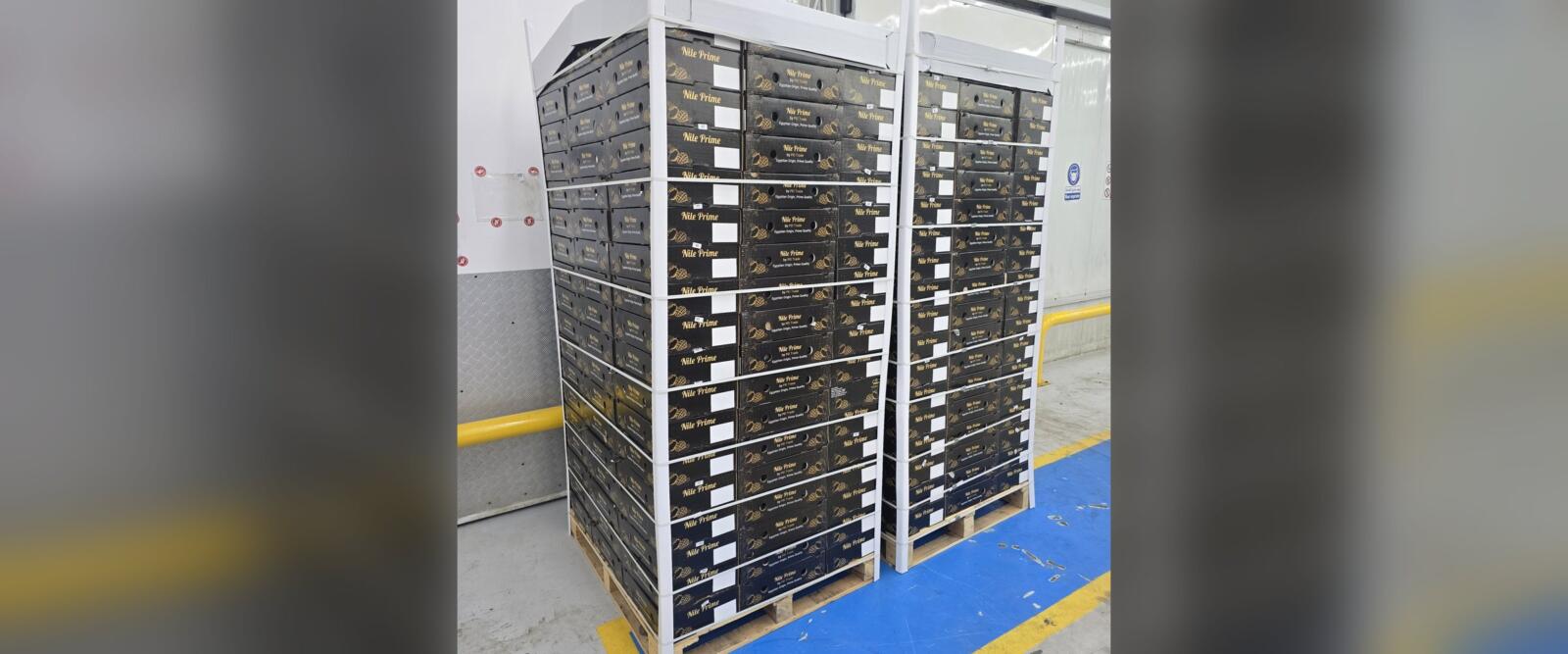
Five days on from our last market note, the picture in the packhouses has shifted in a few ways worth reporting. Keitt is now the crop. Kent has effectively finished on the export grade, and the remaining Naomi is going to local trade rather than into containers. What follows is what our loading desk is seeing this week rather than a forecast.
Volume and variety position
Keitt intake from Ismailia and Sharqia is running at full packhouse capacity and is expected to hold through the last week of August before easing gradually into September. Fruit arriving from the older Ismailia blocks is showing good dry matter and clean skin. The reclaimed desert blocks are two to three days behind on maturity, which is normal for the age of those plantings and does not affect the specification. Kent is finished for export purposes. Buyers still holding an open Kent line should convert it to Keitt now rather than wait, because there is no realistic prospect of Kent volume returning this season.
The sizing curve this week
The curve has moved toward larger fruit, as it usually does at peak. Counts of 8 and 9 per 4 kg carton are the easiest to fill at present. Counts of 10 and 12 are available in good volume. Count 14 and smaller has tightened noticeably over the past week and now carries a premium in some cases, which reverses the usual assumption that smaller fruit is cheaper. Gulf wholesale buyers asking for count 6 and 7 can be served, but those sizes come out of a narrower slice of the grade and should be booked with a few days of extra notice. Our note on matching mango count to your channel sets out how these counts map to retail, wholesale and food service.
Quality notes from the line
Brix on Keitt is testing in the 12 to 15 degree range at harvest maturity, with dry matter above the 15 percent threshold we hold as a minimum. Jelly seed incidence is low this season. The main quality risk in August remains latent anthracnose expressing after arrival rather than anything visible at loading, which is why hot water treatment at 52 degrees Celsius for five minutes stays part of the standard protocol on longer sea legs. Buyers who have had arrival issues in past seasons should read our postharvest disease control notes before finalising a specification.
Freight and booking positions
Reefer space out of Alexandria and Damietta is tight for the next two sailings, which is typical for the first half of August when mango, grape and pomegranate all compete for equipment. Sokhna has more availability for Gulf and Asian routings. Practical lead time from confirmed order to gate-in is currently seven to ten days, against the five to seven days quoted in July. Transit remains five to seven days to Jeddah and Jebel Ali, six to eight to the Western Mediterranean and ten to twelve to Northern Europe. Buyers with fixed promotion dates in early September should be booking this week rather than next.
What to do with September
September and October are late-season Keitt. Fruit holds well, sizing tends to settle back toward counts 9 to 12, and pricing usually softens from the peak. Programmes for that window are being taken now and are the sensible place for buyers who missed the August allocation.
For current counts, availability against a specific week, or a quotation on FOB Alexandria, CFR or CIF terms under Incoterms 2020, contact the Nile Prime export desk on WhatsApp at +20 10 9911 1918.