
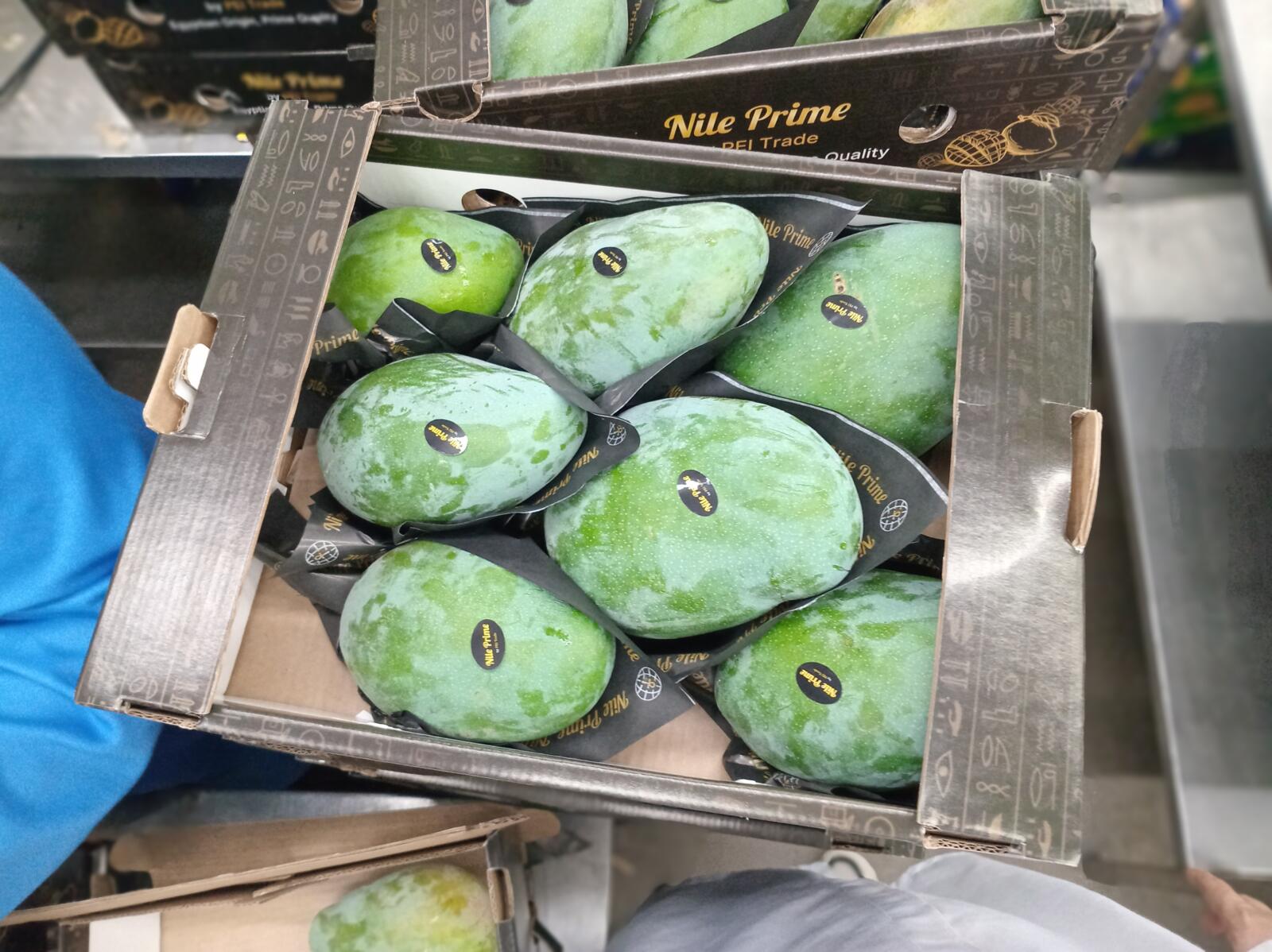
Buyers who have never shipped from Egypt often ask the same question in different words: what actually happens between sending an enquiry and taking delivery. Below is the sequence, with the decisions that sit at each stage and the lead times we work to during the 2026 season.
Stage one: the enquiry
Send five things and you will get a firm answer the same day. Variety, size band or count per carton, volume per shipment and total programme, destination port, and the Incoterm you want to be quoted on. If you are unsure of variety, say what your market wants. Keitt is firm, ships well and dominates the July to October window. Kent has a richer eating quality and a shorter window. Naomi sits in the premium retail slot. Specifications for each are on the site, starting with Egyptian Keitt mango specs.
Stage two: offer and specification sheet
We reply with a price per carton or per kilo, the pack format, pallet configuration, container capacity, shipping window and validity period of the offer. Prices in mango season move week to week with harvest volume, so an offer is normally valid for three to seven days. Alongside the price you get a specification sheet listing size ranges, maturity at harvest, brix range, permitted defect tolerance, carton dimensions and pallet count.
Read the tolerance line carefully. It is the number that governs any future discussion about arrival condition, and it is the one buyers most often skim.
Stage three: samples, if you want them
For a first order we can courier a sample carton. Understand what a sample proves and what it does not. It shows you variety, size, packing and cosmetic quality. It cannot show you how the fruit performs after a 16 to 21 day sea voyage, because a courier sample travels in three days at a different temperature. Judge the packing and the grading from a sample. Judge the shipping performance from a trial container.
Stage four: proforma invoice and payment
Once terms are agreed we issue a proforma invoice covering goods description, quantity, unit and total price, Incoterm and named place, port of loading and discharge, shipping window and payment terms. Standard terms for a first shipment are a deposit by telegraphic transfer against the proforma with the balance against scanned documents, or a confirmed letter of credit at sight. Established buyers move to more open terms over time. Payment terms are negotiable and are a normal part of the discussion, not a fixed rule.
Stage five: production and loading
From confirmed order to loading is typically 7 to 12 days in peak season, longer if you need private-label cartons or a specific liner. Harvest is scheduled against your loading date so fruit is picked at the right maturity for the transit time. If you have appointed a third-party inspector, they attend at stuffing and issue their report before the container is sealed.
Stage six: documents
We issue drafts for your approval before finalising. The set is commercial invoice, packing list, bill of lading, certificate of origin and phytosanitary certificate, plus any market-specific paper your customs authority requires. Give us the exact consignee and notify details in writing at order confirmation. Correcting a bill of lading after departure is possible, chargeable and slow.
Stage seven: transit and arrival
Transit runs roughly 3 to 6 days to Jeddah and the northern Gulf, 8 to 14 days to Northern Europe, and longer to South and East Asia depending on routing. We send the container number and the sailing schedule at departure so you can track. On arrival, download the reefer log, inspect before ripening, and record a defect count if anything looks off. Handling and ripening from that point is covered in our guide to ripening and shelf-life management for Egyptian mango.
A realistic first programme
One 40 ft reefer, one variety, one or two size bands. Resist the urge to split a first container across three varieties and five sizes. A clean single-spec load teaches you more about the supplier and about how the fruit behaves in your market than a complicated one, and it makes any arrival assessment straightforward.
To start an enquiry or get current season pricing, message Nile Prime on WhatsApp at +20 10 9911 1918.