
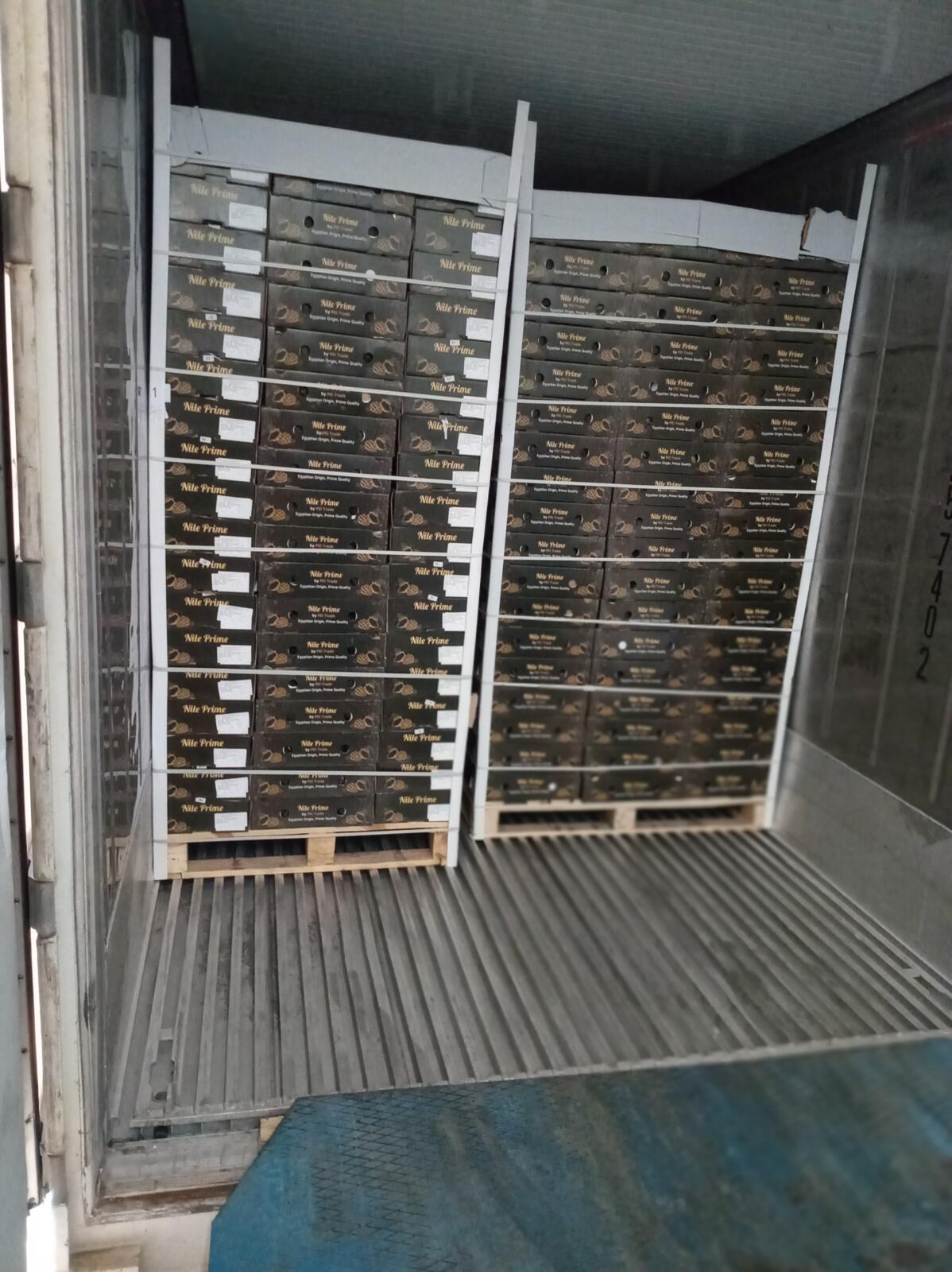
Getting Egyptian mango onto a shelf in good condition is a logistics problem as much as a growing one. The fruit is picked at a maturity that can travel, but the voyage still has to be managed with the right port, the right reefer settings, and clear Incoterms so no cost falls through the cracks. This guide covers how Nile Prime ships mango by sea in the 2026 season and what buyers should confirm before booking.
Choosing the loading port
Nile Prime loads from three ports, and the right one depends on your destination and the sailing schedule. Alexandria and Damietta on the Mediterranean coast are the natural choice for European and Mediterranean buyers, offering frequent sailings and short first-leg transit. Sokhna on the Red Sea coast suits Gulf, East African, and Asian destinations, since it avoids the Suez routing for buyers heading south and east. We book the port that gives the shortest reliable transit for your lane rather than defaulting to one gateway.
Transit times to plan around
As a rough planning guide, Gulf ports are reachable in about 5 to 8 days, Northern European ports in roughly 10 to 14 days, and South and Southeast Asian ports in 18 to 25 days depending on the service and transshipment. These are indicative, and we confirm the actual sailing time on the specific service at booking. Longer lanes are entirely workable with Keitt because the variety holds firmness across a well-set voyage.
Reefer settings and pre-cooling
Fruit is pre-cooled before loading so the container holds temperature rather than fighting field heat. For Keitt and Kent, a carrying temperature in the 10 to 13 degree Celsius range is typical, with the precise set point matched to variety, maturity, and transit length. Vent and airflow settings are configured to keep cold air moving evenly through the pallets. Loading warm fruit or setting the reefer too cold both cause arrival problems, so these values are agreed per shipment rather than assumed.
Incoterms 2020 and your landed cost
Every Nile Prime quote is written under Incoterms 2020, so the split of cost and risk is clear from the outset. FOB puts the buyer in control of the ocean leg and insurance, which experienced importers with their own freight rates often prefer. CFR and CIF hand the sea freight, and under CIF the marine insurance, to us, which suits buyers who want a single delivered figure to the destination port. The right choice depends on your freight buying power, not on a one-size rule.
Book the lane
For a variety and packing refresher before you book, see our Egyptian mango import guide for the UK and the Asia mango playbook for longer transit planning. To confirm a port, sailing, and Incoterm for your 2026 mango program, message the Nile Prime team on WhatsApp at +20 10 9911 1918.