
Egyptian oranges in India feed one of the world’s largest fruit-hungry markets at exactly the moment domestic supply can’t: India’s own citrus (Nagpur mandarins, local sweet oranges) peaks early, leaving the late-winter and spring shelf open for imported fruit — and Egyptian Valencia arrives in that window at prices no other serious origin matches. This guide covers the trade’s structure, specs, ports, and timing for Indian and subcontinent buyers. Part of the complete citrus guide.
Last updated: July 2026 · By the Nile Prime export team
Table of Contents
- Why the Lane Grows Every Year
- What the Market Buys
- Practical Notes for the Lane
- Egyptian Oranges in India — FAQ
- Open the India Lane
- The Indian Distribution Machine
- The Duty Wall
- Spec Notes for the Heat
Why the Lane Grows Every Year
- The window fits: Egyptian Feb–May Valencia lands as Indian domestic citrus tapers — complementary, not competitive.
- Price is the product: the Indian wholesale trade buys on landed cost per carton, and Egyptian Valencia sets the floor among imports.
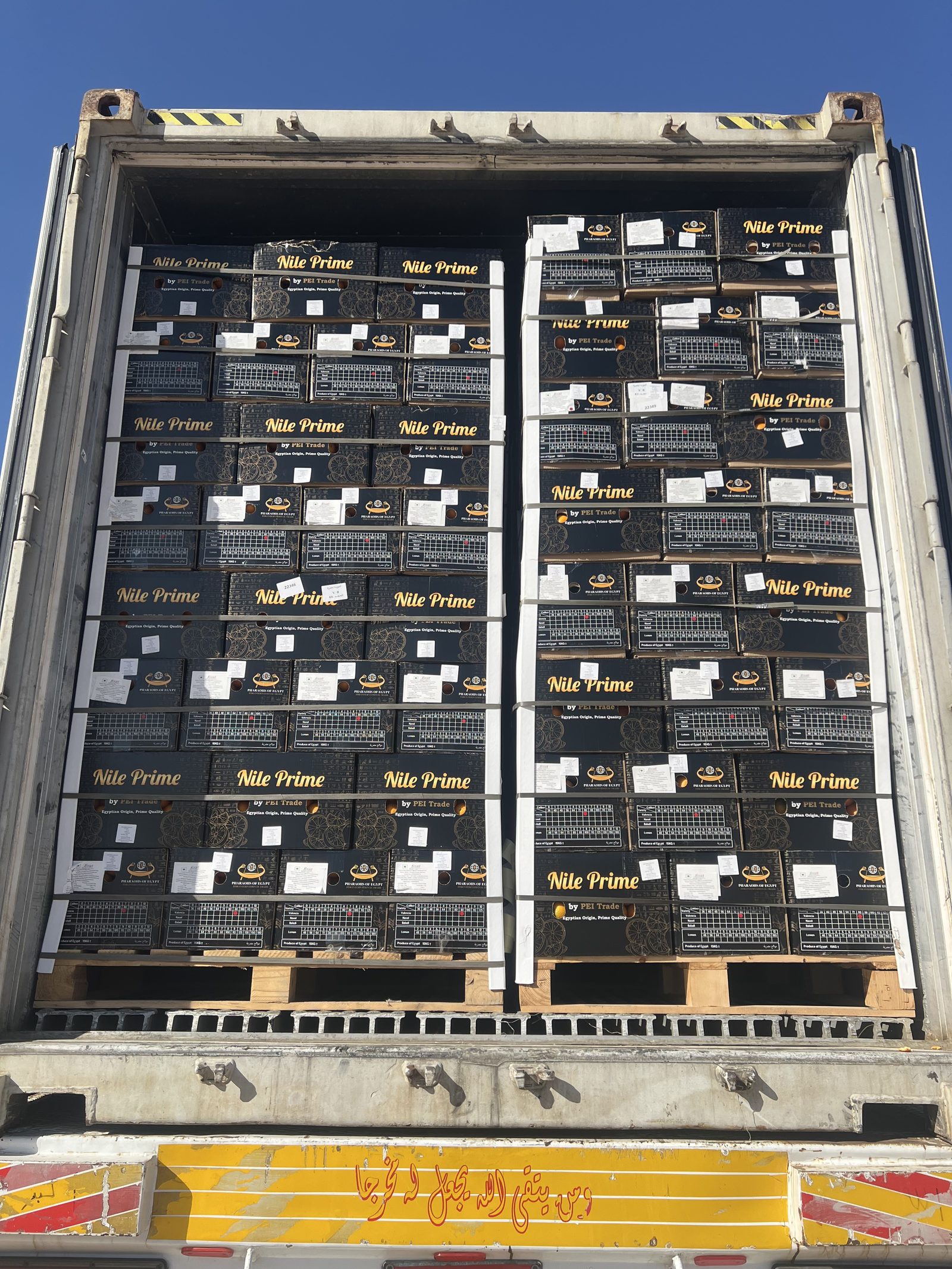
- Reachable transit: 10–16 days to Nhava Sheva or Mundra via the Red Sea — shorter than South Africa or South America.
- Familiar trade rails: Egyptian exporters already serve the subcontinent’s demand patterns through the Gulf’s re-export hubs — direct trade cuts the middle step.
What the Market Buys
| Segment | Product & Counts | Notes |
|---|---|---|
| Wholesale markets (the volume) | Valencia 72–113 | Firm fruit, strong color; 15 kg cartons standard |
| Modern retail & e-grocery | Valencia/Navel 56–80 | Uniformity and shelf life for chain distribution |
| Premium metros | Large Navel 40–56 | Growing gift-and-display niche in Mumbai, Delhi, Bangalore |
Practical Notes for the Lane
- Ports: Nhava Sheva (JNPT) and Mundra dominate; Chennai and Kolkata serve the south and east. Transit 10–16 days by routing.
- Documents: standard Egyptian set plus Indian plant-quarantine import permit arranged buyer-side, and FSSAI-aligned labeling — details in the documents checklist.
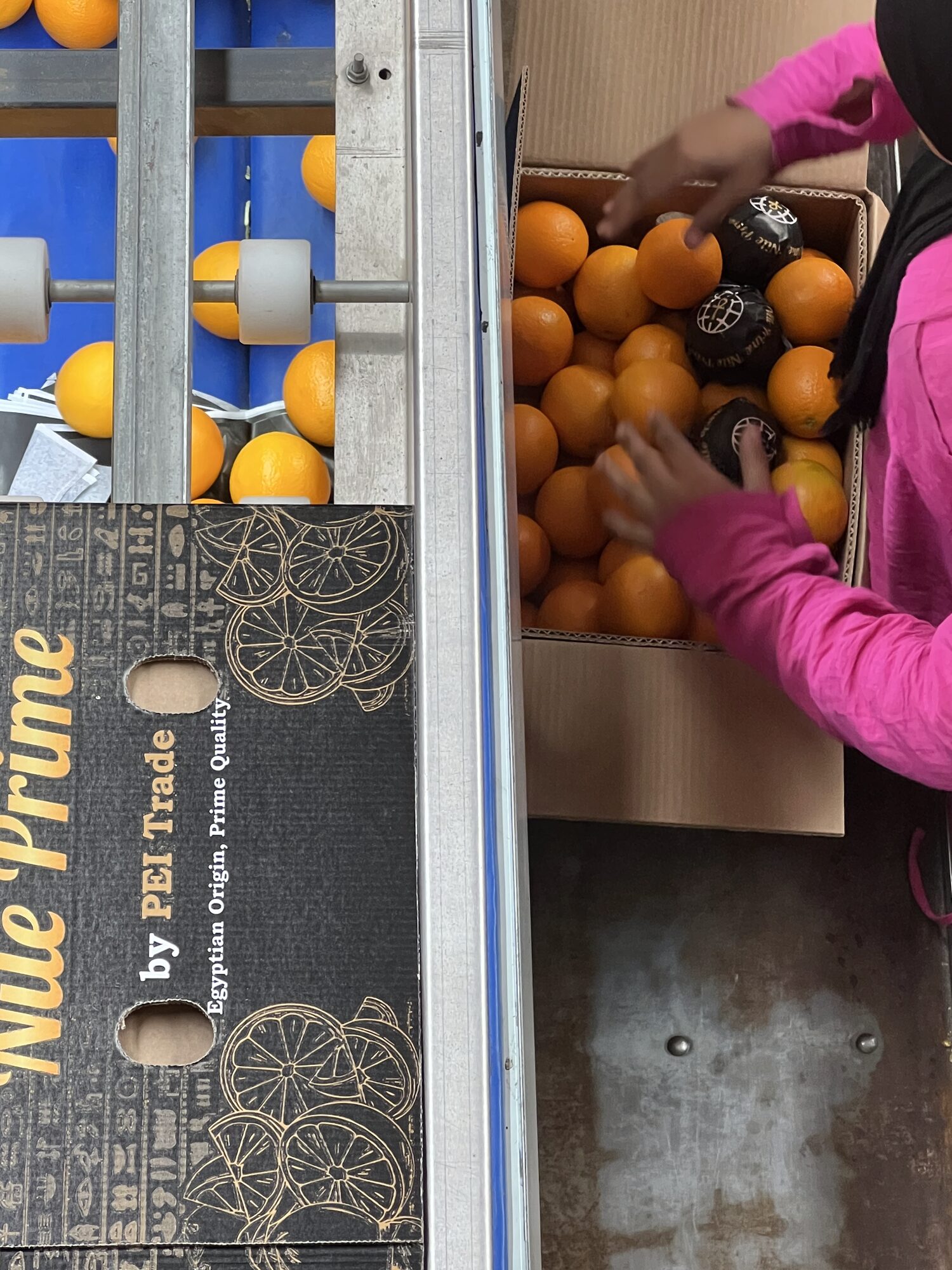
- Fruit selection: hot-market distribution punishes soft fruit — specify firm, thick-skinned late Valencia and reefer discipline to the port of discharge (reefer guide).
- Season economics: the March–May Egyptian peak aligns with Indian summer demand for juice — the trade’s sweet spot.
Inside the Indian Distribution Machine
Egyptian oranges entering India flow through a distribution system unlike any other market on this site. The APMC wholesale mandis — Vashi serving Mumbai, Azadpur in Delhi (Asia’s largest fruit market), and their peers in every metro — absorb the containers and redistribute through commission agents to a million retail points, from supermarket chains to street carts. Pricing is auction-fast and brutally transparent: a container’s fate is decided in days, and quality variance between cartons gets priced instantly. Modern trade (Reliance, BigBasket, DMart and peers) grows every year and contracts more formally, but the mandi still sets the reference. For exporters and their import partners this means one operational truth: uniformity per carton matters more than peak quality per fruit — the auction punishes inconsistency harder than it rewards excellence.
The Duty Wall — and the Math That Clears It
India protects domestic fruit with meaningful import duties on oranges, and every viable program prices through that wall. The math works because of what sits behind it: Egyptian Valencia’s FOB position is low enough that even duty-loaded landed costs undercut competing imported citrus in the window, and the February–May arrival slot faces no domestic orange of comparable type — Nagpur mandarins are a different product for a different use. Add the freight edge (10–16 days versus 25+ from southern-hemisphere rivals) and the equation closes. Buyers should model landed cost per carton duty-inclusive from the first quote — the landed-cost guide shows the full stack — and remember that duty structures shift with trade policy: verifying the current rate before contracting is not optional on this lane.
Spec Notes for the Heat
- Firmness above all: post-clearance distribution often runs on ambient trucks in serious heat — only hard, thick-skinned late Valencia survives the last mile with margin intact.
- Wax and shine matter commercially: Indian wholesale buys with its eyes at auction speed; well-finished fruit earns real premiums.
- Counts 72–113 dominate — the sweet spot between street-vendor economics and family-pack retail.
- Ramadan and festival calendars apply here too: Ramzan demand in Muslim-majority trading cities and the October–November festive season (where late-stored fruit occasionally plays) both lift pull-through.
Egyptian Oranges in India — FAQ
Does India import oranges from Egypt?
Yes — Egyptian Valencia and Navel arrive February–May, filling the window after domestic Indian citrus tapers, with Egyptian fruit setting the landed-cost floor among imported oranges.
How long does shipping take from Egypt to India?
10–16 days to Nhava Sheva or Mundra via Red Sea routings — shorter than any southern-hemisphere alternative, and comfortable for cured Valencia at +5–7°C.
What documents does India require for Egyptian oranges?
The standard Egyptian export set (phytosanitary, CoO, invoice, packing list, B/L) plus the Indian plant-quarantine import permit arranged by the importer and FSSAI-aligned labeling.
Which Egyptian oranges suit the Indian market best?
Firm late-season Valencia in counts 72–113 for the wholesale volume trade, mid counts for modern retail chains, and large gift-grade Navel for the premium metro niche.
Open the India Lane
Nile Prime — the premium brand of PEI Trade — ships firm-graded Valencia programs for hot-market distribution: WhatsApp +20 109 911 1918 · [email protected] · Valencia — specifications.
Sources: Tridge — Egypt orange exports by destination · PEI Trade — Citrus Export Report.