
Egyptian oranges in Russia are not a trend — they are infrastructure. For years Egypt has been among Russia’s largest citrus suppliers, with weekly reefer services into Novorossiysk and St. Petersburg, importer relationships that survive every market cycle, and a Valencia-and-Navel program tuned to exactly what Russian retail and wholesale buy. This guide covers the lane in working detail: varieties and counts, transit, EAEU compliance, and the season rhythm. Part of the complete citrus guide.
Last updated: July 2026 · By the Nile Prime export team
Table of Contents
- Why the Lane Works
- The Russian Program — What to Buy When
- Lanes, Compliance & Documents
- Egyptian Oranges in Russia — FAQ
- Build Your Russia Citrus Program
- Worked Example: A Moscow Program
- Payment & Banking Notes
- The Reverse Temperature Problem
Why the Lane Works
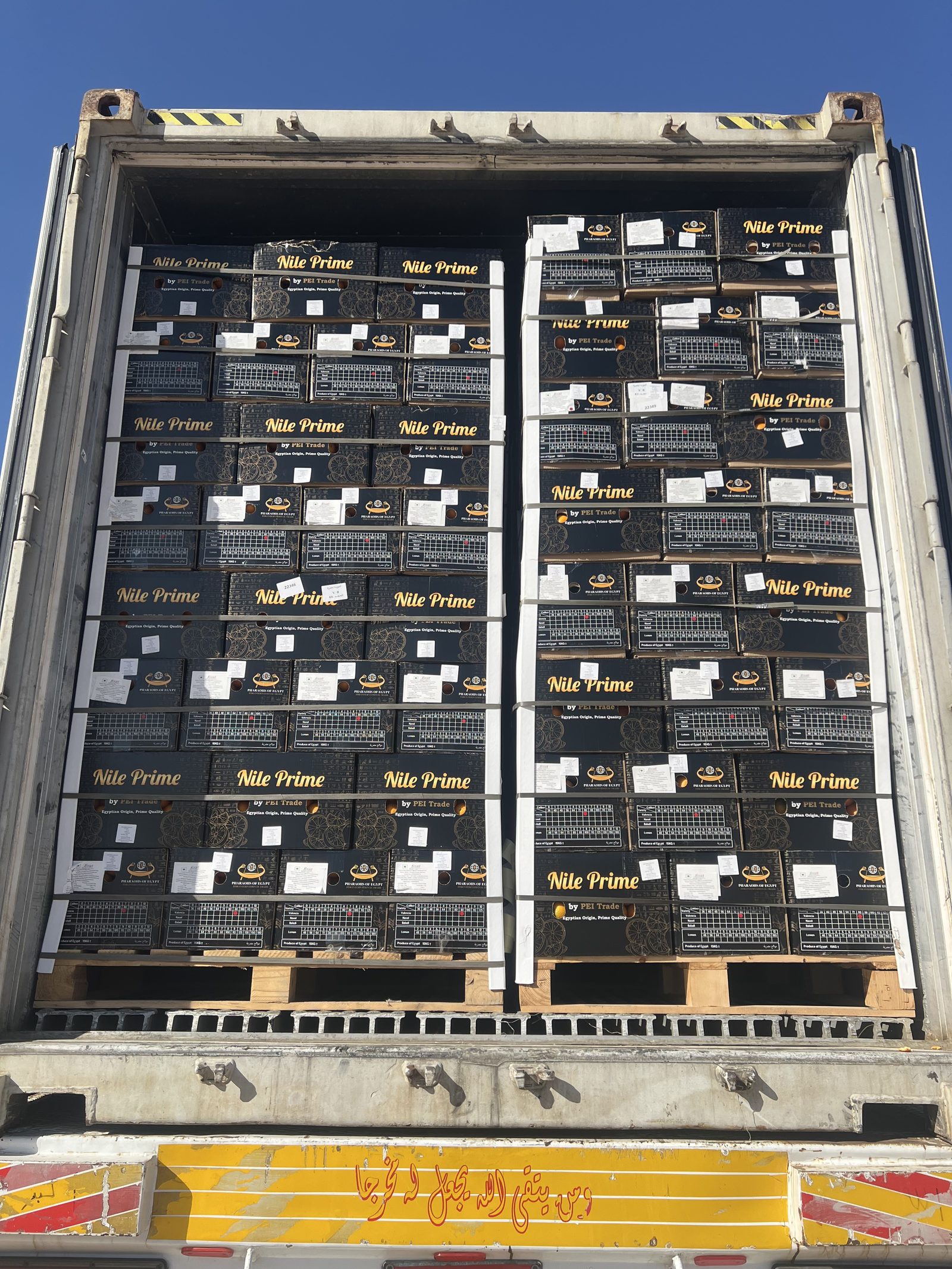
- Counter-season fit: Egyptian citrus peaks December–May — Russian winter and spring, when domestic fruit is nonexistent and vitamin demand peaks.
- Transit that suits oranges: 12–14 days is nothing for hard-cured citrus — fruit arrives with weeks of shelf life.
- Price position: Egyptian Valencia lands below Turkish and Mediterranean alternatives at comparable grade, which is why it anchors the value shelf.
- Established rails: payment channels, forwarders, and clearance routines refined over two decades of continuous trade.
The Russian Program — What to Buy When
| Months | Product | Counts | Channel |
|---|---|---|---|
| Dec–Feb | Navel + mandarins | Navel 56–88; mandarins graded | Retail winter peak, New Year demand |
| Feb–Mar | Handover to Valencia | 72–105 | Retail + wholesale volume |
| Mar–May | Valencia at peak | 72–125 | Volume programs, juice-adjacent demand |
Russian buyers famously prize consistency over size: uniform counts carton after carton beat bigger fruit with variation. Count logic and carton math are in the sizes & packing guide; the Valencia/Navel decision in Valencia vs Navel.
Lanes, Compliance & Documents
| Item | Detail |
|---|---|
| Routes | Alexandria/Damietta → Novorossiysk (~12 d) or St. Petersburg (12–14 d) |
| Reefer settings | +5–7°C, 90% RH, vented; pre-cooled fruit only |
| Phytosanitary | Egyptian certificate, closely inspected at Russian ports |
| EAEU conformity | Importer-side declaration; exporter documents must match exactly |
| Labeling | Product, origin, weight, packer, dates — consistent across carton & docs |
The full document set and timeline are in the export documents checklist.
Worked Example: A Moscow Retail Program, Container by Container
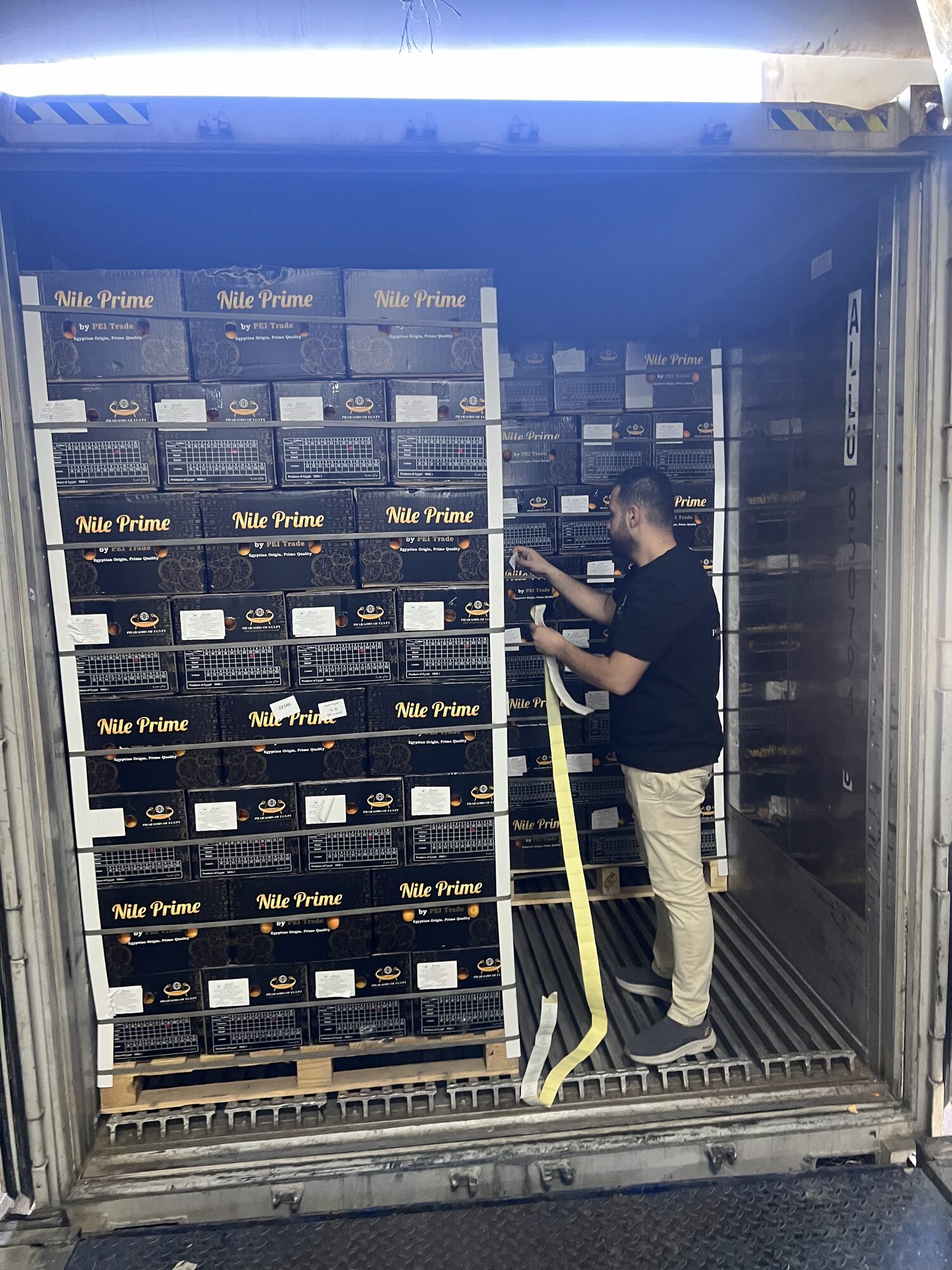
Take a hypothetical Moscow distributor supplying two regional chains, planning 40 containers for the season. The structure that works: October — contract signed for 10 containers of Navel (counts 56–72) and mandarins for December–January, plus a frame agreement for 30 Valencia containers with monthly price reviews. December — first Navel arrivals hit the New Year demand build; the distributor pays a 30/70 T/T split with balance against B/L copies, fruit clearing Novorossiysk in 12 days from loading. February — the handover: last Navel containers overlap first Valencia (counts 72–88 for retail, 105 for the juice-adjacent trade), and the monthly price review captures the season’s slide toward the March–April floor. April — peak Valencia at the year’s best prices; the distributor doubles monthly volume, using the frame agreement’s flexibility rather than renegotiating. Season result: roughly 900 tonnes moved, freight and documents identical every week, and one supplier relationship carrying the whole citrus calendar. The pattern scales down to 10 containers or up to 100 — the frame-plus-review structure is the lane’s working standard.
Payment & Banking Notes for the Lane
The Russia lane has its own financial texture. Sanctions-era banking pushed the trade toward payment channels that clear reliably — advance/balance T/T structures through banks with working correspondent paths, and in some relationships third-currency or alternative-channel arrangements agreed case by case. The operational rules stay constant regardless of channel: company-name accounts only, document-triggered milestones, and the MT103-equivalent proof shared on every payment. Egyptian exporters experienced on this lane know which of their banks clear Russian counterparties smoothly — a question worth asking in the first call, because a payment that bounces between correspondent banks for two weeks while fruit sails is a self-inflicted demurrage event. The T/T guide covers the structural safety rules that apply here doubled.
Winter Cold — The Reverse Temperature Problem
Uniquely on this lane, the risk flips in deep winter: fruit shipped at +5–7°C can face −20°C on the St. Petersburg quay and freeze during discharge or trucking. Professional practice for December–February arrivals: reefers run in heating mode at destination, discharge windows planned around the worst cold, insulated trucking for the inland legs, and receiving teams briefed that a frozen orange is a claim just like an overheated one. It is the one produce lane where the cold chain must protect fruit from the cold — and one more reason the established Egypt–Russia operators earn their programs year after year.
Egyptian Oranges in Russia — FAQ
How long does shipping take from Egypt to Russia for oranges?
About 12 days to Novorossiysk and 12–14 to St. Petersburg at +5–7°C — a comfortable transit for cured citrus, arriving with weeks of shelf life.
Which Egyptian oranges are best for the Russian market?
Navel and mandarins for the December–February retail peak, then Valencia in counts 72–125 carrying volume from February to May — with count consistency valued above fruit size.
What documents does Russia require for Egyptian oranges?
Phytosanitary certificate (closely inspected), certificate of origin, invoice and packing list matching the labels exactly, B/L with reefer settings, and the importer-side EAEU conformity declaration.
When should Russian buyers book Egyptian citrus?
By October for the December–January Navel window and by December for Valencia volume — the lane’s weekly vessel patterns are committed months ahead.
Build Your Russia Citrus Program
Nile Prime — the premium brand of PEI Trade — runs Navel-to-Valencia sequenced programs with EAEU-ready documents: WhatsApp +20 109 911 1918 · [email protected] · Valencia · Navel.
Sources: Tridge — Egypt orange exports · PEI Trade — Citrus Export Report.