
Egyptian citrus export is the biggest story in world citrus that many buyers still underestimate: Egypt is the world’s largest orange exporter, shipping around two million tonnes of citrus a season to more than a hundred markets — outselling Spain, South Africa, and Turkey on the fresh orange trade. Behind the volume sits a full citrus basket: Valencia and Navel oranges, mandarins, lemons and limes, running from December to May with freight lanes that reach the Gulf in days and Rotterdam in under two weeks. This is the complete importer’s guide — varieties, season, specs, packing, compliance, logistics, and markets. Everything in our citrus hub branches from here.
Last updated: July 2026 · By the Nile Prime export team
What This Guide Covers
- Why Egypt Leads World Citrus
- The Citrus Basket: Products & Varieties
- Season Calendar
- Sizes, Grades & Specs
- Packing & Cartons
- Quality & Certifications
- Shipping & Cold Chain
- Market-by-Market
- Sourcing With Nile Prime
- FAQ
Why Egypt Leads World Citrus
- Scale and price. Two million tonnes of exports create packing capacity, vessel frequency, and price levels no Mediterranean competitor matches — Egyptian Valencia routinely lands cheaper than Spanish fruit of comparable grade.
- A juice-and-table double play. Egyptian Valencia serves both fresh retail and juicing programs — high yields, deep color, balanced acidity — letting importers cover two channels from one origin.
- Counter-season to the southern hemisphere. December–May Egyptian supply hands over cleanly to South Africa’s June start; year-round citrus programs are built on exactly this pairing.
- Geography. Gulf ports in 3–7 days, Rotterdam in 10–12, Russia’s ports in 12–14 — with freight costs that decide tenders on their own.
The Citrus Basket: Products & Leading Varieties
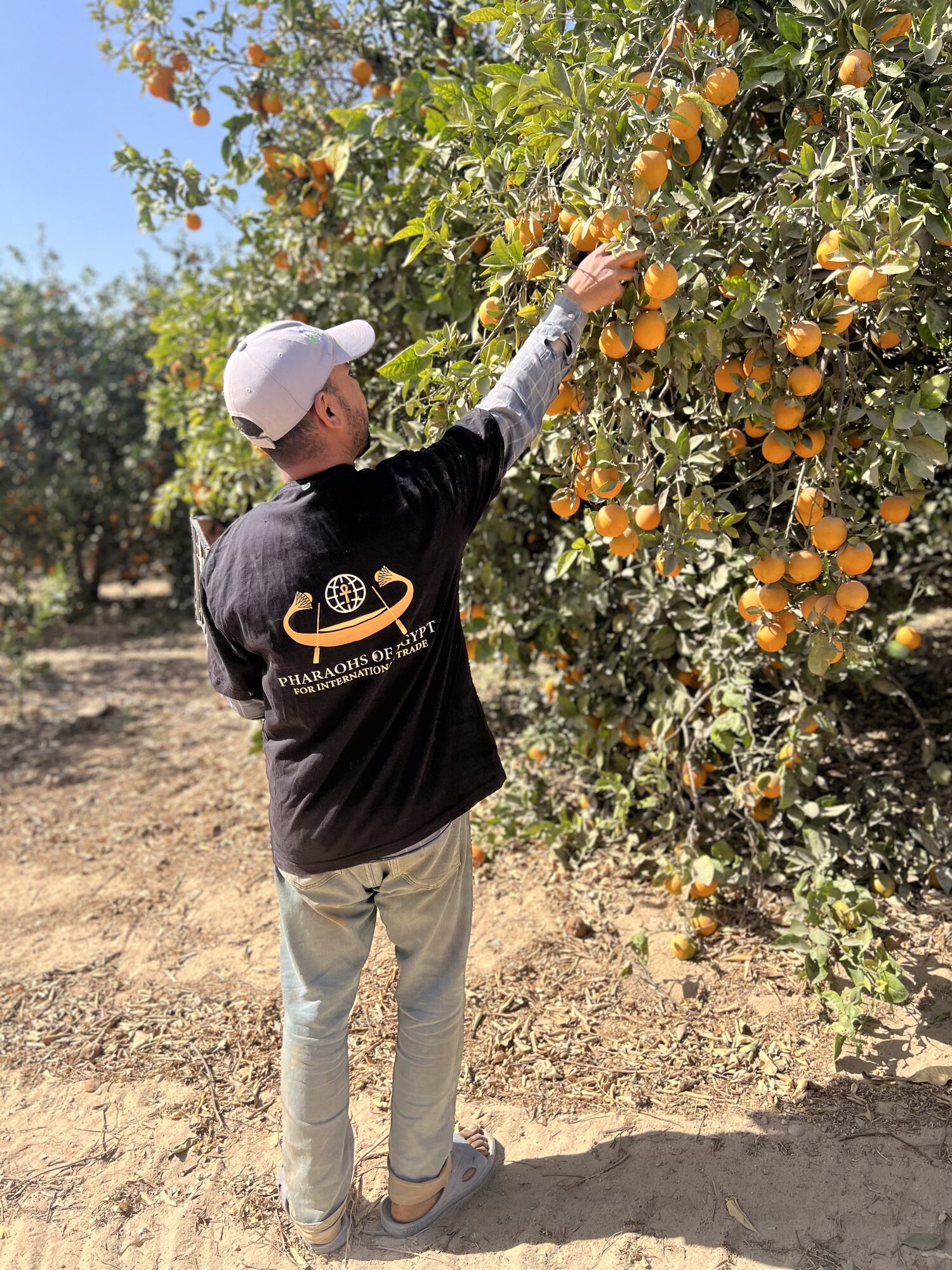
| Product | Key Varieties | Season | Primary Use | Details |
|---|---|---|---|---|
| Valencia Oranges | Valencia Late | Feb–May | Juice + table, the volume king | Product page |
| Navel Oranges | Washington Navel | Dec–Mar | Premium table fruit, seedless | Product page |
| Mandarins | Murcott, Fremont, Clementine | Dec–Mar | Easy peelers for retail | Product page |
| Lemons & Limes | Adalia, Eureka; seedless lime | Year-round peaks | Food service & retail | Product page |
The Valencia-versus-Navel decision shapes most orange programs — we break it down fully in Valencia vs Navel: which orange for your market.
Egyptian Citrus Season Calendar
| Month | What Ships | Importer Notes |
|---|---|---|
| December | Navel opens; mandarins, lemons | First arrivals meet holiday retail demand |
| January | Navel + mandarins peak | Best Navel quality of the season |
| February | Valencia opens; Navel continues | Programs transition; juice contracts start |
| March | Valencia builds; late Navel | Peak overall volume |
| April | Valencia peak | Best Valencia price-to-quality |
| May | Late Valencia | Season tail; southern hemisphere handover |
Contract December–January Navel and mandarin programs by October, and Valencia volumes by December — the week-level detail is in the citrus season calendar.
Sizes, Grades & Export Specifications
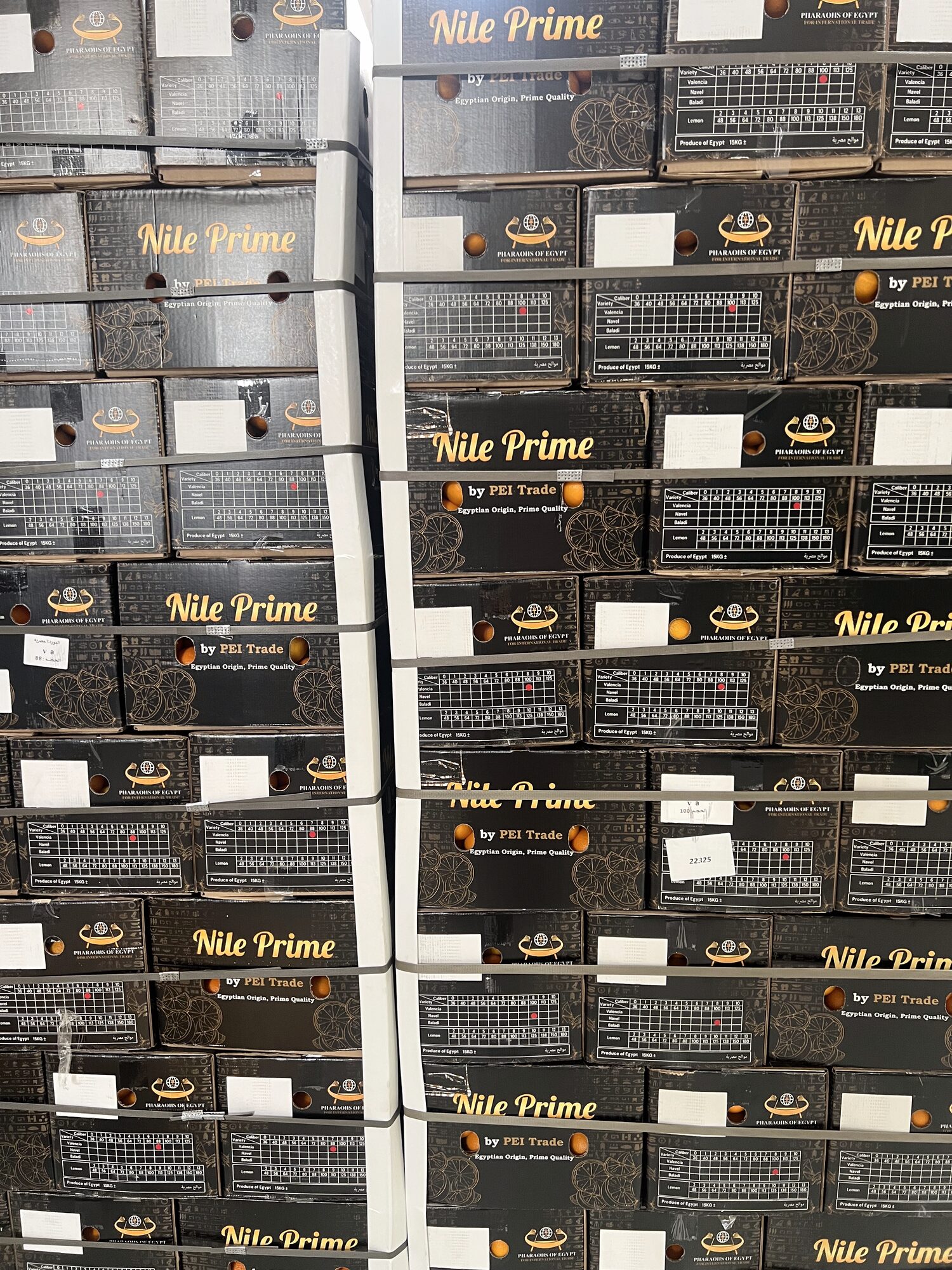
| Parameter | Standard |
|---|---|
| Orange sizes (per 15 kg) | Counts 48–125; retail sweet spot 56–88 |
| Brix | Valencia 11–13°, Navel 11–12.5°, mandarins 11–14° |
| Juice content | Valencia ≥ 45–50% — the juicing benchmark |
| Grade A (Class I) | Uniform color, firm, defects < 5% surface |
| Treatment | Washed, fungicide-treated, waxed food-grade |
| MRL compliance | Tested per destination (EU / GCC / EAEU limits) |
Count-by-count size charts with diameters and carton math live in the orange sizes & packing guide.
Packing & Export Cartons
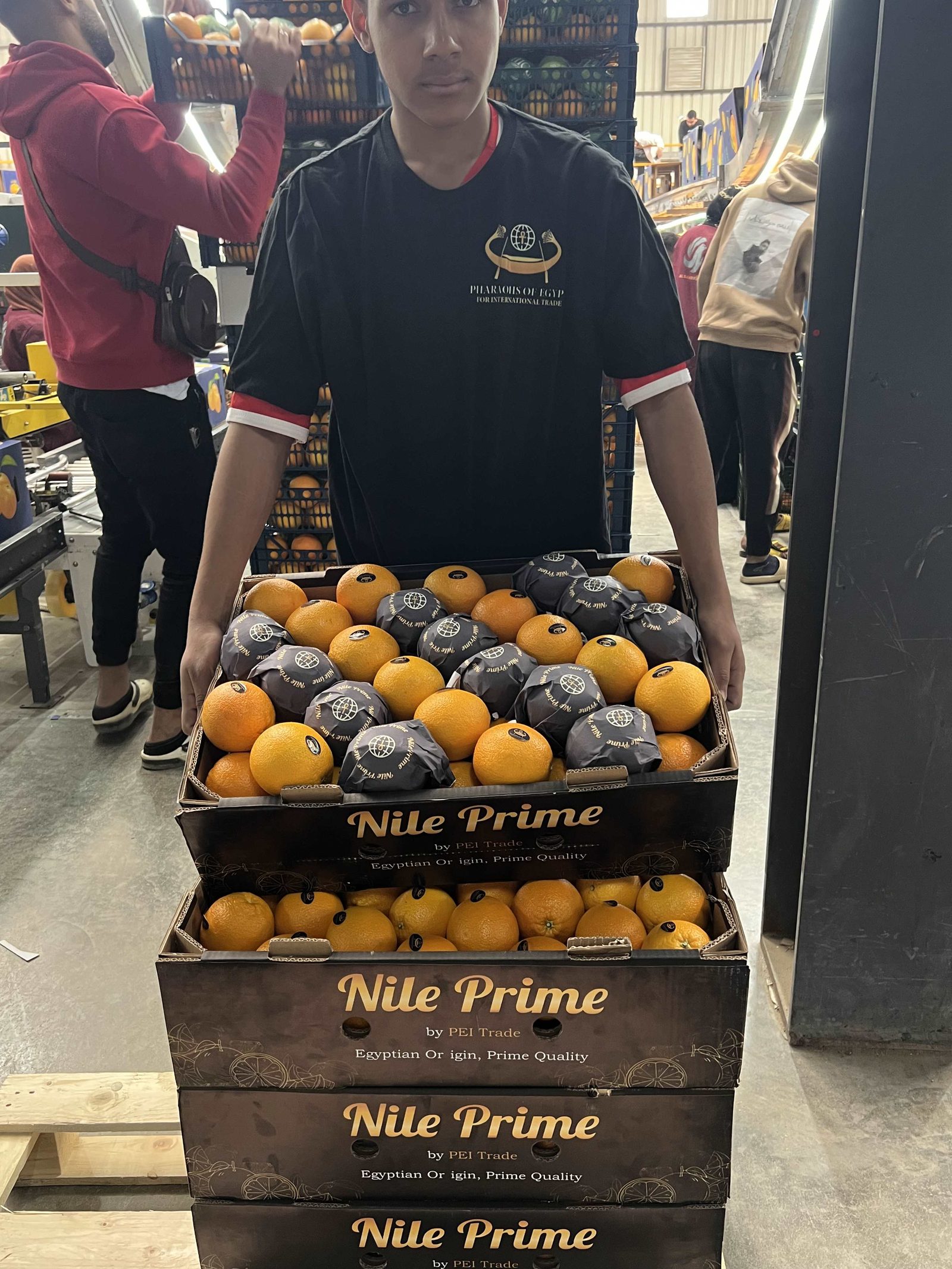
The workhorse is the 15 kg telescopic carton — ventilated, palletized at 80 cartons per pallet, 20 pallets per 40-ft reefer (about 24 tonnes net). Alternatives: 8–10 kg premium cartons for retail programs, 2–3 kg consumer bags or nets packed master-carton for supermarkets, and open-top displays for wholesale markets. Premium Navel and mandarin programs wrap fruit individually. Nile Prime ships branded display cartons designed for direct shelf placement.
Quality Control & Certifications
- GLOBALG.A.P orchards — traceability and pesticide discipline at farm level; verify the scope covers citrus.
- HACCP / ISO 22000 packhouses — washing, grading, waxing, and packing under food-safety systems.
- Cold treatment where required — some markets mandate in-transit cold treatment protocols; the exporter must document probe placement and temperature logs.
- Per-lot MRL testing against destination limits, and phytosanitary certification on every shipment.
Shipping & Cold Chain
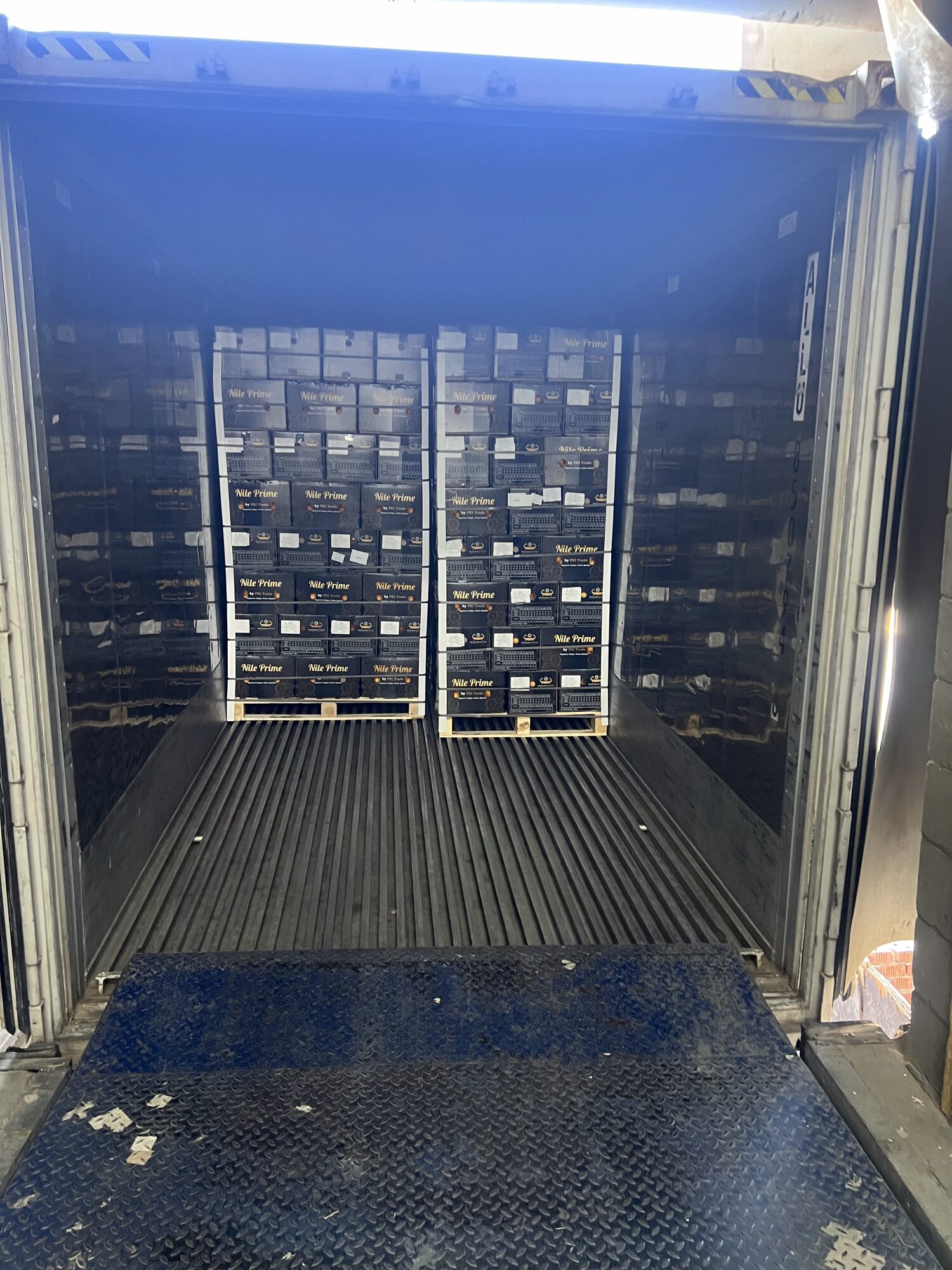
| Destination | Transit | Reefer Settings |
|---|---|---|
| Jeddah / Gulf | 3–7 days | +2 to +5°C by product & protocol, 90% RH, vented; pre-cooled fruit only |
| Rotterdam / EU | 10–12 days | |
| Novorossiysk / St. Petersburg | 12–14 days | |
| Far East (China, SE Asia) | 18–25 days |
Citrus forgives more than mango, but the same rule applies: pulp temperature at loading and unbroken cold chain decide arrival condition — especially on the long Far East lanes where a disciplined exporter is the difference between premium arrivals and claims.
Where Egyptian Citrus Goes
Over a hundred markets, led by Russia and the EAEU (volume orange programs), the Gulf (full basket, premium mandarins), the EU and UK (compliance-led retail), China and the Far East (a fast-growing lane for Egyptian oranges), the Indian subcontinent, and Africa. Each market’s preferences — sizes, varieties, packaging — are covered in the market sections of our companion guides, starting with how to choose your citrus exporter.
Sourcing Egyptian Citrus With Nile Prime
Nile Prime — the premium brand of PEI Trade — runs full-basket citrus programs: Valencia and Navel volume, premium wrapped mandarins, lemons and limes, sequenced December to May with complete documentation per destination. Send your market and volumes: WhatsApp +20 109 911 1918 · [email protected].
Egyptian Citrus Export — FAQ
Is Egypt really the world’s largest orange exporter?
Yes — Egypt has led world fresh orange exports in recent seasons, shipping around two million tonnes of citrus to more than a hundred markets, ahead of Spain and South Africa on volume.
When is the Egyptian citrus season?
December to May: Navel oranges and mandarins open in December and peak through March, Valencia runs February to May, and lemons ship across the season with year-round availability windows.
What is the standard packing for Egyptian oranges?
15 kg ventilated telescopic cartons in counts 48–125, palletized at 80 cartons per pallet and loaded 20 pallets (≈24 tonnes) per 40-ft reefer at +2 to +5°C — with 8–10 kg premium cartons and consumer bags for retail programs.
Which citrus products does Egypt export besides oranges?
Mandarins and clementines (Murcott, Fremont), lemons and seedless limes — alongside the Valencia and Navel oranges that anchor the trade.
Can one exporter supply both juice-grade and table-grade oranges?
Yes — that is Egyptian Valencia’s specialty. High juice content serves processing contracts while the same variety’s eating quality covers fresh retail, letting importers consolidate two channels with one supplier.
Sources: PEI Trade — Egyptian Citrus Export Report 2026 · Tridge — Egypt orange export intelligence.
How to cite this guide: Nile Prime (2026). Egyptian Citrus Export: The Complete 2026 Guide. https://nile-prime.com/egyptian-citrus-export-guide/ — may be cited with attribution to Nile Prime.