
Every buyer’s first question — and the one no serious exporter answers with a single number. Egyptian mango prices move by variety, count, grade, freight mode, and week of the season, across a range where the cheapest and dearest carton of the same week can differ three-fold. This guide gives you the structure instead of a stale number: how FOB pricing is built, the seasonal curve, indicative relationships between varieties, and how to read any offer sheet like a professional. Companion to the complete mango guide.
Last updated: July 2026 · Indicative structure, not quotations — request a live offer for current numbers.
Table of Contents
- How an FOB Mango Price Is Built
- The Seasonal Price Curve
- Variety & Spec Relationships (Rules of Thumb)
- Reading an Offer Like a Professional
- Egyptian Mango Prices — FAQ
- Get This Week’s Live Offer
- Worked Example: One Season’s Buying Sheet
- What Moves Prices
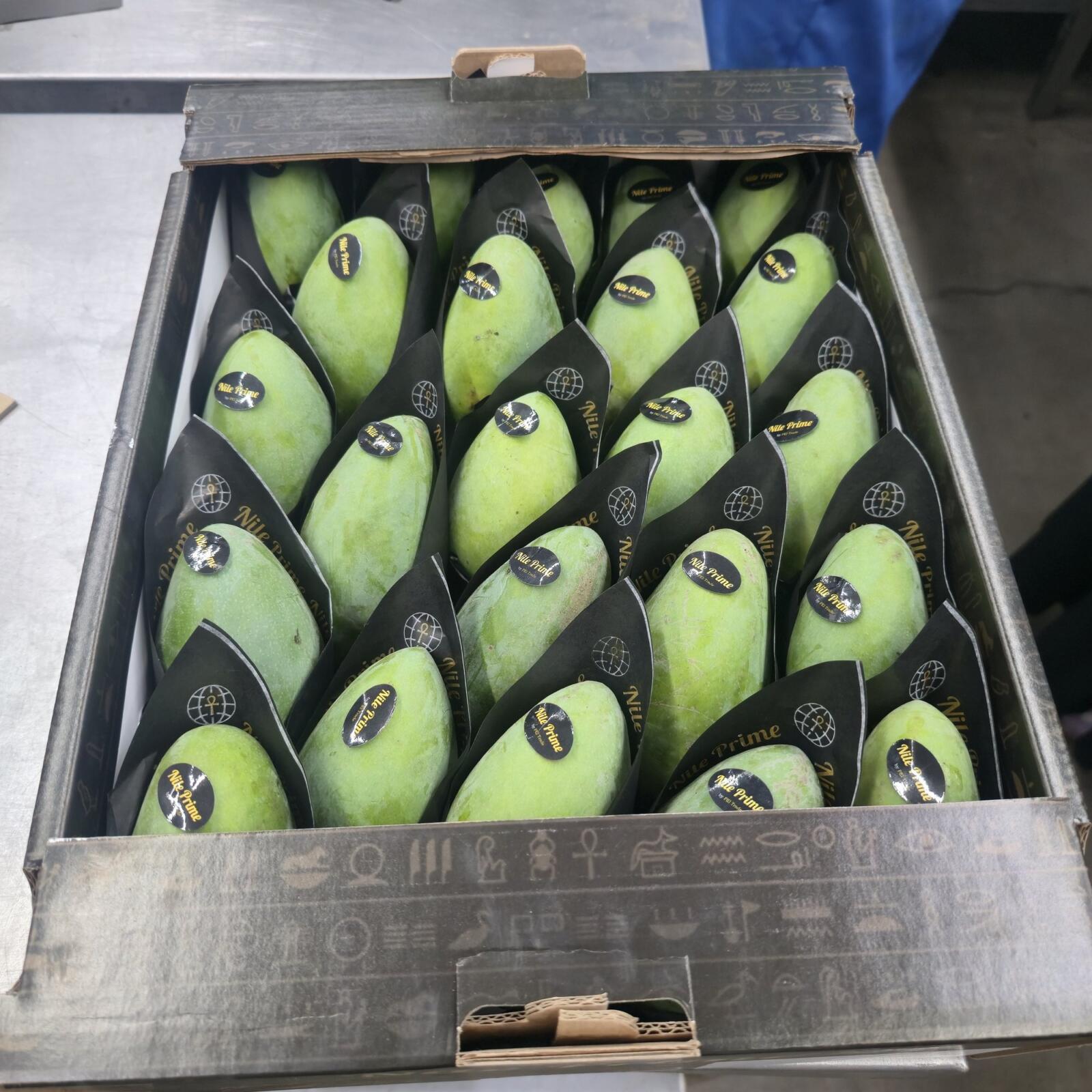
How an FOB Mango Price Is Built
| Layer | Share of FOB (typical) | Notes |
|---|---|---|
| Farm-gate fruit | ~45–60% | Variety and week drive this most |
| Packhouse (grade, HWT, pack) | ~15–20% | Wrapped premium packs cost more, earn more |
| Carton & materials | ~8–12% | Branded display cartons at the top |
| Handling, docs, port | ~8–10% | Fixed-ish per container |
| Exporter margin | Balance | Thin on volume grades, wider on premium |
The Seasonal Price Curve
| Period | Price Level (vs season average) | Why |
|---|---|---|
| June opening | Highest — +30–50% | Scarce early fruit, novelty demand |
| July ramp | High, easing | Volume building |
| Aug–Sep peak | Season floor | Maximum supply, best value |
| October | Floor to firming | Keitt-led, competition thinning |
| November tail | +20–40% and rising weekly | World supply gap — the margin window |
Variety & Spec Relationships (Rules of Thumb)
- Indigenous premium: Owaisi and Zebda trade well above international varieties — often 1.5–2.5× Kent in the same week, air-freight grades higher still.
- Within internationals: Kent and Shelly ≥ Keitt ≥ Tommy Atkins, with gaps narrowing at peak.
- Counts: mid counts (7–9) price above large 6 and small 12 in retail-driven weeks.
- Class I vs Class II: typically 20–30% apart — and Class II is where “cheap offers” quietly live. Always confirm class in writing.
- Air vs sea: a different product — tree-ripened air fruit can run multiples of sea-freight FOB.
Reading an Offer Like a Professional
A quotable offer states: variety, class, counts, packing format, treatment (HWT), Incoterm, validity window, and inspection terms. If any of those is missing, the number means nothing — and if the price sits far below the week’s market, you are being quoted Class II fruit, short weights, or a supplier you’ll regret. Cross-check the week’s context via Tridge price intelligence and the season calendar, then compare like for like. Deeper market data lives in the mango export report.
Worked Example: Pricing One Season Across Three Varieties
Track a hypothetical Gulf importer’s buying sheet through an Egyptian mango season. Early July: season openers — premium Sedika offered at the year’s highest levels, air-grade, because supply is days old and Gulf demand is starved after the Indian exit; he takes two air pallets for the premium wall, no more. Late July–August: Ewais and Fons peak; prices ease as volume builds. August–September (the volume floor): Keitt arrives at scale and the FOB curve bottoms for sea-freight carton fruit; this is where he books 80% of his season’s tonnage on weekly containers. October: late Keitt and Naomi firm again as supply tapers with Gulf demand still on. His blended cost in this sketch lands well under the season’s average because volume concentrated at the floor — the entire craft of mango buying compressed into one sentence: taste the top of the season, buy the middle of it. The curve’s shape repeats every year even as its levels move.
Nile Prime does not publish a price list. FOB moves week to week with variety, grade, count, available volume and vessel space, and a figure fixed at publication misleads more than it helps. For a current number against your spec and destination port, ask the desk — it comes back the same working day.
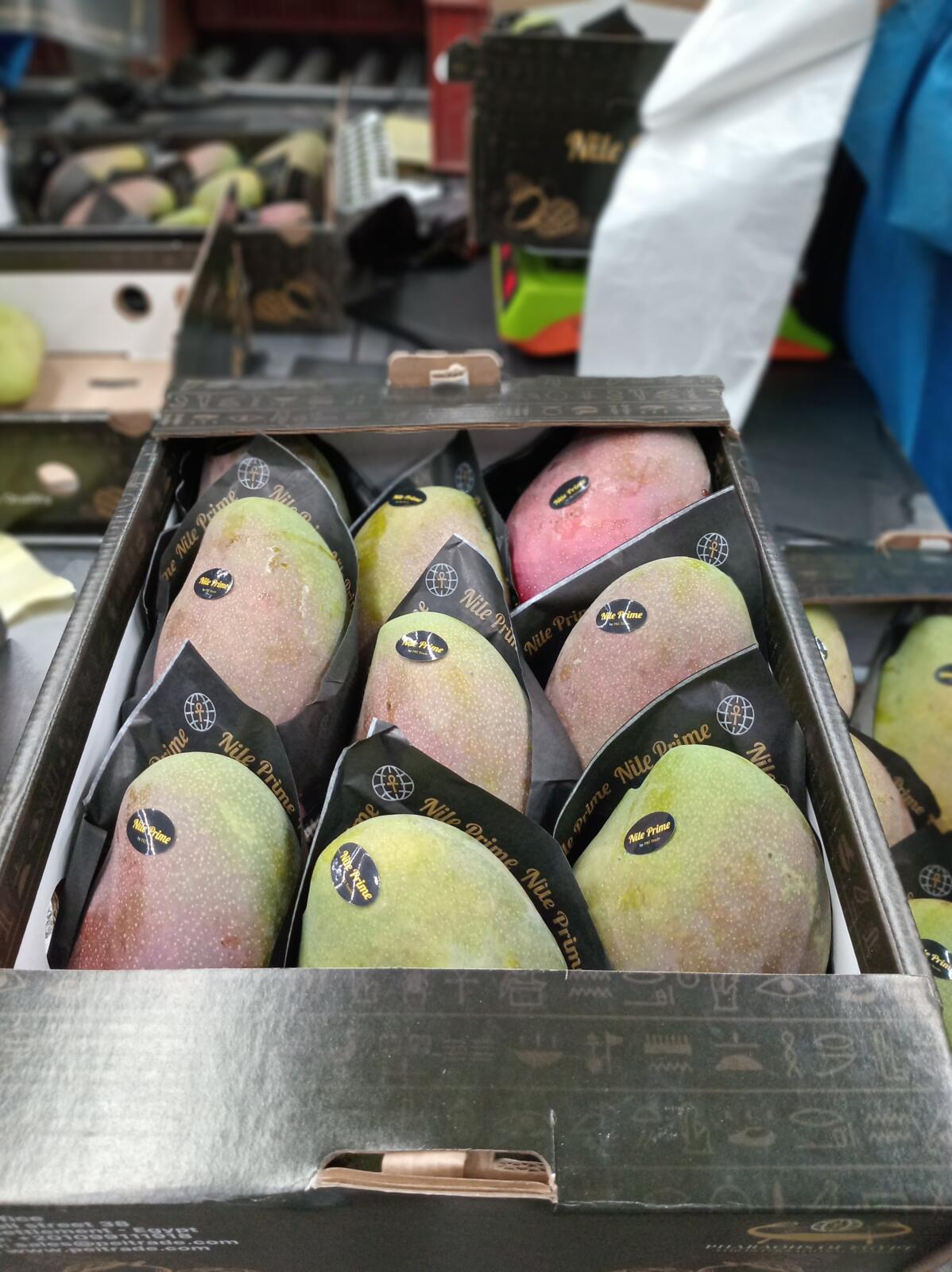
What Moves Egyptian Mango Prices
- Variety and week: the same tonne is a different product in July (scarce, premium) and September (abundant, industrial) — quotes without dates are meaningless.
- Air vs sea grade: air-freight fruit is picked, graded, and packed to a different standard; comparing its price to sea cartons misleads.
- Ismailia vs newer regions: origin district affects both flavor reputation and logistics cost to port.
- Gulf demand pulse: the UAE and Saudi absorb the bulk of exports; their retail promotions move weekly FOB more than any other single factor.
- EGP moves: devaluations soften dollar FOB with a lag as input costs catch up.
- Heat events: summer spikes can compress a variety’s window and firm late-season prices sharply.
Egyptian Mango Prices — FAQ
How much do Egyptian mangoes cost per kg FOB?
There is no single number: FOB varies by variety, class, count, week, and freight mode across a wide range — volume Kent at peak sits at the market floor while air-freighted Owaisi can trade at several times that. Request a dated offer with full spec for real numbers.
When are Egyptian mangoes cheapest?
August–October, at peak supply — the season floor. June opening fruit and the November tail both carry premiums of roughly 20–50% over the peak.
Why is Owaisi so much more expensive than Kent?
Scarcity and demand: it grows only in Egypt, volumes are naturally limited, Gulf premium retail bids for allocation, and the best fruit moves tree-ripened by air — typically 1.5–2.5× Kent, more for air grades.
How do I know a mango price quote is legitimate?
It states variety, class, counts, packing, HWT, Incoterm, and validity — and it sits within the week’s market range. Prices far below market mean Class II fruit or a supplier to avoid; verify with the 10-point exporter checklist.
Get This Week’s Live Offer
Send variety, counts, and destination — Nile Prime returns a dated, full-spec offer within 24 hours: WhatsApp +20 109 911 1918 · [email protected] · Egyptian mangoes — specifications.
Sources: Tridge — Egypt mango price & export data · PEI Trade — Mango Export Report.