
Egyptian green beans export runs one of the most precise trades in this catalog: hand-picked fine and extra-fine beans, air-freighted and short-sea shipped into European retail through the winter — November to May — when Europe grows nothing and Kenya’s air-freight-only supply sets a high price umbrella. Egypt’s edge is the option Kenya doesn’t have: proximity that allows sea and truck routes at air-quality freshness. This guide covers grades, the window, and specs. Part of our vegetables hub.
Last updated: July 2026 · By the Nile Prime export team
Table of Contents
- Grades & Formats
- Specs & Logistics
- The Window & the Competition
- Egyptian Green Beans — FAQ
- Program the Winter Window
- The Chain Behind a Perfect Bean
- Season Month by Month
- Markets & the Kenya Question
- Buyer’s Checklist
- The Frozen Sister Trade
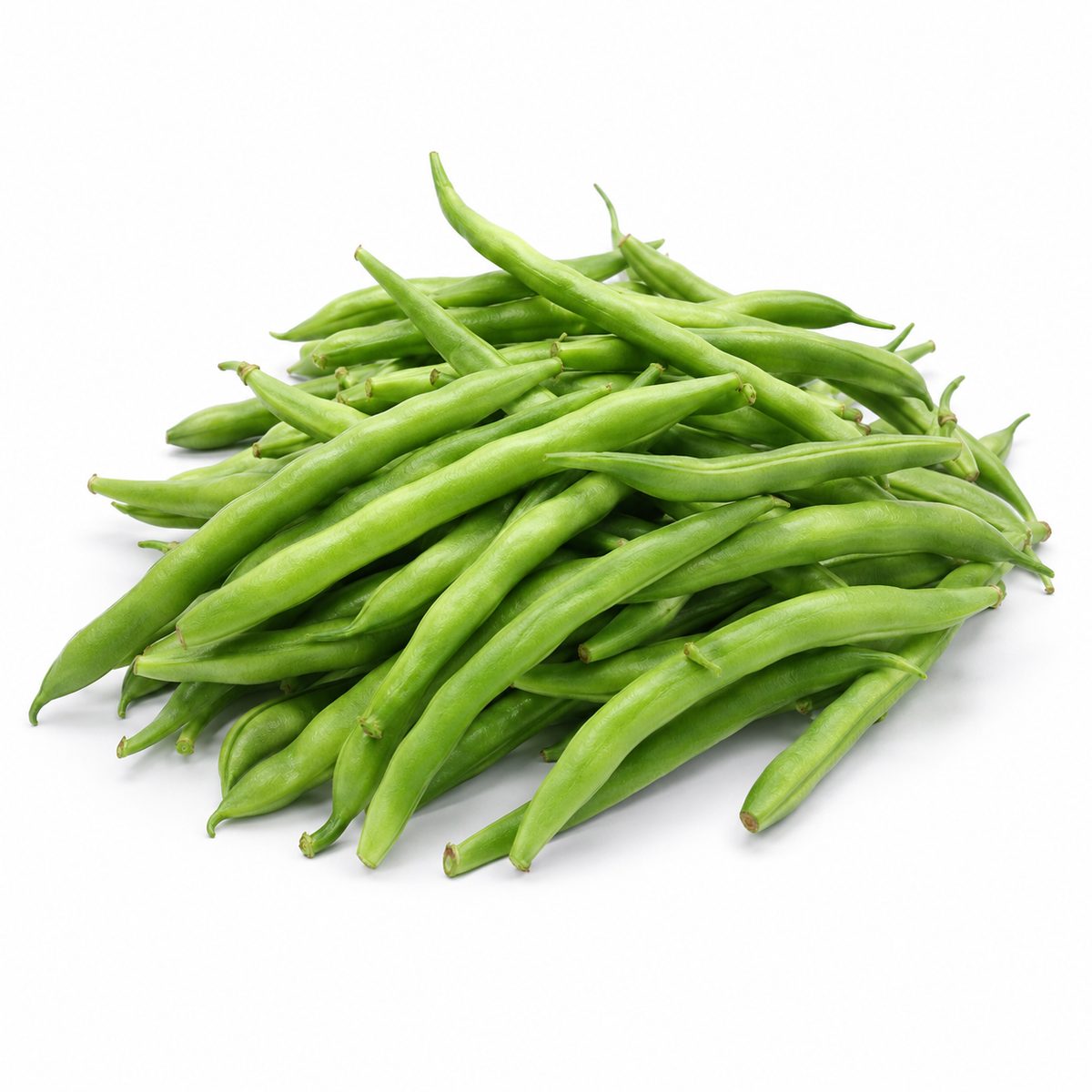
Grades & Formats
| Grade | Diameter | Use |
|---|---|---|
| Extra fine | ≤6 mm | Premium EU retail — the top of the market |
| Fine | 6–8 mm | The retail core |
| Bobby | 8+ mm | Food service, value retail, freezing |
| Frozen IQF | Cut/whole | Year-round — see the frozen guide |
Specs & Logistics
- Condition: straight, snap-crisp, stringless, uniform green — hand-picked at dawn, cooled within 2 hours.
- Packing: 4–5 kg cartons; retail flow-wrap and punnets 200–500 g with private label standard.
- Cold chain: 4–7°C, high humidity — beans dehydrate visibly if the chain slips.
- Routes: air 1–2 days for extra fine; reefer short-sea/truck combinations 4–6 days for fine/bobby — the cost play Kenya can’t match.
- Compliance: GLOBALG.A.P + strict EU MRLs — beans are a residue-watch product; per-lot testing is non-negotiable (documents guide).
The Window & the Competition
November–May, Egyptian beans compete mainly with Kenya (air-only, premium-priced), Morocco (similar proximity play, smaller scale in beans), and Senegal. The buying logic: extra fine flies from everywhere — but for fine-grade weekly retail programs, Egyptian sea-truck logistics land comparable freshness at meaningfully lower cost per kilo. Contract September–October for the November opening; the trade is programmed, not spot.
The Chain Behind a Perfect Bean
Fine beans are the most labor-intensive product in this catalog — every export-grade pod is hand-picked at the right diameter, because a machine can’t tell a 6 mm extra-fine from an 8 mm fine and the price difference is everything. The working chain: dawn picking while field heat is low, shaded collection within the hour, forced-air cooling to 4–6°C within two, then grading lines where trained hands sort three grades and reject curved, blemished, or over-mature pods. From there the lanes split — extra fine to the airport for next-day EU arrival, fine and bobby to reefer trucks and short-sea routings. Every hour shaved from field-to-cold shows up as days of shelf life in a Paris or Riyadh display; when comparing suppliers, ask for their field-to-4°C time in writing. The great houses answer in minutes, not hours.
The Season, Month by Month
| Period | Supply State | Buyer Note |
|---|---|---|
| Sep–Oct | Plantings staged; contracts fixed | Book the season — programmed trade, not spot |
| Nov–Dec | Season opens as EU local supply dies | Premium window; extra fine scarce and flying |
| Jan–Feb | Peak quality in Egypt’s cool months | The best beans of the year — run programs hard |
| Mar–Apr | Strong volumes continue | Kenya competition constant; press the freight edge |
| May | Season tails as heat rises | Quality watch; EU local crop approaches |
Markets & the Kenya Question, Expanded
France is the fine-bean market of reference — the cuisine institutionalized haricots verts — with the UK, Benelux, and Germany running programmed retail behind it, and the Gulf building steady food-service demand on its doorstep. In every European tender the shadow across the table is Kenya: superb quality, deep expertise, but chained to air freight, its costs and its carbon line. Egypt’s structural play is being the origin that can deliver comparable fine-grade quality on wheels and water: reefer truck via land bridges or short-sea in 4–6 days, at freight per kilo Kenya cannot reach and with a carbon footprint EU retailers increasingly must report. Where Egyptian suppliers lose is inconsistency — the buyers burned once by a mixed-grade carton return to Nairobi and pay the premium. Which is why the entire Egyptian value proposition compresses to one sentence: Kenyan discipline at Egyptian freight — the exporters who deliver that sentence own this lane’s future.
The Fine-Bean Buyer’s Checklist
- Grade split per carton in writing — extra fine ≤6 mm / fine 6–8 mm, with tolerance percentages.
- Field-to-4°C time stated and verifiable.
- Per-lot MRL testing against EU limits — beans live on the residue-watch lists.
- Pack spec: 4–5 kg export cartons or retail flow-wrap, punnet weights exact.
- Route declared per grade: air vs reefer-truck vs short-sea, with transit and temperature commitments.
- References from EU program buyers — the 10-point checklist applies in full.
The Frozen Sister Trade
Alongside the fresh premium lane runs a quieter, larger business: IQF green beans — cut or whole — flowing from the same growing regions into European and Gulf freezer aisles year-round. Bobby-grade and over-spec pods that miss the fresh cut feed the plants, giving farms a second revenue line and buyers a hedge: retail chains that run fresh Egyptian fine beans in winter often contract IQF from the same supplier group for the rest of the year, one relationship covering both temperature states. Specs and contracting logic follow the standard frozen playbook — grades, −18°C discipline, pre-season contracts — covered in the frozen vegetables guide.
Egyptian Green Beans — FAQ
When is the Egyptian green bean season?
November to May — the European winter window when local production is zero and Egyptian fine beans arrive by air in 1–2 days or sea-truck in 4–6, against air-only Kenyan supply.
What are fine and extra fine green beans?
Diameter grades: extra fine ≤6 mm for premium retail, fine 6–8 mm as the retail core, and bobby 8+ mm for food service — all hand-picked, straight, and stringless in export grade.
How do Egyptian green beans compare with Kenyan?
Comparable grades and freshness at the fine level, with Egypt’s structural edge being sea and truck routes Kenya cannot use — lower freight per kilo on weekly retail programs.
What compliance do EU-bound green beans need?
GLOBALG.A.P certification and strict per-lot MRL testing — beans are a residue-monitored product at EU borders — plus the standard phytosanitary document set.
Program the Winter Window
Nile Prime — the premium brand of PEI Trade — ships fine and extra-fine programs November to May: WhatsApp +20 109 911 1918 · [email protected] · Green beans — specifications.
Sources: Tridge — Egypt green bean trade · PEI Trade.