
The United Kingdom takes Egyptian Navel and Valencia in volume from December through May, sitting between the Spanish and South African windows. For a supplier it is a demanding market, less because of the border formalities than because of what the multiple retailers put into their specifications. Getting the first container in is straightforward. Getting on a retail programme is a longer project.
Border formalities
Fresh citrus from Egypt is a regulated plant product and requires a phytosanitary certificate issued by the Egyptian Central Administration for Plant Quarantine, covering the consignment and naming the destination. The importer pre-notifies the arrival on the UK system before the goods reach the point of entry, and the consignment is assigned a risk category that determines whether it is subject to documentary, identity or physical checks.
False codling moth remains the pest that decides the tone of the inspection. The orchard and packhouse controls that prevent an interception are set out in our note on false codling moth and fruit fly on Egyptian citrus. An interception on a UK arrival is expensive twice over, once for the load and once for the supplier record it creates.
What the retail specification adds
This is where UK business differs from open-market trade into the Gulf or Eastern Europe. A retail specification typically goes beyond Class I tolerances and names its own limits on rind blemish, minimum juice content, colour, and the presence of residues at levels below the statutory maximum. Several retailers operate a residue policy expressed as a percentage of the legal limit, and some maintain a list of actives they do not accept at all regardless of what the law permits.
Practically this means the spray programme has to be designed for the destination before the season starts, not verified afterwards. Pre-harvest intervals, active selection and the testing schedule are covered in our reference on pesticide residues and MRLs on Egyptian citrus. A grower who sprays for the Gulf and then tries to sell into a UK retail programme will fail the first screen.
Approvals that take time
Expect three parallel workstreams. A recognised food safety certification on the packhouse, with GLOBALG.A.P on the growing sites. An ethical or social compliance audit, which most UK multiples now require and which is often the item that delays approval, because remediation takes weeks. And a technical visit or desk audit by the customer, covering traceability from field block to carton code.
Start twelve weeks before you intend to ship. Certification renewals and audit scheduling do not compress well, and a packhouse that is technically ready but has an audit booked for February cannot serve a December programme.
Practical shipping points
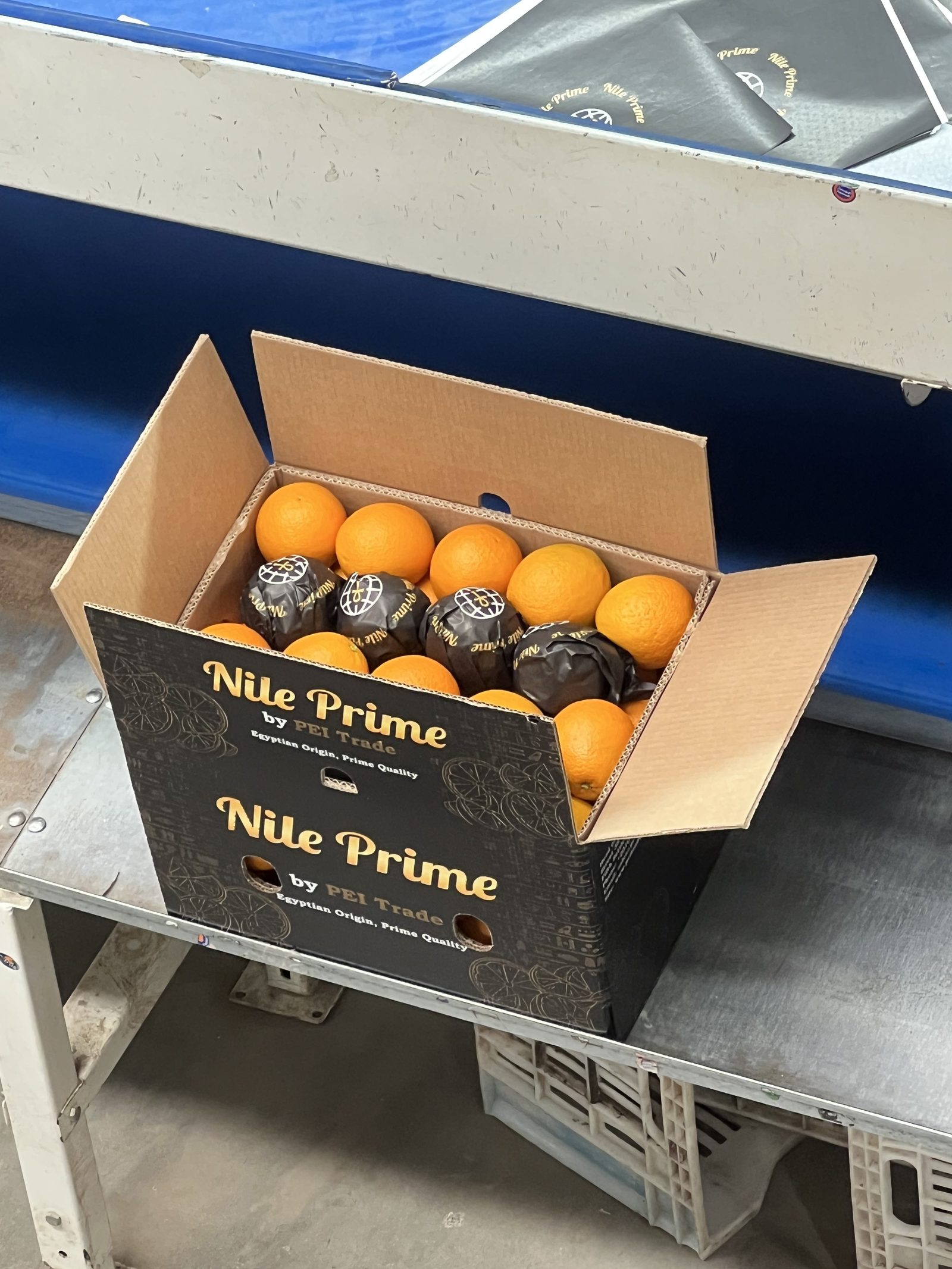
Sailings run from Alexandria and Damietta to the main UK deep-sea ports with transit generally in the range of ten to fourteen days depending on service and transhipment. Set point for Navel and Valencia is held at the same values used for continental Europe, and cargo is pre-cooled to pulp temperature before the doors close. Cartons are commonly 15 kg loose or retail-format packs to the customer’s own design, and pallet configuration follows the receiving depot’s standard rather than ours.
Incoterms are usually CFR or DAP on this lane. A buyer new to Egyptian origin should take the first two loads on CFR, verify arrival quality and temperature download against the specification, then decide whether to move to a larger commitment.
Nile Prime supplies Egyptian Navel, Valencia, mandarin and grapefruit to UK importers and category suppliers, with third-party inspection available on request. To discuss a UK programme for the coming season, message the export desk on WhatsApp at +20 10 9911 1918.