
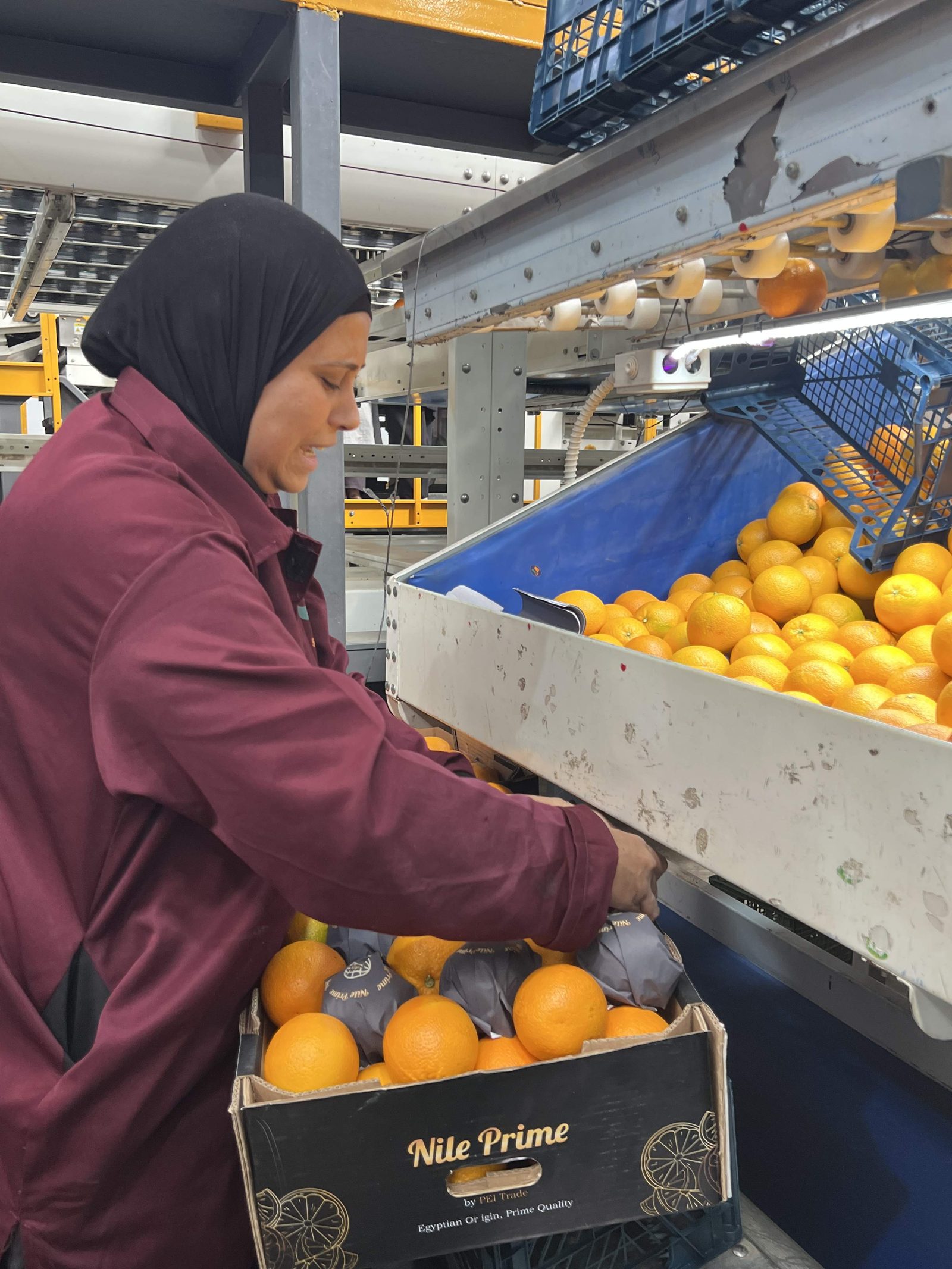
Almost every orange that leaves an Egyptian packhouse for export has been washed, brushed, coated and in many cases stickered before it reaches the carton. Buyers rarely specify any of this, then form strong opinions about it when the fruit arrives. It is worth settling at booking stage.
Why citrus is coated at all
The washing and brushing stage removes field dust, residue and part of the fruit’s own natural wax. Without a replacement coating, an orange that has just been washed loses moisture faster than one that was never touched, which is the opposite of what anyone wants on a fourteen day voyage. The applied coating restores a moisture barrier, slows weight loss and gives the gloss that retail buyers in most markets now treat as normal.
What a coating does not do is improve fruit that was picked immature, hide internal defects or extend life indefinitely. A heavier coat is not a better coat. Over-application restricts gas exchange, which pushes the fruit toward anaerobic respiration and produces off-flavours. When a buyer complains that the fruit tastes fermented, excessive coating combined with a warm holding period is one of the first things to check.
Coating types
Three broad families are in use on Egyptian citrus lines. Carnauba based coatings are plant derived and give a good gloss with moderate gas permeability. Shellac based coatings give the highest shine and are common where retail presentation is the priority, but they are more restrictive on gas exchange and less forgiving if the dose is wrong. Wood resin and polyethylene based coatings sit in between and are used mainly where the fruit is travelling a long way and moisture retention matters more than gloss.
Coatings are sometimes combined with an approved post-harvest fungicide in the same application. That is a separate compliance question from the coating itself, and the approved list differs by destination. Anything applied to the fruit has to be permitted in the importing market, declared, and within residue limits there. Our note on residues and MRL testing on Egyptian citrus covers how that is verified before loading.
What different markets accept
Practice varies enough that it belongs in the specification. Some European retail programmes restrict which coating families may be used, and a growing number of organic and clean-label programmes require uncoated fruit entirely. Uncoated citrus is perfectly shippable, but it will look duller, it will lose moisture faster, and the shelf life expectation has to be adjusted accordingly. If your customer wants uncoated fruit, say so at contract stage, because the packhouse has to run those pallets separately from the coated line.
Gulf and Russian buyers generally take coated fruit as standard and place a high value on gloss. Fruit heading into a re-export role through Jebel Ali is often expected to look bright on arrival because it will be handled and displayed again before it reaches a consumer.
PLU stickers and fruit marking
Stickering is a per-fruit cost and a per-fruit failure point. If stickers are required, they need to be specified in the enquiry: the artwork, whether they carry a PLU code, a variety name, an origin statement or a customer brand, and whether the adhesive has to meet a particular food contact standard. Some retail programmes now require compostable or paper-based stickers rather than plastic film.
Two practical points. Stickers applied to fruit that has just been coated will lift if the coating has not fully cured, so line speed and drying tunnel time matter. And stickered fruit is slower to pack, which affects how much can be committed in a peak week. Neither is a reason to avoid stickering, but both are reasons to raise it before the allocation is agreed rather than the day before loading.
Specifying it properly
A complete citrus specification should state the coating family or state that the fruit is to be uncoated, name any post-harvest treatment applied, and cover stickering and carton presentation. Our piece on the citrus packhouse process shows where in the line each of these steps happens. To discuss coating and presentation requirements for the 2026/2027 citrus programme, message the Nile Prime desk on WhatsApp at +20 10 9911 1918.