
Residue compliance is the quietest part of a citrus programme until the week it stops a consignment. On Egyptian oranges and mandarins it is decided long before the fruit reaches the packhouse, in the spray diary and the pre-harvest interval. Buyers who ask for the analysis at loading are asking too late to change anything.
What an MRL is, and what it is not
A maximum residue level is a trade and enforcement figure, set per active substance and per crop. It is derived from good agricultural practice, not from a toxicological threshold, which is why a result slightly above an MRL is a compliance failure rather than an automatic safety issue. The practical consequence for a buyer is simple: the limit that applies is the limit of the destination market, not of Egypt. EU limits, UK limits and Gulf limits are not identical, and a lot cleared for one destination can be non-compliant in another. Establish the destination before the block is sprayed.
The pre-harvest interval does the work
Each registered product carries a pre-harvest interval, the minimum number of days between the last application and picking. Observing it is what brings residues down to compliant levels. Cutting it short because a vessel moved forward is the single most common cause of a failed result on citrus. On our programme blocks the spray diary is closed a defined number of days before the picking date, and blocks that have not cleared their interval are simply not picked that week, whatever the loading schedule says. That decision sits upstream of everything described in the first 72 hours from harvest to loading.
Post-harvest applications count too
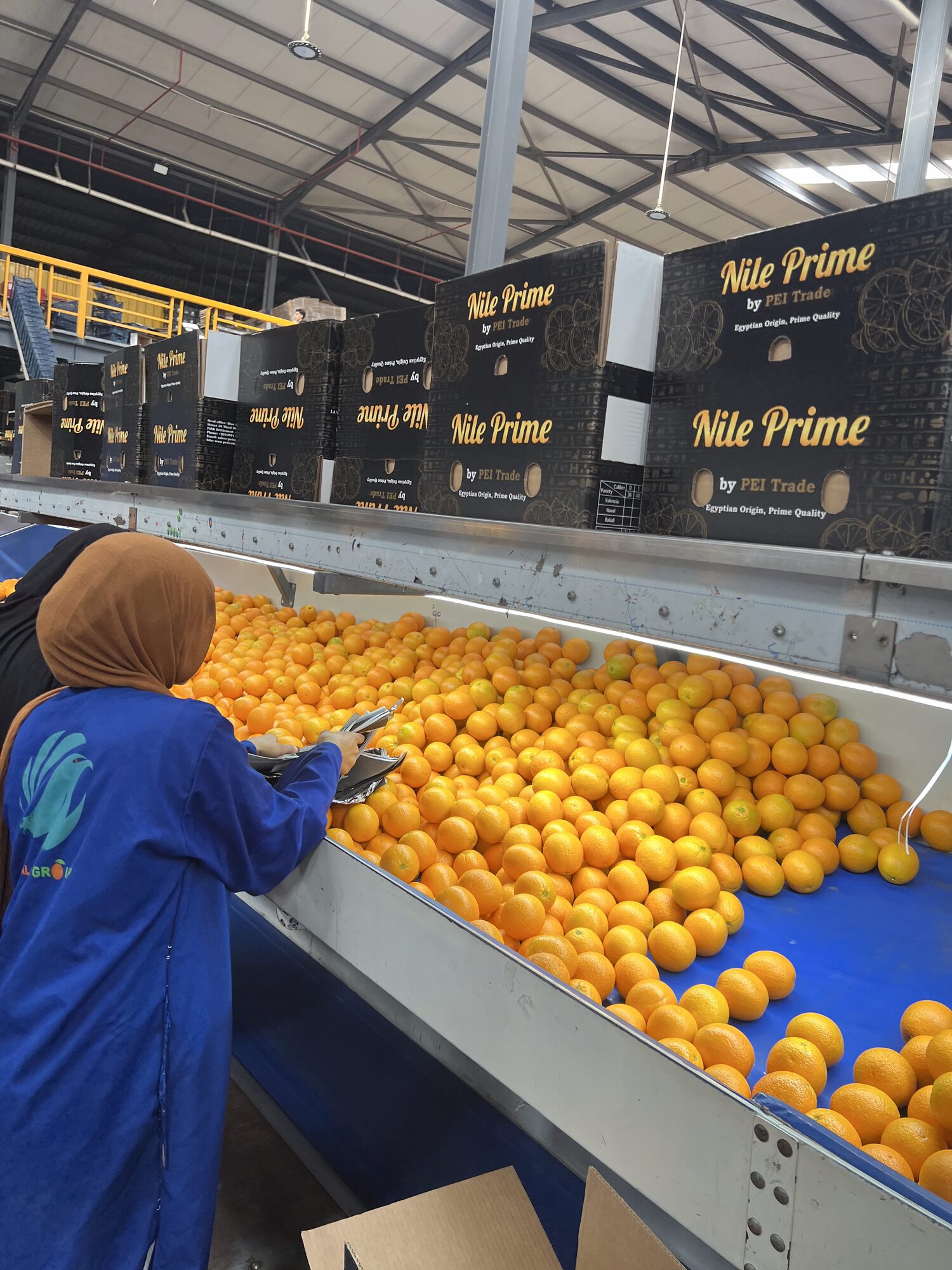
Fungicides applied in the packhouse drencher, and the wax carrier they travel in, appear on the analysis alongside field residues. Imazalil, thiabendazole and 2-phenylphenol are the usual names on citrus. Some markets restrict individual actives, and several retail specifications set private limits below the legal MRL, commonly a percentage of it. Where that applies, the packhouse treatment programme has to be adjusted for that customer, not for the market. Our note on the citrus packhouse from drencher to palletiser covers where in the line those applications happen.
What a usable laboratory report contains
A screen is only worth what its scope covers. Ask for the accreditation (ISO/IEC 17025), the number of actives in the multi-residue panel, the limit of quantification, the sampling date and the block or lot the sample represents. A certificate that does not tie back to a lot code cannot be matched to the pallets in the container. Sampling should follow a recognised protocol rather than a handful of fruit taken from the top layer, and the sample should be drawn before the fruit is packed so there is time to act on the result.
Setting it up before the season
The workable arrangement is agreed in writing at programme stage. It names the destination market and any retail specification, the panel to be screened, the frequency (per block, per lot or per shipment), who pays, and what happens if a result exceeds the limit. Buyers who want more than a per-shipment screen usually ask for a pre-season block screen plus one confirmatory analysis before the first loading, which catches problems while there is still a season left to fix them.
Speak to the citrus desk
Nile Prime works to the destination market limits and any retail specification agreed at programme stage, and supplies lot-coded analysis on request. For Valencia, Navel and Murcott specifications, ports of loading at Alexandria, Damietta or Sokhna, availability and a quotation on Incoterms 2020 terms, message the desk on WhatsApp at +20 10 9911 1918.