
Most citrus rind disorders are created before the fruit reaches the packhouse, and most of them are invisible on the day of loading. Creasing and granulation are physiological conditions that develop on the tree. Oleocellosis is created in the first minutes after picking. Puffiness is a maturity problem. Stem-end rind breakdown is a water loss problem that starts in the packhouse and finishes in the container. None of these are decay, and none of them are chilling injury, which means a buyer who reports them as either will get the wrong answer from the supplier.
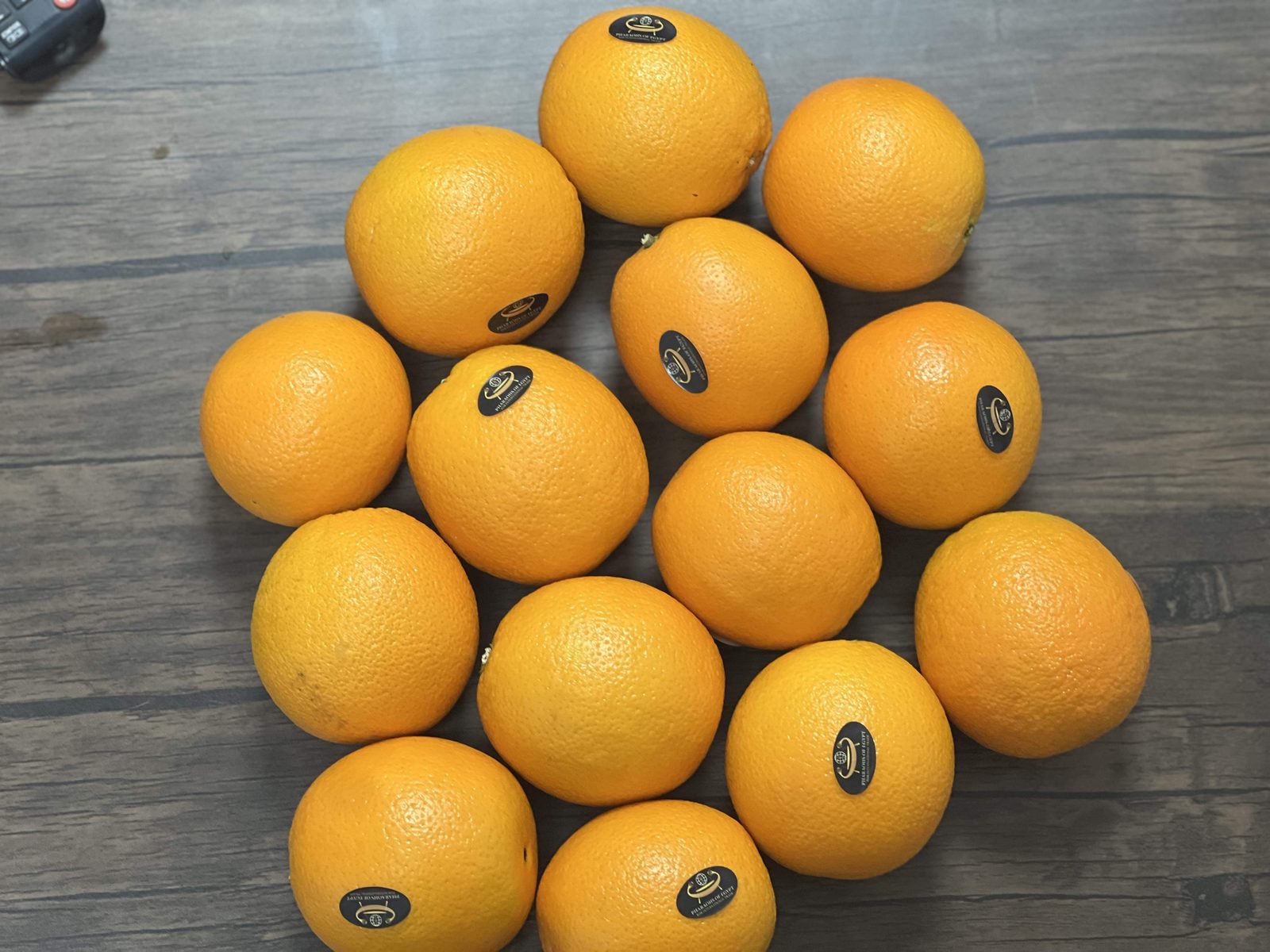
The five citrus rind disorders that matter
| Disorder | What it looks like | Where it is created | Gradeable out |
|---|---|---|---|
| Creasing | Sunken grooves and channels in the rind, fruit feels soft over them | On the tree, weeks before harvest | Yes, visible on the line |
| Oleocellosis | Green then brown sunken patches where oil glands ruptured | At picking, on turgid fruit | Partly, it darkens over several days |
| Puffiness | Rind lifted away from the segments, fruit light for its size | Late in the maturity window | Yes, by feel and by weight per count |
| Granulation | Dry, hard juice vesicles inside, no external sign | On the tree, late season and large fruit | No, only by cutting samples |
| Stem-end rind breakdown | Sunken collapsed ring around the button | Between picking and cooling, and in dry storage | No, it appears after packing |
Oleocellosis: created in the first ten minutes
Oleocellosis is the one disorder on this list that a picking crew can cause outright and a buyer will only see at destination. When citrus rind is turgid, which means early morning with dew still on the fruit, or within a day or two of heavy irrigation or rain, the oil glands sit under pressure. Any impact ruptures them, the released oil kills the surrounding rind cells, and a pale green depression appears. Over the following days it browns and hardens. Fruit that looked clean at packing arrives spotted.
The control is entirely in harvest discipline. Do not pick until the dew has dried. Delay picking 24 to 48 hours after significant rain or irrigation. Keep bin drops short and do not overfill. This is one of the specific reasons our note on the first 72 hours from harvest to loading puts so much weight on the picking window rather than the packhouse.
Creasing: a tree problem, a grading answer
Creasing shows as sunken channels where the albedo, the white layer under the peel, has broken down while the outer rind stayed intact. Navel oranges are more prone to it than Valencia. It develops on the tree over weeks and is influenced by rind thickness, fruit position in the canopy and nutrition. From the buyer’s side, creasing is a grading question rather than a shipping question. Affected fruit is visible on the sorting line, it grades out, and its presence in a container points at a grading failure rather than a transit failure. Creased fruit also bruises more easily in handling, so it should not be sent even into a second-grade programme where the fruit travels far.
Puffiness: the late mandarin problem
Puffiness appears at the end of a variety’s window, most visibly in mandarins. The rind separates from the segments, the fruit feels light and hollow for its calibre, and it bruises and splits in handling. A container of puffy mandarins usually means the fruit was picked a week or two past the sensible cut-off, often because a programme was still unfilled. The defence is contractual rather than technical: agree a harvest window on the order, not just a delivery date, and specify a minimum weight per count so light fruit is caught on the line.
Granulation: why the inspector cuts fruit
Granulation, sometimes called section drying, is juice vesicles turning dry and hard while the fruit still looks and weighs correctly from the outside. It is more common late in the season, in oversized fruit, and in fruit from young vigorous trees. Nothing on the packing line detects it. The only defence is cutting a sample at pre-shipment inspection, which is why a proper inspection report on citrus includes cut fruit and a juice content figure and not only external grading. If your inspection protocol does not require cutting, granulation is a risk you are carrying without knowing it.
Stem-end rind breakdown: a water loss defect
Stem-end rind breakdown is a collapsed sunken ring around the button, caused by rapid moisture loss from the stem end while the rest of the fruit is still firm. It is worst when fruit sits warm and dry between picking and cooling, and when storage humidity is low. Prompt cooling, high relative humidity in the cold store and in the container, and a coating applied correctly all reduce it. Because it appears after packing, it is frequently reported as transit damage. That is nearly right: it is created by the conditions in and before transit, not by the fruit itself. Distinguishing it from the rind pitting of chilling injury on Egyptian citrus matters, because the two have opposite fixes. Chilling injury calls for a warmer set point, stem-end rind breakdown calls for higher humidity and faster cooling.
Nile Prime exports Egyptian citrus and is not a neutral reviewer. Disorder behaviour varies with variety, orchard and season. Where a claim is in dispute, an independent surveyor’s report at discharge remains the reference document.
Writing rind tolerances into your citrus specification
If you are setting the 2026/2027 citrus specification and want the rind disorder tolerances written into it properly, alongside a cut-fruit clause for the pre-shipment inspection, send us your variety and calibre plan and we will draft the clauses. WhatsApp +20 10 9911 1918.