
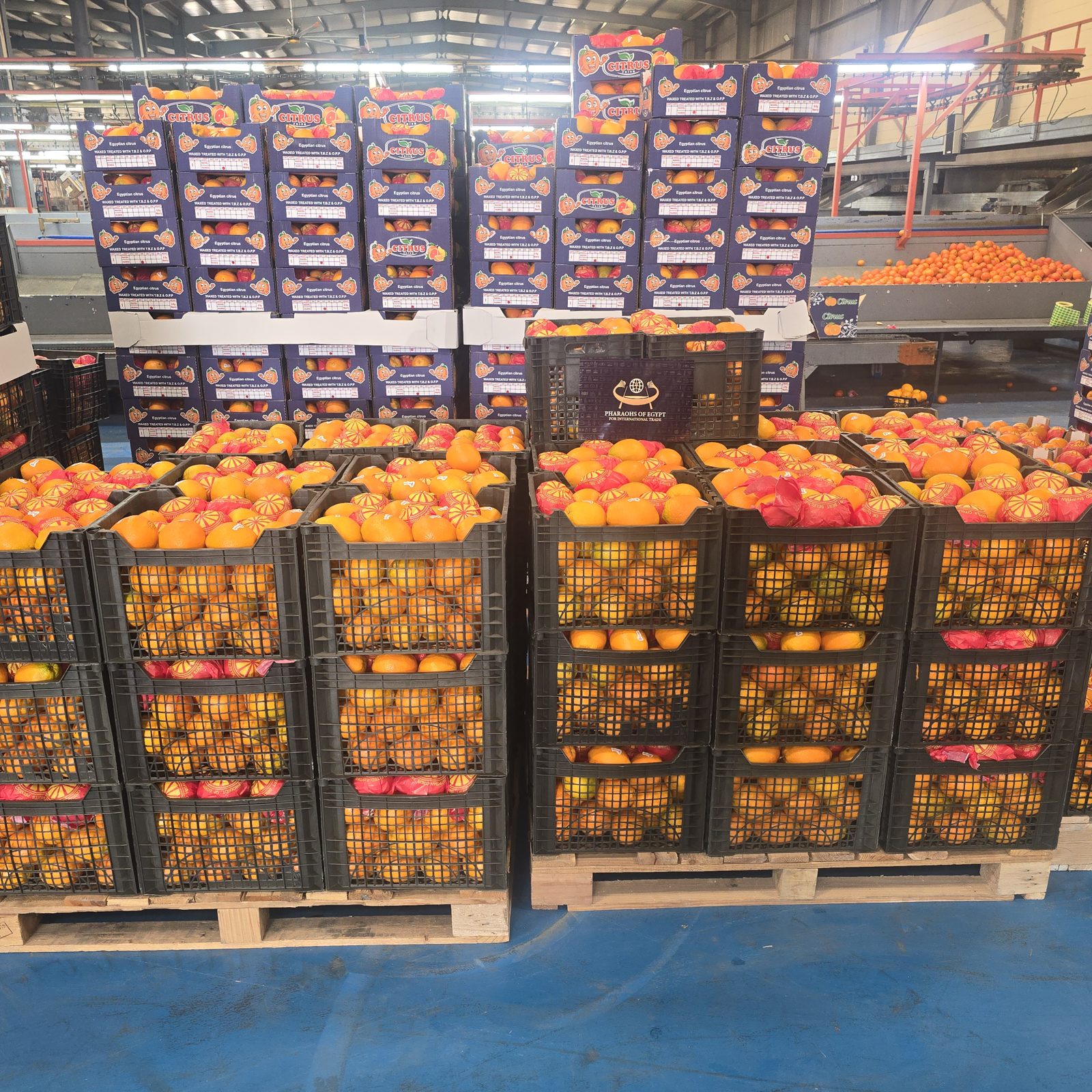
Most of what is written about citrus cold chain stops at the container doors. For a receiver, the container is the short part. Fruit that sailed 18 days may then sit four weeks in a cold room, move through a repacking line and reach a shelf a fortnight after that. The decisions taken in the first 24 hours after devanning determine how much of that is possible.
Conditions in the receiving cold room
Oranges and mandarins hold at 4 to 5 degrees Celsius with relative humidity at 90 to 95 percent. Most receiving cold rooms are drier than that, which is the single most common cause of weight loss and rind shrivel after arrival. A room running at 75 percent humidity will pull moisture out of the fruit steadily, and the loss shows first as a dull, slightly soft rind on the top layer of the pallet.
Keep the fruit at the temperature it arrived at. Moving a pallet from 4 degrees into a 12 degree staging area and back again condenses moisture onto the carton, softens the board and creates the conditions for mould to establish at a cut or a stem-end. If staging is unavoidable, do it once and move the fruit onward rather than cycling it.
Do not hold citrus in a room with ethylene-producing product. Stone fruit, apples, melons and bananas in the same space will accelerate rind breakdown and, on mandarins, calyx browning and drop.
Rotating by lot, not by pallet position
A container is not one homogeneous stock. It typically carries fruit from more than one picking day and sometimes more than one field block, and the differences show up over weeks rather than at inspection. Rotate on the lot code printed on the carton, not on which pallet is nearest the door. Record the lot against the sale so that if a problem appears at a customer, the supplier can trace it to the block and the packing shift.
Open and check two cartons from different pallets on arrival and again at day seven and day fourteen. This costs almost nothing and gives you a trend rather than a single snapshot, and a trend is what tells you whether the stock is stable or declining.
What appears after arrival, and what it means
Rind pitting and brown sunken patches that were not visible at loading usually indicate the fruit was carried too cold, and the damage only expresses once the fruit warms. Our note on chilling injury on Egyptian citrus covers the thresholds. Puffiness, creasing and granulation are physiological and originate in the orchard rather than the voyage, and are set out in our note on rind disorders. Green or blue mould spreading from a single fruit is a wound infection and calls for the affected fruit to be removed and the layer inspected, not for the pallet to be condemned.
Estimating remaining selling days
Take realistic post-harvest life for the variety, subtract the days from packing to loading, the sailing days, and the days at port and in customs. Navel typically gives 6 to 8 weeks from packing under correct conditions and Valencia somewhat longer, while mandarins are shorter and vary widely by variety. A container packed on day zero, loaded on day four, sailing 18 days and cleared on day 26 has consumed a month before it enters your cold room. Plan the onward sale against what is left, not against the total.
Talk to us before the first arrival
We will send the packing dates, lot codes and the temperature trace with each shipment so your receiving team can plan rotation from day one. WhatsApp +20 10 9911 1918.