
Most published guidance on Egyptian mango is written for European retail or Gulf import. African destinations are covered far less, even though they absorb real volume and behave very differently from a retail programme. As the 2026 Keitt tail runs through September, buyers in Libya, Sudan, Kenya and Tanzania are among the most active on late fruit. The commercial mechanics deserve their own explanation.
Routing, and the road option
Libya is the outlier because a large share of the trade moves overland rather than by sea. Refrigerated trucks load at the packhouse and cross at Sallum, with transit to Benghazi typically measured in days rather than weeks. That short transit changes the fruit specification: harder to justify air, no need for the long-transit conservatism that governs a twenty-day sailing, and scope to ship fruit at a slightly more advanced maturity because it will be on sale quickly. It also concentrates the risk on border throughput rather than on the cold chain.
Sudan and East Africa move by sea. Sokhna is the natural loading port for anything routed through the Red Sea toward Port Sudan, Djibouti, Mombasa or Dar es Salaam, and it avoids the Suez transit that an Alexandria loading would require. Alexandria still works where a service suits the schedule, but the port choice should follow the destination rather than habit. Our Egyptian ports guide sets out the differences between Alexandria, Damietta and Sokhna in more detail.
Pack formats that suit these markets
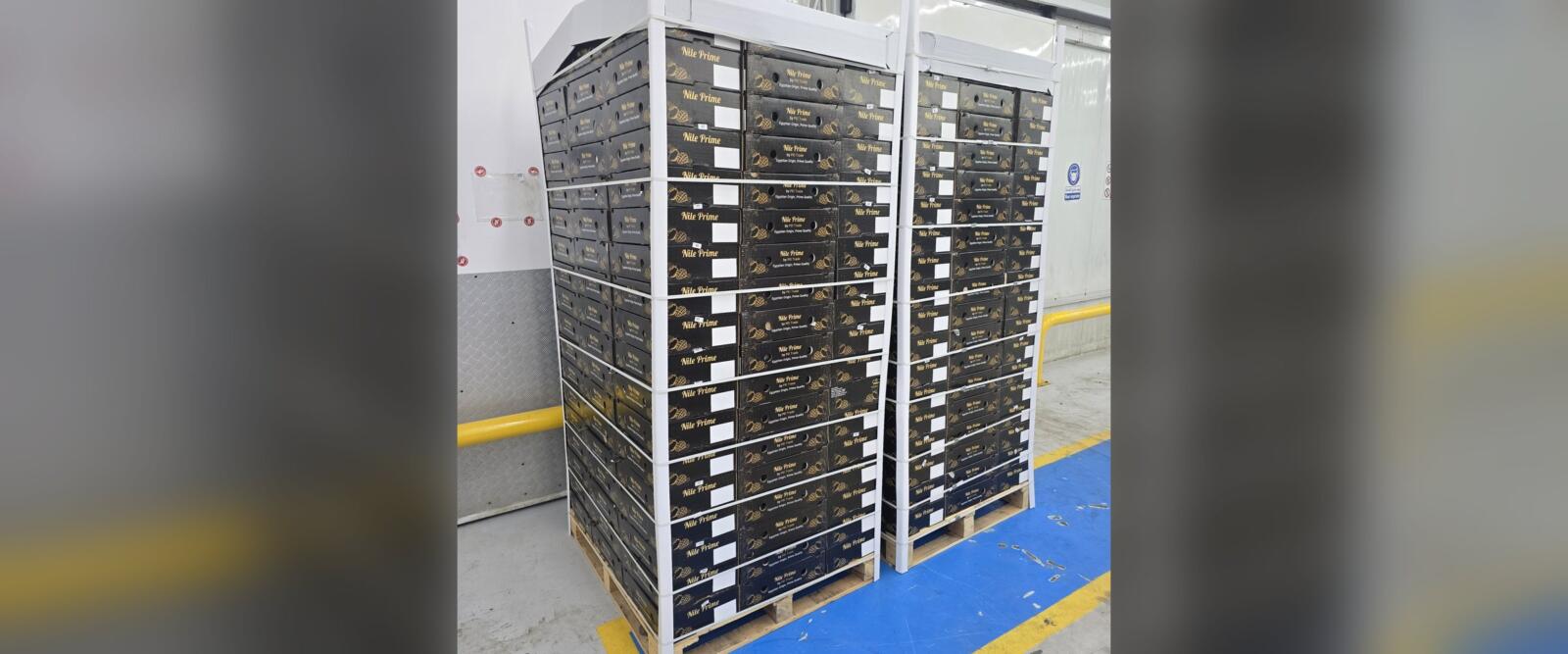
African destinations are predominantly open-market and wholesale rather than packaged retail. That pushes format decisions in a consistent direction. Larger counts and bigger fruit sell well, so counts 6 to 9 in a 4 kg or 6 kg net carton move faster than the count 10 to 12 sizes that EU retail favours. Single-layer telescopic cartons with a moulded tray remain the workhorse. Punnets and retail sleeves rarely earn their cost.
Class II fruit has a genuine home here. Cosmetic defects that would fail a European retail specification, minor sap marks or light scarring, are widely accepted where fruit is sold loose by weight. That does not mean lower internal quality. Maturity, firmness and freedom from decay still have to be right. The distinction between cosmetic grade and condition is covered in our note on Class I and Class II Egyptian mango.
Documentation and market access
The document set is the standard one: commercial invoice, packing list, certificate of origin, phytosanitary certificate and the bill of lading or CMR on road movements. Several African destinations additionally require a certificate of origin legalised by their embassy or a chamber of commerce, and some operate pre-shipment conformity schemes through appointed inspection bodies. Confirm which regime applies to your destination before booking, because arranging a conformity certificate retroactively is slow and expensive.
Cold treatment is generally not required on these lanes, which removes a constraint that complicates shipments to some other destinations. Standard phytosanitary inspection at the Egyptian side still applies.
Payment practice
This is where African lanes differ most from Gulf or European business. Letters of credit are used but are slower and more costly to confirm from several of these markets, and banking access varies considerably by country. In practice the trade runs on advance transfer, part deposit with the balance against scanned documents, or payment through an established intermediary. First shipments are normally on a substantial deposit. That is not a reflection on the buyer. It is a reflection of how difficult recovery is if a load is not collected. The general framework for deposits and documentary settlement is set out in our guide to payment terms on Egyptian mango.
Timing the late season
Keitt runs into late September and, in a favourable year, early October from the later Ismailia and reclaimed-land blocks. Fruit from the tail of the season is smaller on average and needs faster turnover, which suits short-transit African destinations better than long sailings. Buyers planning September arrivals should have bookings placed now rather than waiting for the spot market to thin out.
Nile Prime ships Keitt from Alexandria, Damietta and Sokhna on Incoterms 2020 terms, with GLOBALG.A.P certified fruit and pre-shipment inspection available on request. For September Keitt positions into Libyan, Sudanese or East African destinations, message us on WhatsApp at +20 10 9911 1918.