
Fresh dates are a cold chain product, not a dry goods product, and treating them like the dried grades is the single most common mistake on this cargo. Egyptian Zaghloul, Samany and Barhi shipped at balah or rutab stage carry 40 to 60 percent moisture, respire actively and have weeks of life rather than months. The harvest runs from late August into October, which makes early September the point at which the loading plan has to already be fixed.
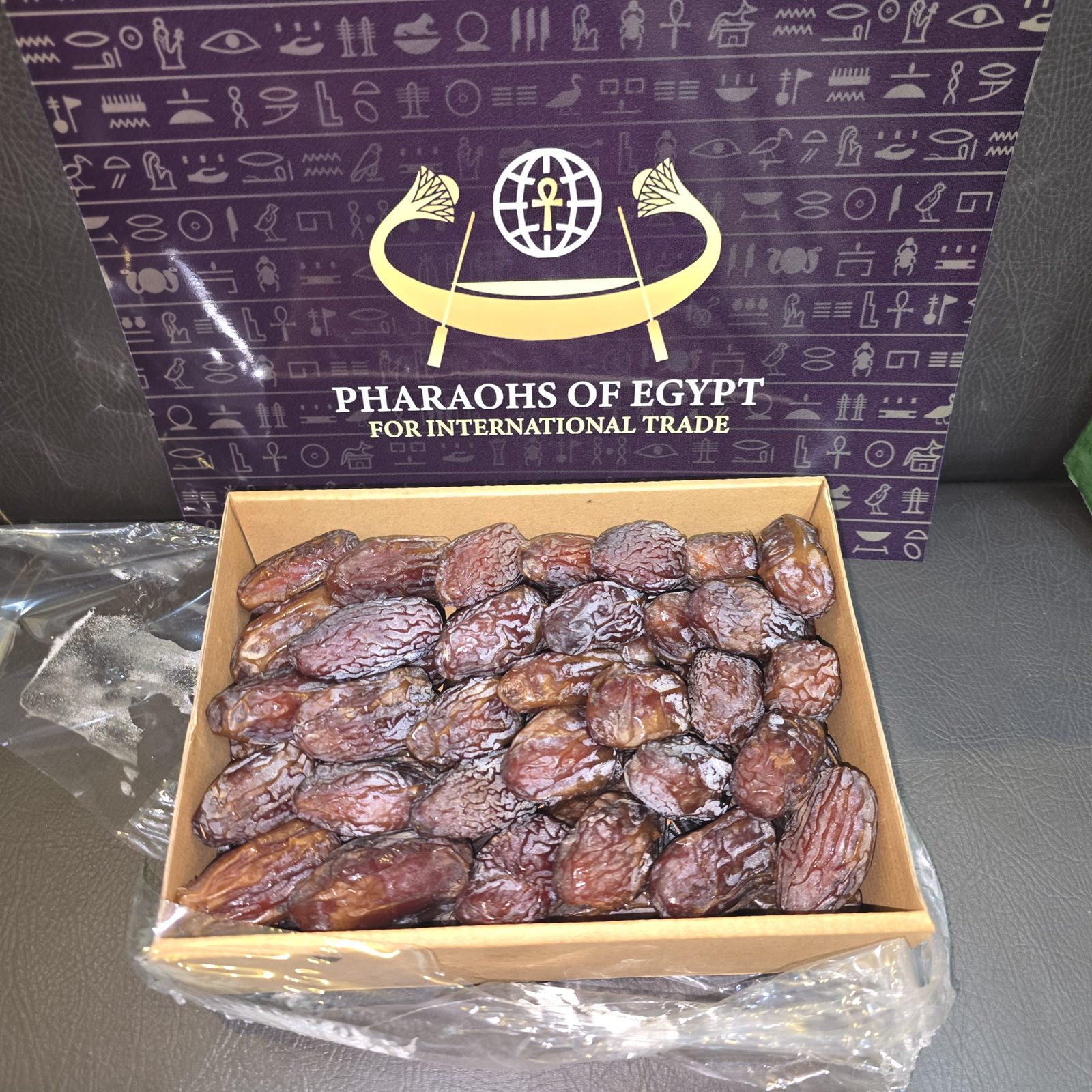
The four maturity stages, and which two ship fresh
Date maturity runs kimri, khalal or balah, rutab, then tamr. Only the middle two ship as fresh product. Balah is the crisp, fully coloured, not yet soft stage that Zaghloul is famous for. Rutab is the soft, translucent stage that Barhi and Samany are usually eaten at. Tamr is the fully dried stage that becomes the shelf-stable trade and is a different product with a different specification.
| Variety | Stage shipped | Harvest window | Carton format |
|---|---|---|---|
| Zaghloul | Balah, crisp and red | Late August to early October | 5 kg or 10 kg single layer, or on the strand |
| Samany | Balah to early rutab | September to October | 5 kg carton, tray or punnet |
| Barhi | Khalal yellow, or rutab | August to September | On the strand, or 500 g punnets in a 5 kg master |
| Medjool | Rutab, then cured to tamr | September to October | 5 kg bulk or retail punnet |
Set points and transit
Fresh dates go into the reefer at 0 to 2 degrees Celsius with humidity held around 85 to 90 percent and fresh air vents closed or near closed, since these are not high respiring fruit and open vents only cost humidity. Pre-cooling matters more than the carrying temperature. A pallet loaded warm from the field will not be pulled down by the container in time, and the middle cartons ripen while the outer ones look correct.
At 0 to 2 degrees Celsius, balah stage fruit typically holds three to five weeks in sound condition, which is enough for Gulf and Mediterranean lanes by sea and not enough for long haul. Anything beyond about four weeks door to door should go by air or should ship as tamr instead. Consumption of the remaining shelf life is what a buyer is really paying for on this cargo, and it is worth reading against the shelf life and storage chart.
The arrival defects to expect and specify against
- Advanced ripening. Balah fruit turning soft and brown in patches, caused by a warm start rather than a warm voyage.
- Skin separation and puffiness on Barhi, which follows late picking more often than transit.
- Condensation staining where cartons were closed before the fruit was fully cooled.
- Fermentation odour in the carton, which means the load was warm long enough for yeast activity and is not recoverable.
Write the stage into the contract, not just the variety. A clause reading Zaghloul, balah stage, uniform red colour, maximum 5 percent fruit showing rutab softening at loading gives both sides something measurable. Without it, the word fresh means whatever the surveyor decides on the day.
Nile Prime exports this cargo and is not an independent inspection body. Buyers comparing suppliers can start from the Egyptian date exporter list.
Book against the remaining window
Send the variety, the stage, the carton format and the destination port, and we will confirm what is still available this season and the loading week. WhatsApp +20 10 9911 1918.