
The single most common cause of a disappointing mango arrival is not the reefer, the transit time or the carton. It is fruit that was cut before it was physiologically mature. An immature mango will soften in transit and look ripe on arrival, but it will never develop proper sugar or aroma. Once it is picked, no amount of ripening room work will fix it. This is why maturity testing sits at the front of the Nile Prime harvest decision rather than at the end.
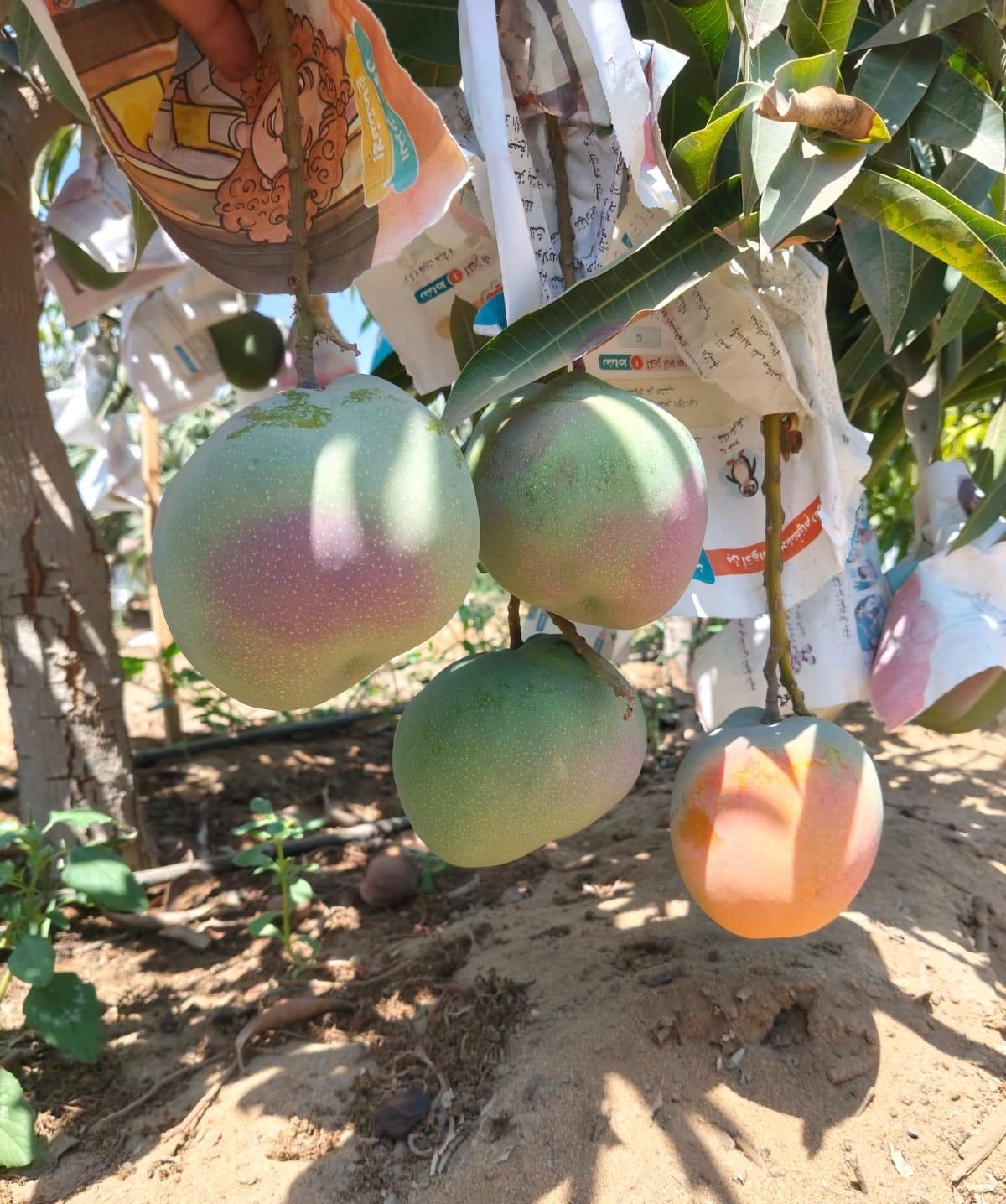
Why skin colour is not a maturity test
Keitt stays green at full maturity and often carries only a faint pink blush. Kent develops more colour but does so unevenly depending on sun exposure within the canopy. Naomi colours earlier than it matures. A picker working on colour alone will strip the outside of the tree too early and leave shaded fruit hanging too long. Colour describes appearance. It says very little about eating quality.
Dry matter
Dry matter is the most reliable single indicator of eventual eating quality, because it reflects the starch and sugar the fruit has already accumulated on the tree. It is measured by taking a slice from the cheek of a sample fruit, weighing it, drying it and weighing it again. For Egyptian Keitt and Kent, harvest is generally not opened below about 14 percent dry matter, and blocks intended for long sea transit are usually held until the sample average sits higher than that. Dry matter does not rise after picking, so this figure is fixed at harvest.
Brix
Brix measures soluble solids, effectively sugar, with a refractometer on expressed juice. It is quick and cheap, which makes it useful on the line, but on a hard green mango it is a weak indicator on its own because most of the sugar is still bound up as starch. Brix becomes meaningful once the fruit has ripened. A useful practice is to hold a sample from each block until it is eating ripe and measure brix then, using that result to judge whether the block should be harvested. Ripe Keitt and Kent from a good Egyptian block will typically read in the mid teens.
Firmness and flesh colour
Flesh colour is checked by cutting sample fruit lengthwise. Mature fruit shows yellow developing from the stone outward. Fully white flesh means the block is not ready. Firmness is measured with a penetrometer on two opposite cheeks after removing a disc of skin, and it is the figure that governs shipping decisions rather than harvest decisions. Fruit that is already softening does not belong in a container heading for a three week sail. Our note on ripening and shelf life management covers how firmness is used at the receiving end.
What to ask for as a buyer
Write the maturity standard into the specification rather than leaving it to the exporter. A workable clause names the minimum dry matter at harvest, the target firmness range at loading, the sample size and the frequency of testing. Twenty fruit per block per test, repeated as harvest moves through the orchard, is a reasonable baseline. Ask for the maturity record to be issued with the shipping documents. It costs the packhouse nothing to share and it gives both sides a factual reference if arrival quality is questioned later.
Where testing sits in the packhouse day
Maturity work happens before the fruit reaches the line. By the time cartons are being filled the decisions that determine eating quality have already been made in the orchard. The sequence from field heat through grading to a palletised container is set out in our walkthrough of the Egyptian mango packhouse process.
To request the maturity protocol applied to a specific block, or to have dry matter and firmness figures included with your shipping documents, contact the Nile Prime export desk on WhatsApp at +20 10 9911 1918.