
Egyptian peppers export is a winter greenhouse trade: colored bell peppers — red, yellow, orange — grown under protection and shipped November to May, exactly when Dutch glasshouses run on expensive winter energy and Spanish supply carries the whole continent. Egypt’s pitch is simple: comparable blocky fruit at meaningfully lower production cost, on lanes that reach Europe in days and the Gulf even faster. This guide covers types, specs, and the window. Part of our vegetables hub.
Last updated: July 2026 · By the Nile Prime export team
Table of Contents
- Types & Grades
- Specs & Logistics
- The Window & the Competition
- Egyptian Peppers — FAQ
- Book the Winter Pepper Window
- The Greenhouse Build-Out
- Month by Month
- Market by Market
- Four Buyer Mistakes
- The Cost Case
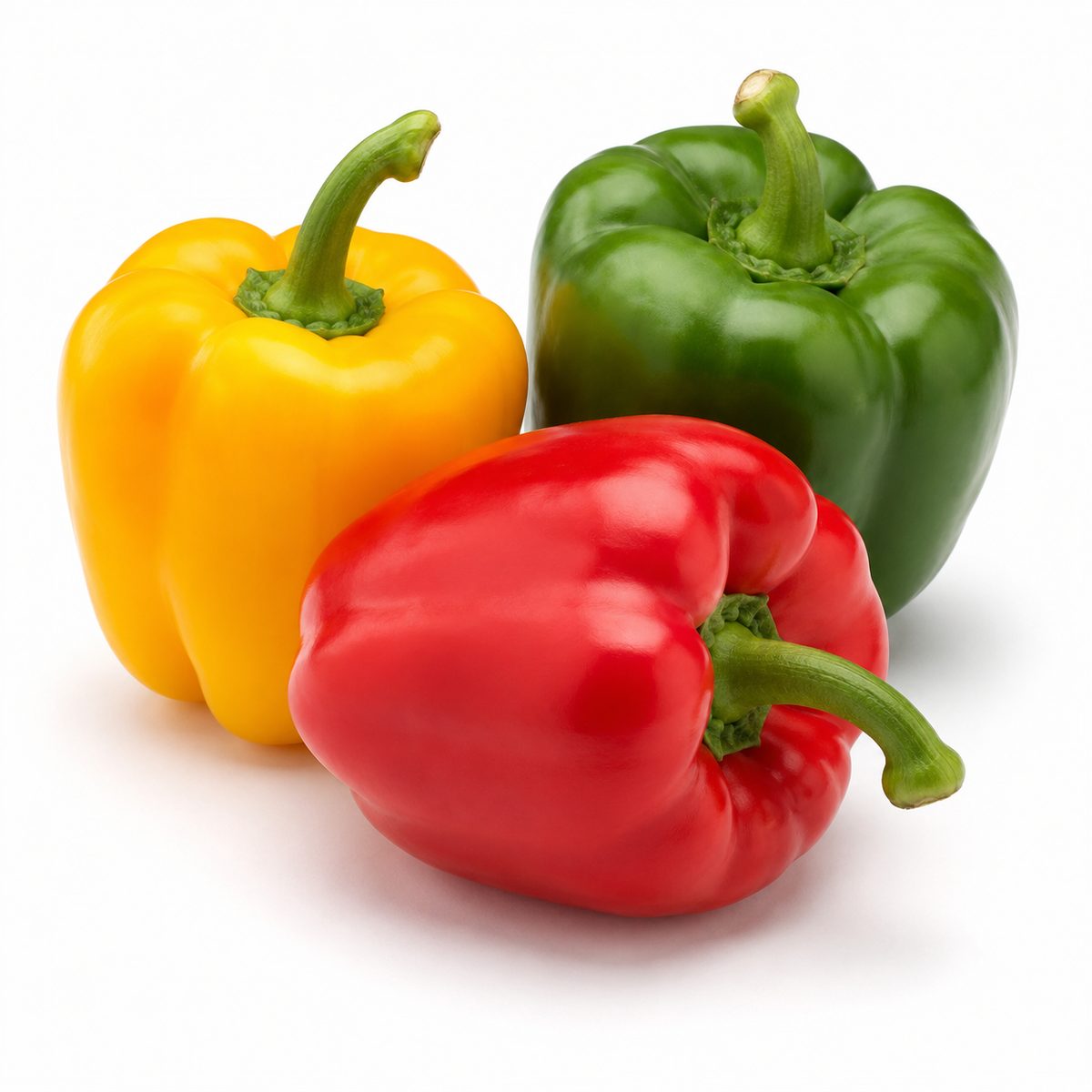
Types & Grades
| Type | Sizes | Demand |
|---|---|---|
| Red blocky bell | 70–90+ mm | The retail core — EU & Gulf |
| Yellow & orange bell | 70–90 mm | Traffic-light packs, premium shelf |
| Green bell | All sizes | Value retail & food service |
| Mixed color packs | Flow-wrapped 3-packs | The supermarket format — private label standard |
| Hot chili types | Various | Gulf & ethnic retail niche |
Specs & Logistics
- Grade: firm, glossy, thick-walled, uniform color — 4-lobed blocky preferred for retail.
- Packing: 5 kg cartons; traffic-light flow-wrap 3-packs (500 g) for retail programs.
- Cold chain: 7–8°C, 90–95% RH — colder causes pitting; peppers dehydrate visibly if humidity slips.
- Lanes: reefer truck/short-sea to Europe 4–7 days; Gulf 3–5 days sea or same-day air.
- Compliance: GLOBALG.A.P + strict EU MRLs — peppers are among the most residue-tested products at EU borders; per-lot testing is survival (documents guide).
The Window & the Competition
November–May, the European colored-pepper shelf belongs to Spain (Almería) with Morocco rising and the Netherlands paying winter gas bills. Egypt’s growing greenhouse sector enters that triangle on cost — the play is programmed weekly supply into wholesale and mid-retail, and Gulf programs where the freight edge is decisive. Contract September–October for the November opening.
Egypt’s Greenhouse Build-Out — The Story Behind the Supply
The pepper trade exists because Egypt spent the last decade building protected agriculture at scale: thousands of hectares of plastic tunnels and increasingly climate-controlled greenhouses across the reclaimed desert, much of it purpose-planted for export vegetables. The economics stack simply — winter sun that Holland has to replace with gas, land and labor at a fraction of Mediterranean costs, and blocky bell varieties bred for exactly this trade. The quality consequence matters to buyers: tunnel-grown fruit varies more with weather swings than Dutch glasshouse product, while the newest climate-controlled units close that gap. When qualifying a supplier, ask which production system backs your program — the answer predicts winter consistency better than any brochure.
Month-by-Month Through the Window
| Period | Supply State | Buyer Note |
|---|---|---|
| Sep–Oct | Planting/first sets; programs contracted | Book November opening volumes now |
| Nov–Dec | Season opens, colors building | Reds arrive first in volume; yellows/oranges follow |
| Jan–Feb | Peak production, best color availability | The traffic-light pack window at its strongest |
| Mar–Apr | Strong volumes continue | Watch Spanish spring recovery on EU pricing |
| May | Season tail as heat rises | Quality watch; shift remaining demand to Gulf lanes |
Market by Market
The Gulf is the natural first lane — 3–5 day transits, year-round salad culture, and hypermarkets that take the full color range plus chili types; Egyptian peppers effectively own the winter shelf there. Eastern and Central Europe buys on price into wholesale and mid-retail, where the Egyptian discount against Spanish fruit lands hardest. Western EU retail is the compliance game: strict MRLs, GLOBALG.A.P with GRASP, and flow-wrap pack standards — enter through importers who specialize in Egyptian programs rather than cold-calling chains. Russia takes robust reds and greens through the established produce lanes. The one market to approach carefully is the Netherlands itself in spring — selling peppers into Westland as Dutch production wakes is swimming upstream.
The Four Mistakes Pepper Buyers Make
- Buying color percentages loosely: “mixed colors” without ratios means a carton of greens with three reds on top. Specify the red/yellow/orange split per carton.
- Shipping too cold: peppers pit below 7°C — a fresh-produce reflex (“colder is safer”) that destroys this product specifically.
- Skipping wall-thickness spec: thin-walled fruit dehydrates visibly in transit; demand thick-walled blocky types for anything beyond a 5-day lane.
- Ignoring the MRL profile: peppers are a top-tier residue-watch product in the EU — one exceedance triggers enhanced checks; per-lot testing is the entry ticket, as the documents guide details.
The Cost Case Against Every Competitor
Run the winter pepper math from a European buyer’s desk and Egypt’s position clarifies. Dutch winter fruit carries the gas bill of heated glass — structurally the most expensive pepper on earth between November and March. Spanish Almería fruit is the volume incumbent, but a decade of rising labor and water costs has lifted its floor. Moroccan supply, the closest analogue to Egypt’s model, competes hard into Perpignan yet faces its own water constraints and truck-capacity ceilings. Egyptian fruit lands 4–7 days out at production costs below all three — the discount widest exactly when Dutch heating costs peak in deep winter. The honest caveats: Egyptian consistency depends on the supplier’s production system, and the EU compliance bar is unforgiving. Which is why the winning Egyptian pepper program pairs a climate-controlled grower with per-lot MRL discipline — cost advantage plus compliance, not cost advantage instead of it. Verify both with the 10-point checklist before contracting the season.
Egyptian Peppers — FAQ
When is the Egyptian pepper season?
November to May — the protected-cultivation winter window when European production depends on expensive Dutch glasshouses and Spanish supply, and Egyptian greenhouse fruit competes on cost.
What pepper types does Egypt export?
Colored blocky bells — red leading, yellow and orange for traffic-light packs — plus green bells for value retail and chili types for Gulf and ethnic shelves.
How are export peppers packed and shipped?
5 kg cartons and 500 g flow-wrapped traffic-light 3-packs (private label standard), shipped at 7–8°C and high humidity — colder causes pitting — reaching Europe in 4–7 days.
Why is MRL testing critical for peppers?
Peppers rank among the most residue-tested products at EU borders — per-lot MRL testing to the destination’s limits is the entry ticket, and one exceedance can trigger enhanced checks on future shipments.
Book the Winter Pepper Window
Nile Prime — the premium brand of PEI Trade: WhatsApp +20 109 911 1918 · [email protected] · Peppers — specifications.
Sources: Tridge — Egypt pepper trade · PEI Trade.