
Beyond the flagship trades sit Egypt’s specialty fruits — figs, guava, cantaloupe, and watermelon — each with its own niche, season, and buyer. None moves mango-scale volume, but each rounds out a Gulf program, fills a seasonal gap, or serves a diaspora shelf nobody else supplies properly. This combined guide covers all four: seasons, specs, and the honest logistics of delicate fruit. Part of our fruits hub.
Last updated: July 2026 · By the Nile Prime export team
Table of Contents
- Figs — The Delicate Premium
- Guava — The Diaspora Signature
- Cantaloupe — The Early-Window Melon
- Watermelon — The Regional Volume Play
- The Four at a Glance
- Specialty Fruits — FAQ
- Round Out Your Program
- Worked Example: London Specialty Program
- Air vs Sea Basket
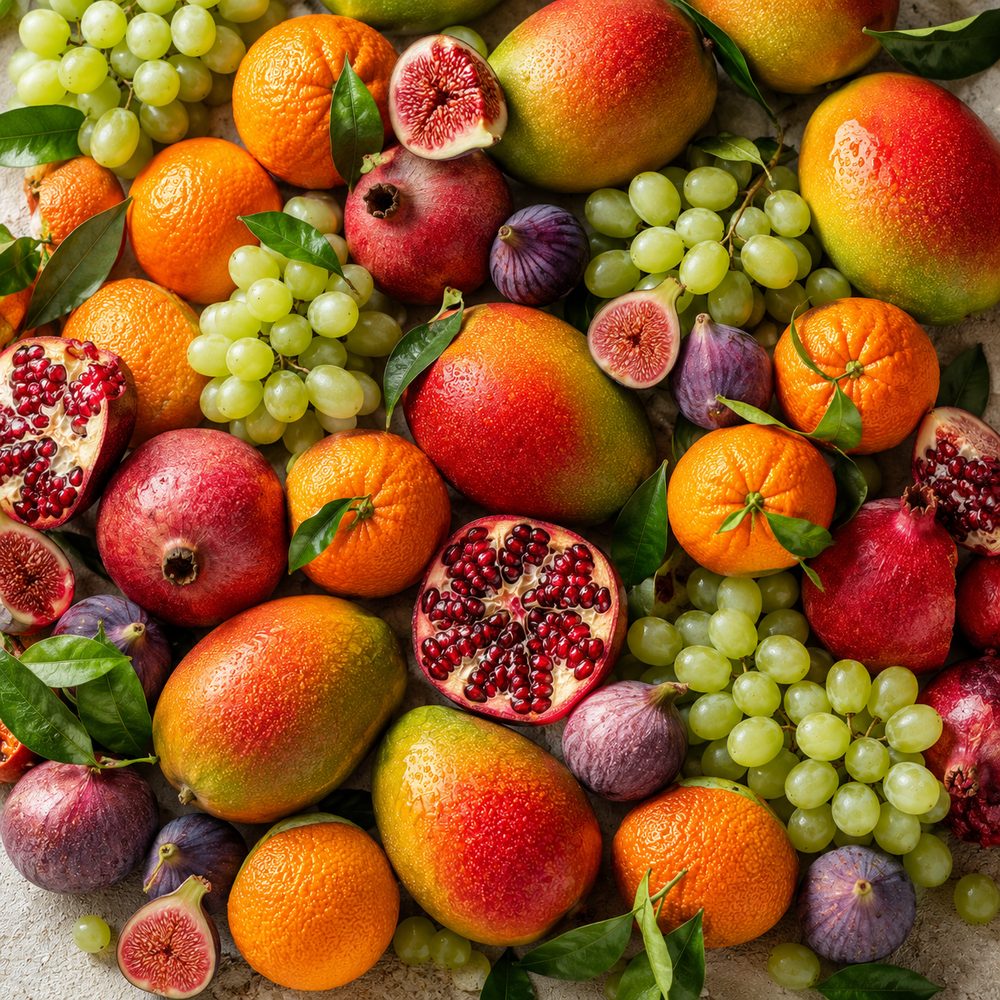
Figs — The Delicate Premium
Fresh Egyptian figs (Sultani and related types) run July–September — soft, honeyed fruit that must fly: picked at dawn, single-layer trays of 1–2 kg, air freight to Gulf premium retail within 24 hours at 2–4°C, shelf life measured in days. The volume alternative is dried figs through autumn. A niche with real premium margins for buyers with fast retail turnover — and no tolerance for slow logistics. Specs: figs product page.
Guava — The Diaspora Signature
Egyptian white guava is a cultural product — the perfumed fruit of late summer (Aug–Nov) that Egyptian and Levantine communities abroad actively seek. Fresh exports fly to the Gulf in 2–3 kg cartons; the bigger trade is frozen guava pulp and halves for the juice industry — guava nectar is a Gulf staple, and Egyptian pulp feeds it year-round at −18°C. Specs: guava product page.
Cantaloupe — The Early-Window Melon
Egyptian cantaloupe (Galia and charentais types included) hits its export stride March–July, with the March–May window the play: European and Gulf demand rises with spring while Spanish volume is still building. Sea-freight viable at 4–6°C in 5–10 kg cartons, counts 4–9 per carton, Brix ≥12° for export grade. Specs: cantaloupe product page.
Watermelon — The Regional Volume Play
Egyptian watermelon (May–August) moves in serious regional volume — Gulf and neighboring markets — where short lanes suit a heavy, low-value-per-kilo fruit. Whole melons 4–12 kg, seeded and seedless, loaded loose or in bins at ambient-to-12°C; the economics live and die on freight per kilo, which is why Egypt owns its region and doesn’t chase distant lanes. Specs: watermelon product page.
The Four at a Glance
| Fruit | Season | Logistics | Best Buyer |
|---|---|---|---|
| Figs | Jul–Sep | Air only, 2–4°C, days of shelf life | Gulf premium retail |
| Guava | Aug–Nov fresh; pulp year-round | Air fresh / −18°C pulp | Diaspora retail + juice industry |
| Cantaloupe | Mar–Jul | Sea 4–6°C | EU & Gulf spring programs |
| Watermelon | May–Aug | Short-lane volume | Gulf & regional wholesale |
Worked Example: A London Wholesaler Bets on the Specialty Basket
A hypothetical New Covent Garden wholesaler serving London’s restaurant trade wants difference, not volume. The Egyptian specialty program: autumn — two pallets of fresh Sultani figs air-freighted weekly during the short season, landed at premium pricing the restaurant trade absorbs without blinking; Wonderful-variety pomegranates by sea fill the same months at volume prices. winter — sweet Egyptian strawberries in punnets ride the reefer lanes; fresh dates in the khalal window serve the Middle Eastern restaurant niche. spring — green almonds and fresh apricots in flying visits — days-long seasons that chefs plan menus around precisely because nobody else has them. summer — figs return, prickly pears intrigue the adventurous, and premium Sedika and Ewais mangoes by air crown the program. Scenario economics: air freight makes each kilo expensive and the wholesaler’s margin per kilo triples anyway, because scarcity is the product. The lesson is structural — Egypt’s specialty basket is a chef-calendar business, and the buyers who win it qualify suppliers for reliability in tiny windows rather than price per tonne.
Air vs Sea Across the Specialty Basket
| Fruit | Mode | Why |
|---|---|---|
| Fresh figs | Air only | Days of shelf life; no sea option exists |
| Pomegranates | Sea | Weeks of storage tolerance; volume pricing |
| Fresh (khalal) dates | Air | Short window, premium niche |
| Guava | Air | Ethylene bomb; ripens in hours, not days |
| Prickly pear | Sea (short lanes) / air (far) | Moderate tolerance; Gulf sea lanes work |
| Premium mango varieties | Air for Sedika-class, sea for Keitt | Variety-dependent shelf life |
Specialty Fruits — FAQ
When are Egyptian figs in season?
July to September — delicate fresh fruit that must fly within 24 hours of harvest in single-layer trays, serving Gulf premium retail; dried figs extend the trade into autumn.
Does Egypt export guava?
Yes — fresh white guava flies to the Gulf August–November, and frozen guava pulp ships year-round at −18°C as the backbone of the region’s guava nectar industry.
When is the Egyptian cantaloupe window?
March–July, with March–May the strategic window — spring demand rising in Europe and the Gulf before Spanish volume peaks — sea-freighted at 4–6°C, Brix ≥12°.
Why doesn’t Egyptian watermelon ship to distant markets?
Freight economics — a heavy, low-value-per-kilo fruit only works on short lanes, which is why Egypt dominates its Gulf and regional radius and leaves long-haul to nobody.
Round Out Your Program
Nile Prime — the premium brand of PEI Trade — adds specialty fruit lines to any seasonal program: WhatsApp +20 109 911 1918 · [email protected] · the full calendar.
Sources: Tridge — Egypt fruit trade · PEI Trade.