
Egyptian produce in Saudi Arabia is less an import lane than a food-supply artery: 3–5 days from Sokhna to Jeddah, cultural familiarity with every Egyptian product, and a calendar where something Egyptian is always in season — citrus all winter, mangoes all summer, strawberries flown overnight, onions and dates year-round. This country guide maps the full basket for Saudi importers: what to buy each month, SFDA compliance, and the demand peaks that drive the year. Built from every product guide on this site.
Last updated: July 2026 · By the Nile Prime export team
Table of Contents
- The Saudi Buyer’s Egyptian Calendar
- SFDA & Clearance Essentials
- The Three Demand Peaks That Shape the Year
- Egyptian Produce in Saudi Arabia — FAQ
- One Partner for the Whole Saudi Calendar
- Worked Example: Riyadh Wholesaler
- SFDA, SABER & Labels
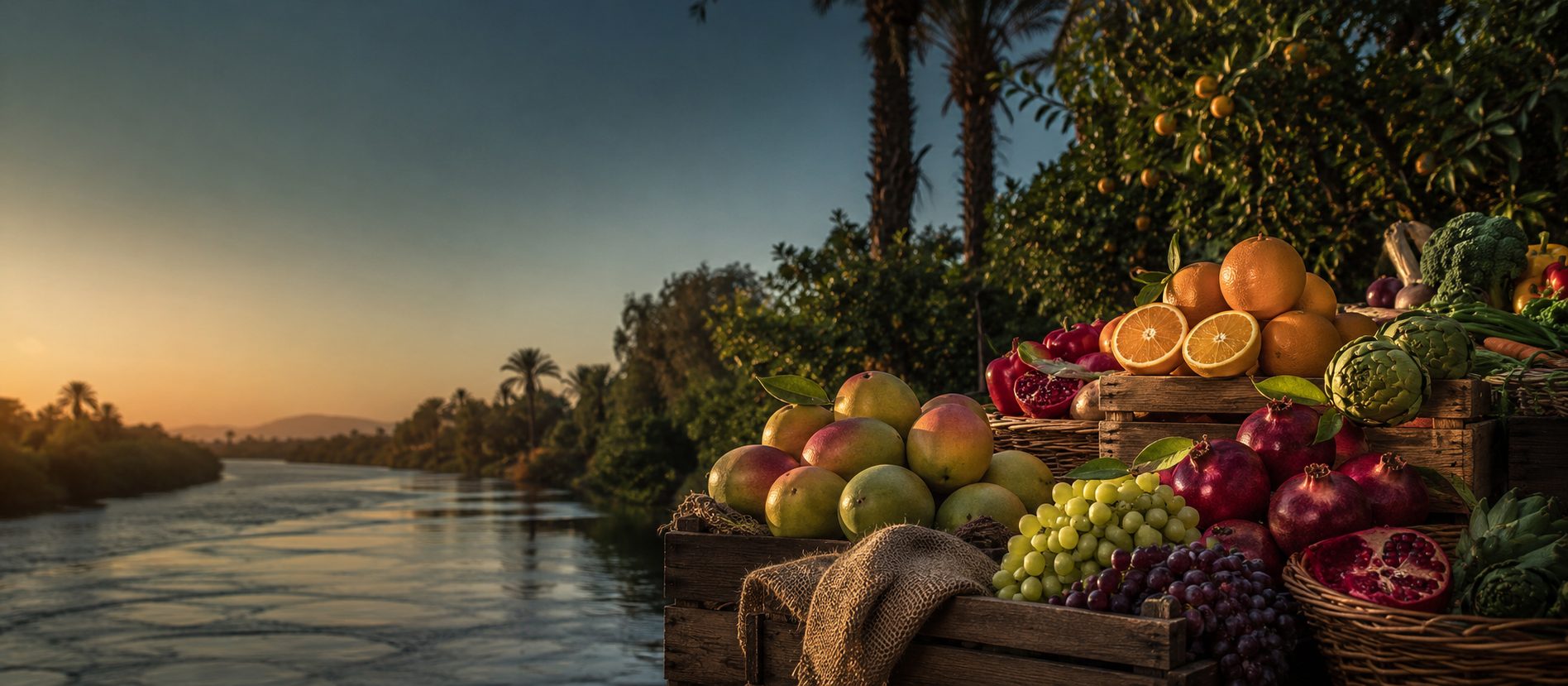
The Saudi Buyer’s Egyptian Calendar
| Months | Lead Products | Guide |
|---|---|---|
| Dec–Mar | Navel, mandarins, strawberries (air), potatoes | Citrus Gulf · Strawberries Gulf |
| Feb–May | Valencia volume + juice, onions, garlic | Citrus · Onions |
| May–Aug | Grapes, early mangoes, watermelons | Grapes |
| Aug–Nov | Mangoes at peak — Owaisi campaigns, pomegranates | Mangoes Gulf · Pomegranates |
| Oct–Ramadan | Dates programs, frozen staples | Dates |
| Year-round | Frozen (molokhia, okra, IQF), pulses, olives | Frozen · Legumes |
SFDA & Clearance Essentials
- Importer registration with SFDA before first arrival; product registration where categories require it.
- Arabic labeling on retail formats — product, origin, dates, packer — matching documents exactly.
- Halal documentation where requested for processed lines (olives, frozen prepared items).
- Documents: the standard Egyptian set (checklist here) with scans before vessel arrival — Jeddah clears complete files fast.
- Cold chain at destination: reefer trucking booked ahead — summer tarmac is the last-mile risk on every fresh product.
The Three Demand Peaks That Shape the Year
- Ramadan: dates contracted 4–6 months out, juice-grade Valencia and family packs surging — the year’s biggest planning exercise (and it shifts ~11 days earlier annually).
- Summer mango season: Owaisi launches in early August — air allocation books weeks ahead; campaign weeks make or break premium retail years.
- Winter citrus & strawberries: the fresh shelf’s high season — weekly programs from December, next-day strawberry air bridges.
Worked Example: A Riyadh Wholesaler’s Year With Egypt
Sketch a hypothetical Riyadh wholesale house serving supermarkets and catering across the central region. Its Egyptian calendar: December–February — Navel oranges via Jeddah (3–5 day transit from Sokhna), 8 containers monthly, sized 56–72 for Saudi retail. January — Ramadan planning meeting: February–March call-offs doubled in advance for juice oranges and dates, because the demand spike is calendar-certain and allocation goes to committed buyers. March–May — Valencia takes the juice trade; strawberries ride along in mixed reefer programs early in that window. May–September — the basket flips to onions, garlic, and potatoes as Gulf summer demand leans on storable vegetables. Year-round — frozen vegetables fill the quiet weeks. Total in this scenario: ~70 containers across 6 product lines from a small set of qualified exporters, GAFTA certificates keeping every shipment duty-free, SFDA registration and Arabic labeling handled once per SKU then reused all season. The wholesaler is invented; the shape — one origin covering a Saudi produce calendar nearly end to end at a 3-day sail — is Egypt’s structural pitch to the Kingdom.
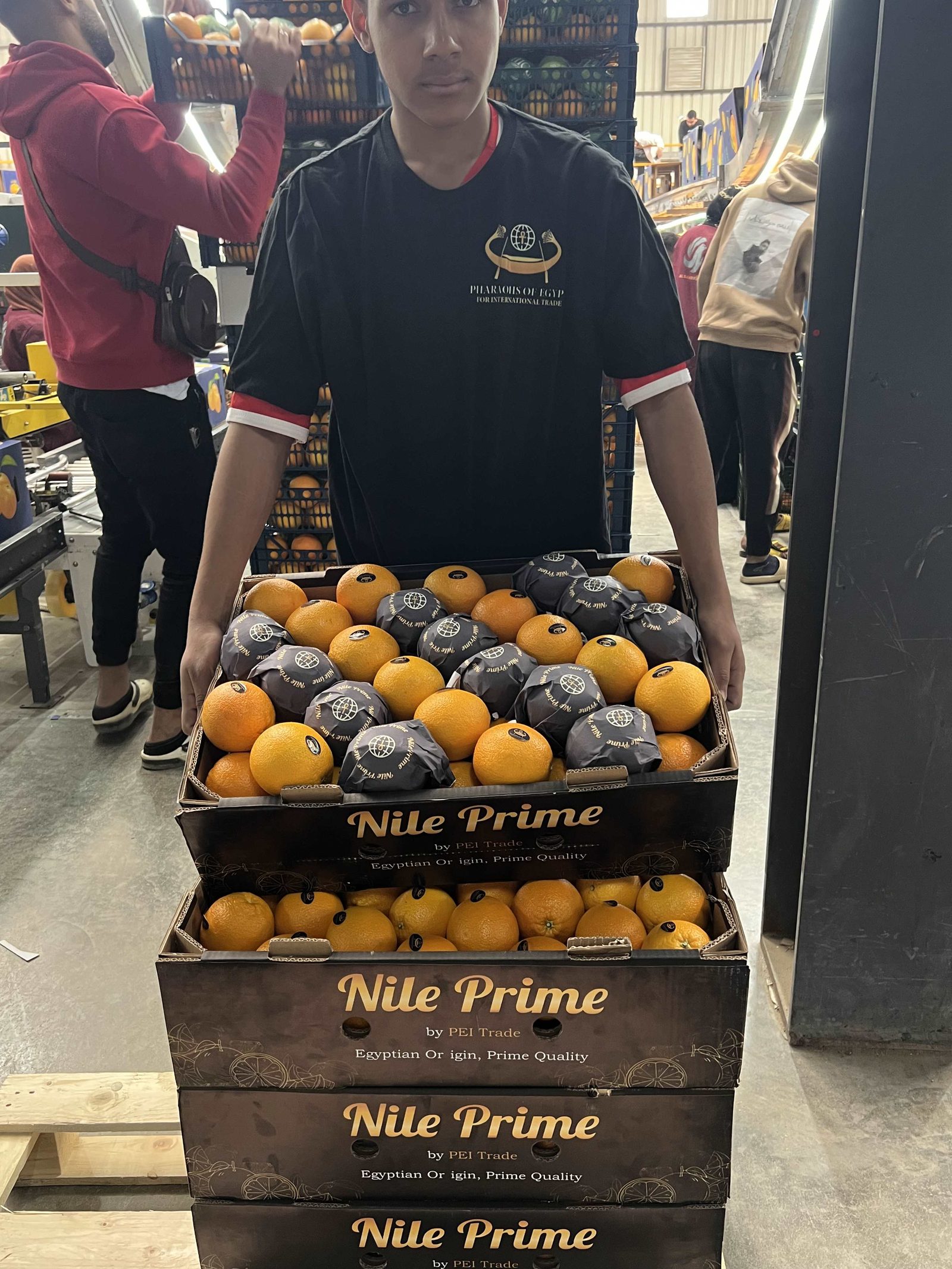
Saudi Compliance in Practice — SFDA, SABER, and Labels
- Arabic labeling on retail packs: product name, origin, packer, production/expiry dating per SFDA format — artwork approved before printing, not at the port.
- SFDA food-facility registration for the exporting packhouse/plant on processed and frozen lines; fresh produce rides on phytosanitary certification.
- SABER/FASAH flows handled by the importer’s broker — but the exporter’s document set (invoice, packing list, GAFTA CoO, phyto, halal where relevant) must match it field by field.
- Shelf-life dating: Saudi retail enforces dating conventions strictly; agree the printed format in the spec.
- Ramadan surge planning: book reefer space and double volumes 8–10 weeks ahead — the whole Gulf competes for the same equipment window.
Egyptian Produce in Saudi Arabia — FAQ
How long does shipping take from Egypt to Saudi Arabia?
Sea freight from Sokhna reaches Jeddah in 3–5 days; Riyadh and Dammam connect by reefer truck or via Gulf ports. Air freight from Cairo lands same-day — the standard for strawberries and premium mangoes.
What Egyptian products does Saudi Arabia import most?
Citrus and mangoes lead by season, with dates, onions, potatoes, strawberries, frozen staples (molokhia, okra, IQF fruit), pulses, and olives running through the year — a full-basket trade built on proximity and cultural familiarity.
What does SFDA require for Egyptian produce imports?
Importer registration before first arrival, Arabic labeling on retail formats matching the documents exactly, halal documentation where relevant, and the standard export document set with pre-arrival scans.
When should Saudi importers plan for Ramadan?
Four to six months ahead: dates allocation first, then juice-grade Valencia volumes and family-pack formats — remembering Ramadan moves about 11 days earlier each year.
One Partner for the Whole Saudi Calendar
Nile Prime — the premium brand of PEI Trade — runs Saudi programs across every season above, Arabic labeling included: WhatsApp +20 109 911 1918 · [email protected] · see what ships this month.
Sources: Tridge — Egypt export destinations · PEI Trade Gulf operations.