
Egyptian dates export starts from a fact that surprises even produce professionals: Egypt is the world’s largest producer of dates — well over 1.5 million tonnes a year — and its export trade is growing fast as packing and grading catch up with the orchards. Semi-dry and soft varieties ship from the October harvest through the year, with the Ramadan demand wave dominating the commercial calendar. This guide covers varieties, the trade’s rhythm, specs, and packing. Part of our fruits hub.
Last updated: July 2026 · By the Nile Prime export team
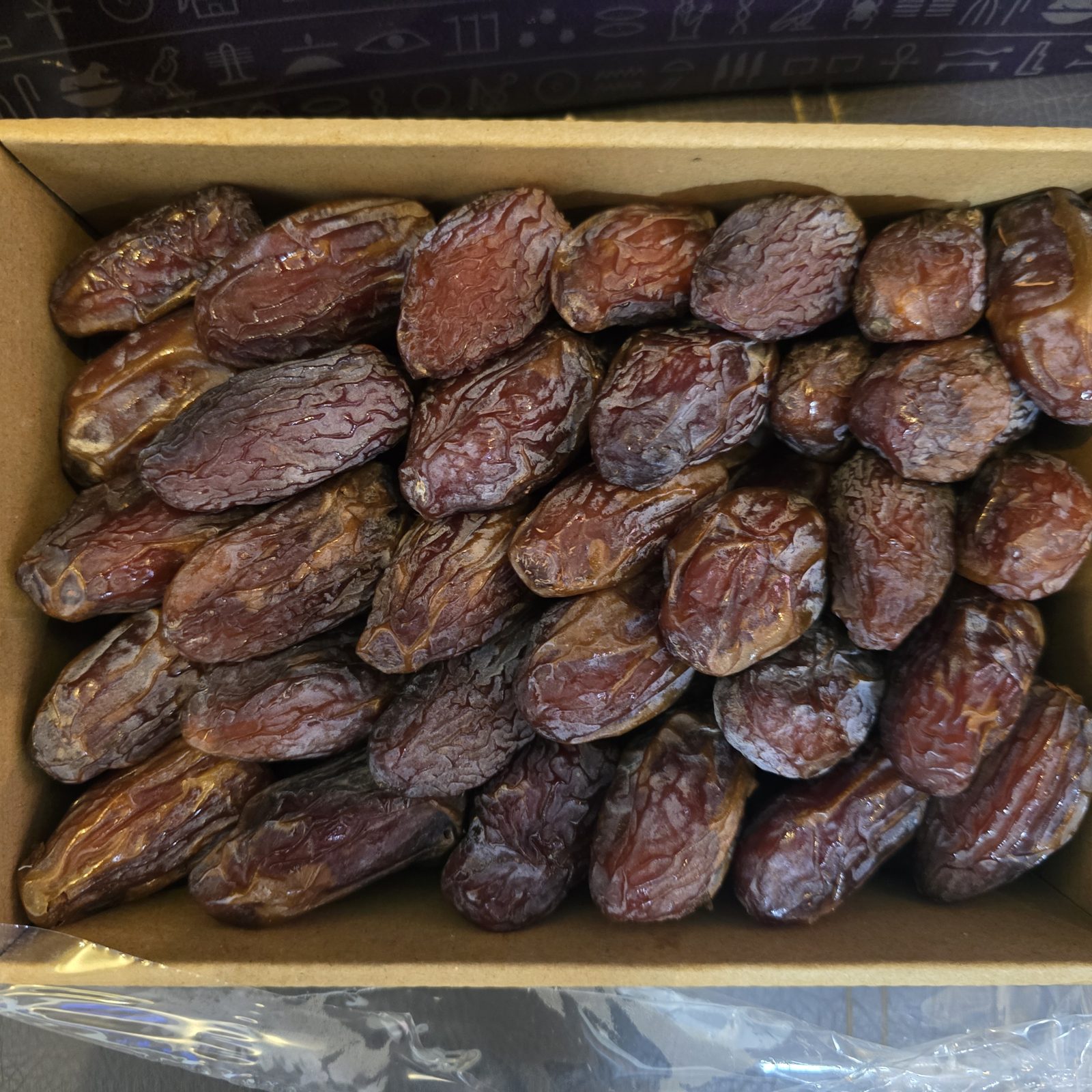
Table of Contents
- The Varieties That Trade
- The Ramadan Clock — The Trade’s Real Calendar
- Specs & Packing
- Egyptian Dates Export — FAQ
- Contract the Coming Harvest
- Worked Example: Indonesian Ramadan Program
- Date Types & Markets
The Varieties That Trade
| Variety | Type | Character | Main Demand |
|---|---|---|---|
| Medjool | Soft, large | The premium king — big, moist, caramel-rich | Gulf, EU, US premium retail |
| Siwi | Semi-dry | Egypt’s classic — sweet, amber, versatile | Regional, Gulf, Asia volume |
| Saidy | Semi-dry | Upper Egypt staple, stores beautifully | Wholesale & processing |
| Hayani | Fresh/soft | Dark, eaten fresh-frozen | Regional & diaspora |
| Barhi | Fresh (khalal) | Golden, crunchy stage delicacy | Gulf fresh-season niche |
The Ramadan Clock — The Trade’s Real Calendar
Dates are the iftar staple across the Muslim world, and the commercial year bends around that: importers contract Ramadan volumes 4–6 months before the month, packers run retail formats (200–500 g trays and cartons) through the winter, and vessels time arrivals 4–8 weeks ahead of Ramadan’s first day. Because Ramadan shifts ~11 days earlier each year, the contracting window moves with it — smart buyers diarize it annually. Outside Ramadan, steady retail and ingredient demand (bakery, date paste, syrup) runs year-round on stored semi-dry fruit.
Specs & Packing
| Parameter | Standard |
|---|---|
| Grades | Size-graded (Medjool: Super/Large/Medium), moisture-classed |
| Moisture | Soft ≤30%; semi-dry 15–25% — stated per lot |
| Processing | Washed, sorted, metal-detected; fumigation/steam treatment documented |
| Retail packing | 200–500 g trays & cartons, private label standard |
| Wholesale | 5–10 kg cartons; blocks for industry |
| Transport | Reefer +2–5°C recommended (Medjool mandatory); dry acceptable for semi-dry in cool months |
| Shelf life | 12–24 months by variety & storage |
Suppliers ranked in the dates companies guide; timing context in the season calendar.
Worked Example: An Indonesian Importer’s Ramadan Date Program
Indonesia is one of the world’s largest date importers, and its demand is a single spike: Ramadan. A hypothetical Jakarta importer’s Egyptian program: six months before Ramadan — contract 12 containers of semi-dry dates packed in 5 kg retail cartons plus 10 kg bulk, targeting arrival 6–8 weeks pre-Ramadan; sea transit from Sokhna runs ~3 weeks, so loading dates are fixed backward from the religious calendar, not the Gregorian one. Pre-shipment — moisture content and grading verified per lot; halal certification documents assembled with the shipment set. Arrival — stock lands into Jakarta warehouses as wholesale demand ignites; the importer’s fixed contract price sits well under the spot market, which in this scenario has risen 25% since his signing date. Ramadan — sell-through completes before Eid; leftover stock is near zero because volumes were planned against last year’s sell-through, not hope. Fictional importer, real mechanics: the date trade is won and lost on calendar arithmetic done half a year early.
Egyptian Date Types and Where Each Sells
| Type | Character | Main Markets |
|---|---|---|
| Siwi (semi-dry) | The volume workhorse; stores and ships well | Indonesia, Bangladesh, Morocco, Africa |
| Medjool | Large premium soft date; growing Egyptian plantings | Europe, North America, Gulf premium retail |
| Barhi (fresh/khalal) | Yellow fresh stage, short season | Gulf fresh markets, niche air-freight |
| Dry types (Sakkoti, Malkabi) | Hard dates, long shelf life, low price point | African markets, industrial use |
Egypt is the world’s largest date producer; its export share is far smaller than its production share, which is exactly why the export side is growing fast and why serious buyers are qualifying Egyptian packers now rather than after the premium Medjool plantings mature. Timing logic for the demand spike sits in the Ramadan guide.
Egyptian Dates Export — FAQ
Is Egypt really the world’s largest date producer?
Yes — Egypt produces over 1.5 million tonnes annually, more than any other country. Exports are smaller than production but growing quickly as grading and packing infrastructure expands.
Which date varieties does Egypt export?
Premium Medjool leads in value; semi-dry Siwi and Saidy carry volume; Hayani ships fresh-frozen; and golden Barhi serves the Gulf’s khalal-stage niche.
When should importers order dates for Ramadan?
Contract 4–6 months before Ramadan and schedule arrivals 4–8 weeks ahead of its first day — remembering the month shifts about 11 days earlier every year.
How are Egyptian dates packed for export?
Retail trays and cartons of 200–500 g (private label standard), 5–10 kg wholesale cartons, and industrial blocks — washed, sorted, metal-detected, with documented fumigation and moisture stated per lot.
Contract the Coming Harvest
Nile Prime — the premium brand of PEI Trade — ships Medjool and Siwi programs, retail to wholesale: WhatsApp +20 109 911 1918 · [email protected] · Egyptian dates — specifications.
Sources: Tridge — Egypt dates intelligence · PEI Trade.