
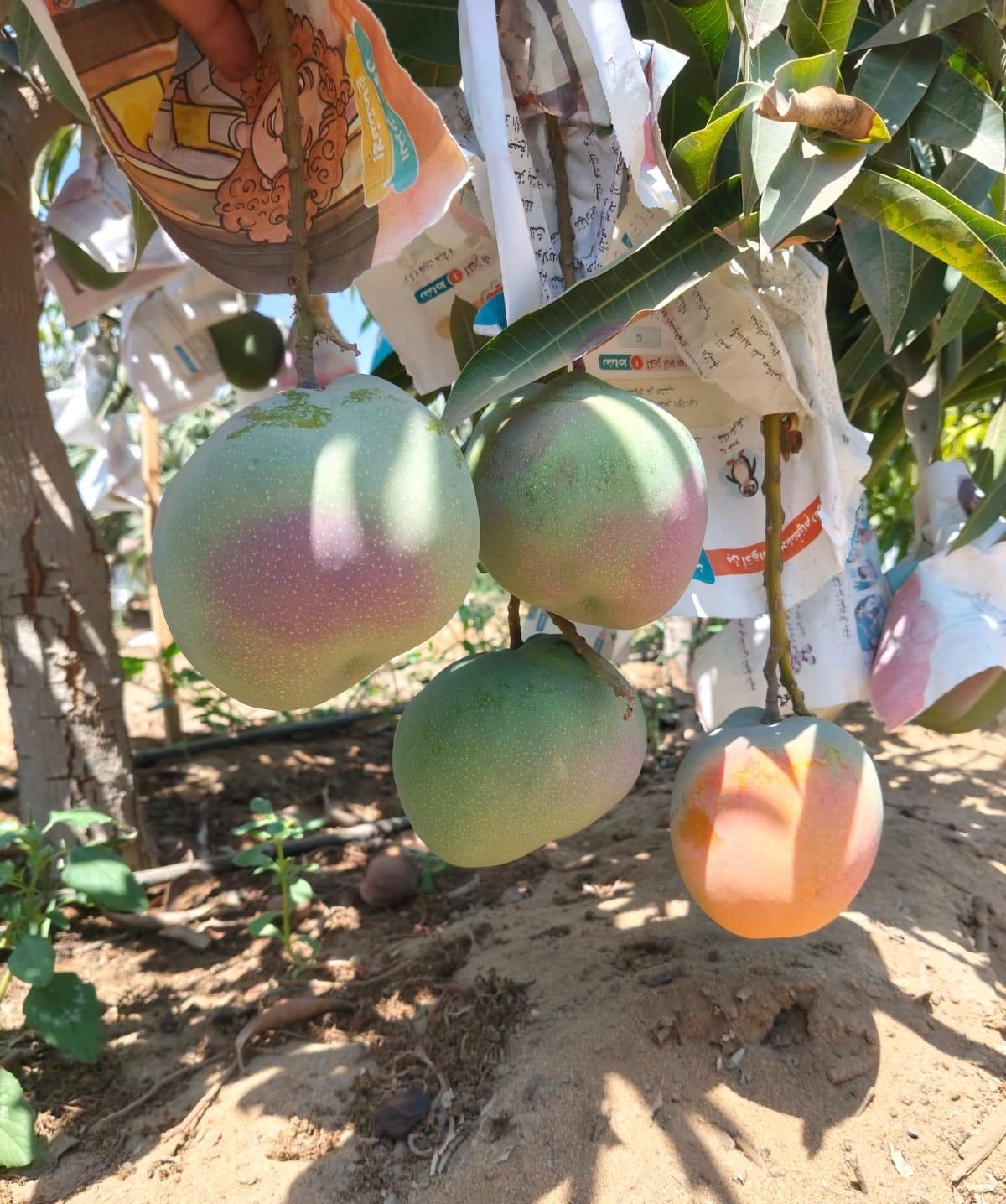
Enquiries for organic Egyptian mango have grown steadily over the last few seasons, mostly from European retail and from specialist distributors in the Gulf. The supply picture is less straightforward than the demand picture. Organic mango out of Egypt exists, it is genuinely certified, and it is available in far smaller quantity than most first-time buyers expect. Setting expectations correctly at the enquiry stage saves everyone a month.
What the certification actually covers
Organic status for the EU market runs under Regulation (EU) 2018/848, with equivalent schemes for the UK, the United States under the NOP, and various national requirements elsewhere. The certificate belongs to a defined production unit, not to a supplier in general. It covers the orchard, the conversion period, the inputs used, and the handling operations that touch the fruit after harvest. A packhouse handling organic fruit needs its own certification for the handling operation, separate from the orchard certificate.
Conversion is the reason volumes are limited. A mango orchard moving to organic production carries a conversion period of three years before fruit can be sold as organic. That is three seasons of organic input costs against conventional prices, on a tree crop where yields under organic management are typically lower and more variable than under conventional management. Not many growers take that on speculatively, so certified organic mango area in Egypt remains a small share of total plantings and is concentrated in the desert reclamation areas where disease and pest pressure are naturally lower.
Varieties and season
Where organic volume exists, it tends to sit in the same varieties as conventional. Keitt is the most commonly available because of its later window and its size profile, with smaller quantities of Kent and Naomi. The season follows the conventional calendar, which means organic Keitt is available roughly from late July through to September or October. Sizing on organic fruit often skews smaller and the count distribution within a lot is usually wider. Buyers writing a tight count specification into an organic order are frequently disappointed, and a sensible order allows a broader count band than a conventional one would.
Segregation and traceability
The part importers should question hardest is what happens between the orchard gate and the carton. Organic fruit has to be physically or temporally separated from conventional fruit through reception, washing, grading and packing. In practice most packhouses run organic on a dedicated day or shift, with a documented line cleardown before the run. Cartons carry the certifier code and the operator number. Every lot should trace back to a specific orchard and a specific harvest date, which is the same traceability chain described in our note on carton labelling and traceability.
Documents to ask for
Request the current organic certificate for the production unit and for the handling operation, checking the validity dates and the scope. For EU shipments, ask for the Certificate of Inspection issued through TRACES, which has to be issued before the consignment leaves and cannot be produced retrospectively. Residue testing on organic fruit is still worth doing, both as a control and because most retail buyers will ask for it regardless. Our guidance on phytosanitary and residue compliance covers how those tests fit into the loading timeline.
Nile Prime does not hold organic certification and does not supply organic mango. Our Keitt, Kent and Naomi programmes come from certified conventional farms, certified to GLOBALG.A.P. at farm level and HACCP / ISO 22000 at the packhouse, and are tested against the MRLs of the destination market, with residue reports available per lot. To check certificate scope and shipping positions from Alexandria, Damietta or Sokhna, message our export desk on WhatsApp at +20 10 9911 1918.