
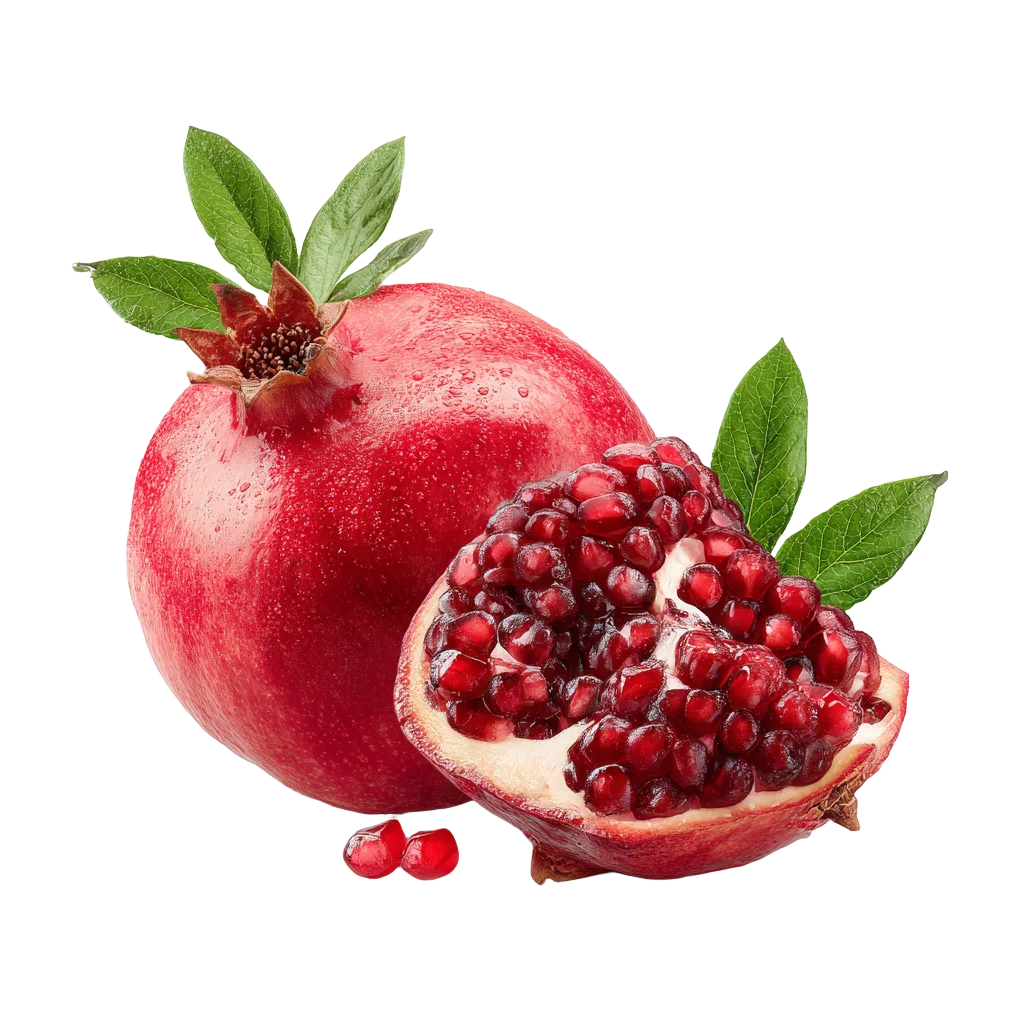
Pomegranate is graded on more criteria than most fruit an importer buys, and the criteria interact. A fruit can pass on diameter and fail on colour cover. It can pass on colour and fail on a single sunburn patch. Because the grading decision is made in seconds on a moving belt, the specification you send determines what arrives far more directly than any inspection at destination does. This is how the line actually works and what belongs in the spec.
Colour cover
The first sort is colour. Wonderful is judged on the percentage of the husk carrying red colour, and Egyptian export practice generally treats 70 percent and above as premium, 50 to 70 percent as standard export, and below 50 percent as domestic or processing. Early-season fruit sits lower on this scale, which is why colour cover on a late September shipment and on a November shipment are not comparable. If your market is retail, specify a minimum percentage. If your market is juice or foodservice, do not pay for colour you cannot sell, because releasing the colour requirement widens the pack and lowers the price.
Size and count
Sizing is by weight and equatorial diameter together. Export fruit typically runs 300 to 800 grams, with the commercial core between 400 and 600 grams. Cartons are packed to count, most commonly 6 to 12 fruit in a 4 kilogram carton, or 8 to 18 in a larger format depending on the market. Order by count rather than by grams, because the count is what the packhouse actually runs and what your customer sees when the carton is opened. Our shipping pomegranates from Egypt guide sets out the pallet configurations that follow from each carton format.
Defects that pull fruit off the line
Four categories account for most rejections at grading. Sunburn shows as a bleached or bronzed patch on the exposed shoulder and is the most common defect in an Egyptian season. Cracking and splitting follows irrigation irregularity late in the ripening period and is not repairable. Bruising and abrasion is handling damage, usually from field crates or a drop between belts. Rot at the crown, often invisible from the side, is the one that costs importers most, because it develops in transit and is only found on arrival.
Class I tolerates minor skin blemish that does not affect keeping quality. Class II tolerates more colour and shape variation but still no rot and no open cracks. Anything below that is processing fruit and should be described as such rather than shipped as low-grade export.
The four lines to put in your specification
State the minimum colour cover as a percentage. State the count per carton and the acceptable range around it. State the maximum tolerance for each defect class as a percentage of the carton, not as a general adjective. State whether you require individual foam netting and, if so, on which counts. Those four lines remove most of the argument that arises at arrival, and they let the packhouse tell you before loading whether the week’s harvest can meet them.
Grading is only as good as the fruit that reaches it. What happens between picking and the grading belt matters just as much, and we cover that in the first 72 hours from harvest to loading.
Working with Nile Prime
We pack Wonderful pomegranate to buyer specification from Alexandria, Damietta and Sokhna under Incoterms 2020, with colour cover, count and defect tolerances confirmed in writing before loading and photographs of the packed pallets sent on request. To discuss a specification for the 2026/2027 season, message our export desk on WhatsApp at +20 10 9911 1918.