
Mango condensation is water that forms on fruit and carton board whenever the surface is colder than the surrounding air, and it is one of the most common reasons an Egyptian mango container arrives looking worse than it left. The fruit is not leaking. The air is. Understanding which of the four points in the chain produced the water tells you whether it is a supplier problem, a carrier problem or your own receiving problem.
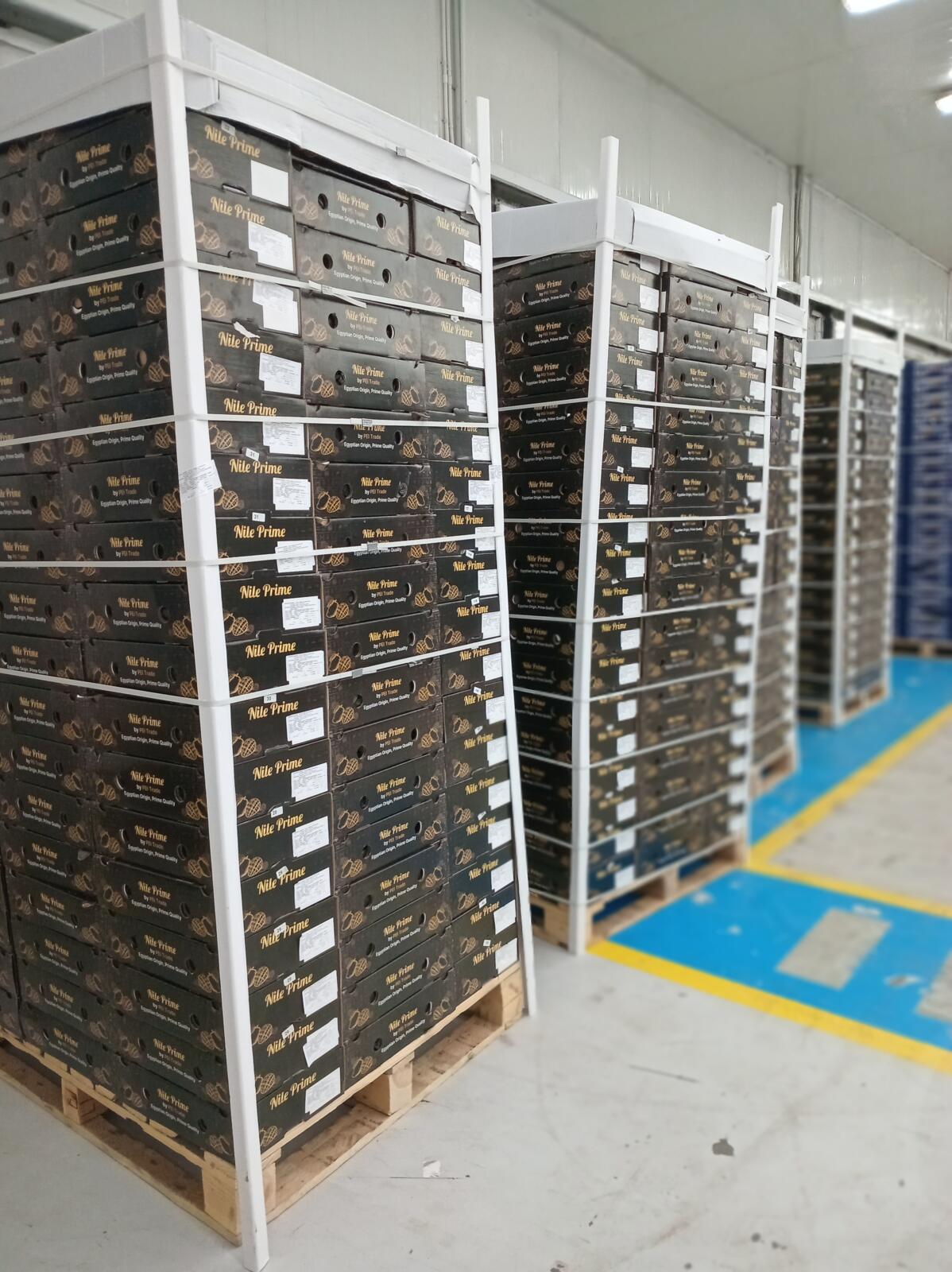
The four points where water forms
| Point in the chain | What causes it | Controlled by |
|---|---|---|
| Packhouse to cold store | Field-warm fruit moved into a cold room in humid air | Exporter |
| Cold store to container | Cold pallets standing on an open dock in Egyptian summer air | Exporter |
| Inside the reefer | Set point cycling, poor airflow, or fruit loaded above set point | Exporter and carrier |
| Container doors opened | Warm humid air meeting fruit at 10 to 12 C on arrival | Receiver |
What the water actually costs
Three separate costs, and they are worth separating in any claim discussion. Wet corrugated board loses a large share of its stacking strength, which is how a pallet that was square at loading arrives leaning or with crushed bottom-tier cartons. Free surface moisture on the fruit gives anthracnose and stem-end rot the film of water they need to establish, so a shipment that looked clean at loading can show decay on arrival. And wet labels lift, which creates a traceability problem exactly when you least want one. Board grades and how they behave wet are covered in our note on carton board, liners and trays on Egyptian mango.
Preventing it on the export side
The single most effective measure is not letting the fruit and the air separate by much in the first place. Fruit should be pre-cooled properly and then loaded from the cold store into a pre-cooled container through a sealed dock, with the shortest possible exposure to outside air. Where a sealed dock is not available, loading should be scheduled for early morning rather than the middle of the afternoon. Ventilated liners and adequate carton vent hole area let moisture move out rather than sit; sealed polyethylene liners trap it. Loading practice and airflow are set out in reefer stowage and airflow on Egyptian mango.
Preventing it on arrival
Most condensation a receiver sees is made at their own door. Fruit at 10 to 12 C brought into a warm humid warehouse will sweat within minutes, and once it does the fruit is on a shorter clock. Unload into a chilled area, or at minimum move pallets straight into the cold room rather than staging them on the dock while paperwork is checked. If the fruit is going to be repacked, let it come up to temperature gradually inside the cold room rather than on the floor. If you are photographing the load for a claim, take the images at the door before the fruit has had time to sweat, otherwise the photographs will record damage that arrival conditions produced.
Nile Prime loads from cold store to pre-cooled reefer and supplies temperature logger data with each container. To discuss loading practice, liner specification or a September Keitt position, message +20 10 9911 1918 on WhatsApp with your count, carton format and destination port.
Nile Prime is the exporter, not a neutral reviewer. Figures reflect standard practice for Egyptian mango in the 2026 season and should be confirmed against your own carrier and warehouse conditions.