
FOB shipping means the seller delivers the goods on board the vessel at the named port of loading, and from that moment the risk and the cost are the buyer’s. Everything before the ship’s rail is the seller’s problem; everything after it is yours. That single line decides who pays the freight, who claims on a damaged container, and who is out of pocket when a vessel rolls.
By the Nile Prime export desk · Last updated 26 August 2026 · Reading time 6 minutes
Key facts
- Risk passes when the goods are on board the vessel — not at the gate, not at the quay.
- FOB and CFR carry no insurance. Only CIF and CIP oblige the seller to insure, and only at minimum cover.
- FOB is a sea and inland waterway term only. For air freight or a truck the correct terms are FCA, CPT or CIP.
- Under FOB the buyer books the vessel. Under CFR the seller books it and the buyer still carries the risk at sea.
- On a 40 ft reefer the step from EXW to FOB is four separate cost lines, not one — see below.
Table of Contents
What FOB shipping actually covers
Free On Board is one of the eleven Incoterms 2020 rules published by the International Chamber of Commerce. Under FOB the seller must pack the goods, move them to the port of loading, clear them for export, and load them on board a vessel the buyer has nominated. The seller’s obligation ends there.
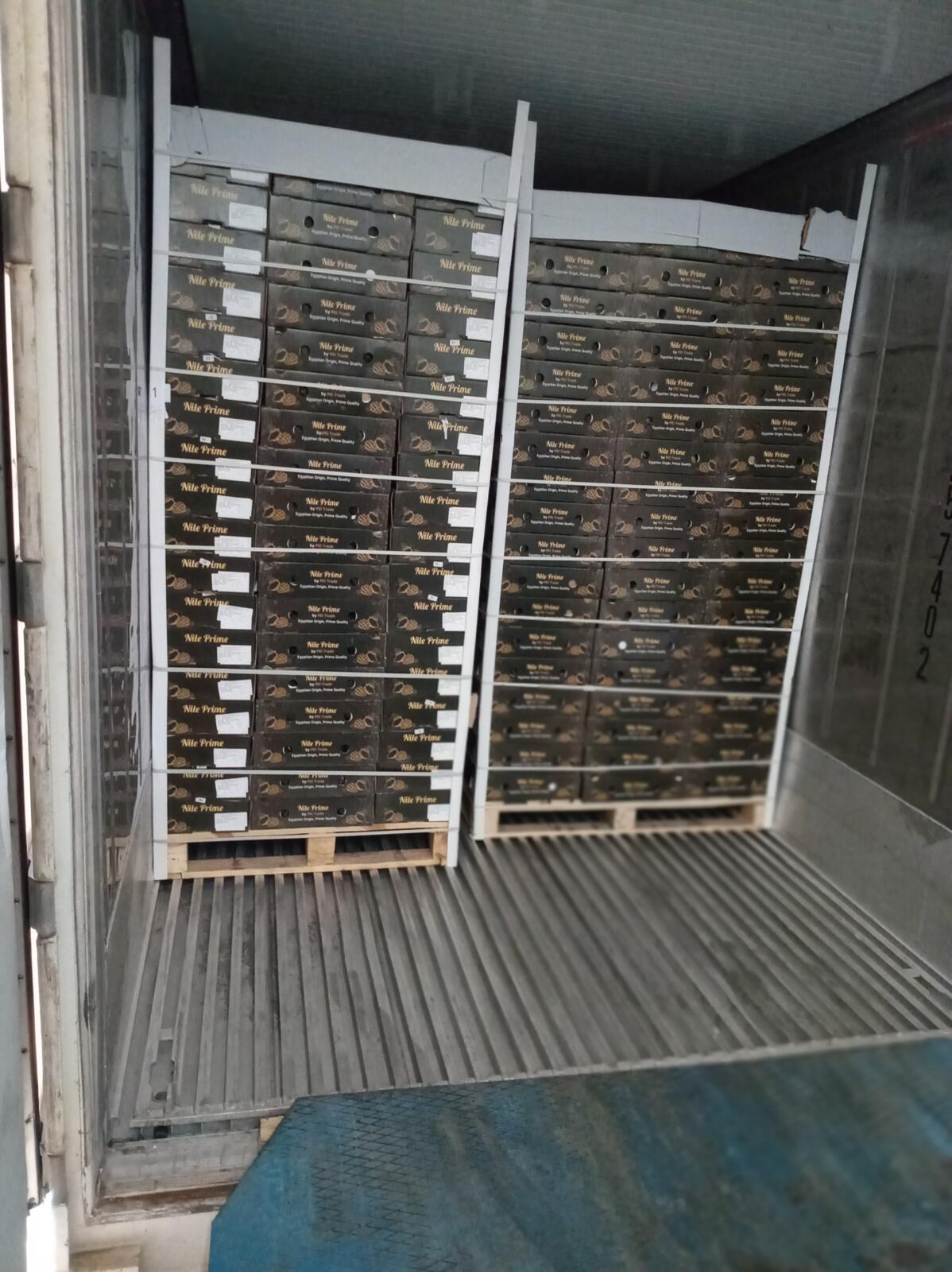
What that means in practice on a fresh-produce container: we pack and palletise, pre-cool, truck the load to Alexandria or Damietta, obtain the phytosanitary certificate and the export clearance, pay the terminal receipts, and stuff and seal the reefer against the booking. You nominate the line, you pay the ocean freight, and the container becomes yours the moment it is on the vessel.
FOB against CFR, CIF, EXW and DAP
Five terms cover almost every fresh-produce shipment out of Egypt. The difference between them is not the fruit — it is which side of the line each cost sits on.
| Cost line | EXW | FOB | CFR | CIF | DAP |
|---|---|---|---|---|---|
| Packing and palletising | S | S | S | S | S |
| Inland transport to port | B | S | S | S | S |
| Export clearance and phyto | B | S | S | S | S |
| Loading on board | B | S | S | S | S |
| Ocean freight | B | B | S | S | S |
| Marine insurance | B | B | B | S | B |
| Import clearance and duty | B | B | B | B | B |
| Delivery to your door | B | B | B | B | S |
| Risk passes at | Seller’s gate | On board | On board | On board | Named destination |
Read the last two rows together and the common mistake becomes obvious. Under CFR and CIF the seller pays the freight, but the risk still passed on board in Egypt. A buyer who assumes that “the seller arranged the shipping, so the seller carries it” has misread the rule.
When does risk transfer under FOB?
Incoterms 2020 places the transfer at the moment the goods are placed on board the vessel. Not when the container leaves the packhouse, not when it passes the terminal gate, and not when the bill of lading is issued. If the reefer sits on the quay for two days waiting for a berth and the plug is pulled, that loss is the buyer’s under FOB — which is precisely why the loading documents matter.
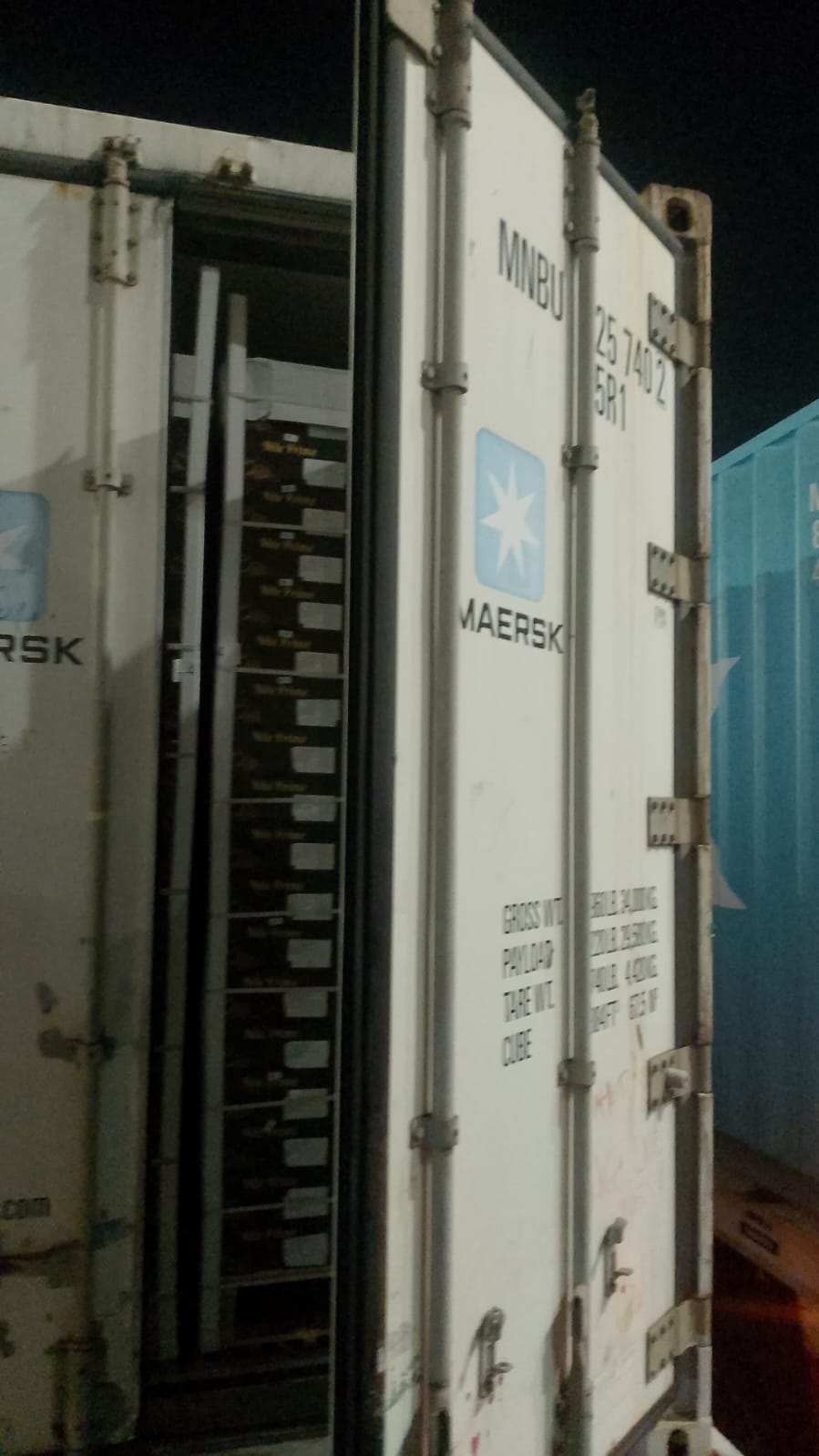
On perishable cargo the practical consequence is that you want evidence of condition at the transfer point. Ask for pulp temperatures at stuffing, the reefer set-point printout, the container and seal numbers, photographs of the stow, and the temperature logger placement. Those five items are what separate a provable claim from an argument. Our note on how arrival disputes are documented and settled covers what a surveyor looks for.
What the EXW to FOB step is made of
Buyers often treat the gap between an EXW price and an FOB price as a single handling fee. It is not. On a 40 ft reefer out of an Egyptian packhouse it is four distinct lines, and each one is quoted separately in our own costing:
| Line | What it pays for | Varies with |
|---|---|---|
| Inland freight | Refrigerated truck, packhouse to terminal | Distance and diesel; Ismailia to Alexandria is the long leg |
| Road receipts | Weighbridge, road tolls and en-route checks | Route, not cargo value |
| Customs clearance | Export declaration, broker, phytosanitary lodgement | Destination paperwork; some markets need extra declarations |
| Port receipts | Gate-in, terminal handling on the export side, plug-in while waiting | Terminal and how long the box waits for the vessel |
Two of those four are fixed per container rather than per kilo, which is why the FOB uplift per carton falls as the load gets heavier. A 40 ft reefer of mango in the 5 kg carton carries 4,160 cartons and 20,800 kg net, so the same fixed cost spreads across roughly eleven per cent more weight than the same container packed in the 5 kg box at 3,744 cartons and 18,720 kg. If you are comparing two FOB offers, check the pack format before you conclude one is cheaper.
FOB or CFR: who should book the vessel?
The honest answer is that it depends on whose freight contract is better, and on a reefer lane that is usually the party with volume on it. A buyer running weekly containers into Rotterdam will almost certainly beat an exporter’s spot rate. A buyer taking two containers a season into a Gulf port probably will not.
| Situation | Better term | Why |
|---|---|---|
| You hold a contract rate on the lane | FOB | You buy the freight cheaper than we can |
| You want one number to compare suppliers | CFR | Landed comparison without assembling freight yourself |
| Reefer plugs are scarce in peak weeks | CFR | The party at the load port books space earlier and more reliably |
| Your bank requires a specific document set | Whichever the credit names | A letter of credit that says CFR cannot be shipped FOB |
Whichever you pick, the risk position is identical. CFR moves the freight invoice, not the exposure at sea. For the mango-specific version of this decision, see our guide to buying Egyptian mango on FOB or CFR terms.
The insurance gap buyers miss
This is the part that costs people money. Neither FOB nor CFR includes marine insurance. Under both, the goods cross the sea at the buyer’s risk and uninsured unless the buyer arranges cover. Only CIF and CIP place an insurance obligation on the seller — and under CIF that obligation is Institute Cargo Clauses (C), the narrowest cover in the set, at 110 per cent of the invoice value.
On perishable cargo, Clauses (C) will not answer the loss you are most likely to have. It covers named perils — stranding, fire, collision — not a reefer unit that drifts three degrees for a day. If temperature deviation is the risk you are actually insuring, you need cover written for it, and you need to say so before the booking, not after the arrival.
Nile Prime quotes FOB and CFR. Where a buyer needs CIF we will say so explicitly on the offer and name the cover; do not assume an offer marked CIF carries insurance suited to temperature-controlled cargo without reading the clause.
Which term suits a first order?
For a first container from a new supplier, CFR is usually the calmer choice. It removes the coordination risk of nominating a vessel into a port you have not shipped from, and it gives you a single landed figure to judge the deal on. Take FOB from the second or third shipment, once you know the packhouse holds its dates and you have a rate to beat.
Whichever you choose, buy insurance separately and deliberately. The cheapest mistake in this trade is a first container shipped CFR by a buyer who believed CFR meant covered.
Frequently asked questions
Who pays for shipping under FOB?
The buyer. Under FOB shipping the seller pays everything up to and including loading the goods on board — packing, inland transport, export clearance and terminal handling on the export side — and the buyer pays the ocean freight, any insurance, import clearance and onward delivery.
When does risk transfer under FOB?
When the goods are placed on board the vessel at the named port of loading. Not at the packhouse gate, not at the terminal gate, and not on issue of the bill of lading. A container damaged while waiting on the quay is the buyer’s loss under FOB.
Is FOB or CIF better for a first order?
CFR or CIF is usually easier for a first container, because the seller books the vessel and you get one landed number to compare. But note that CFR includes no insurance at all, and CIF only obliges the seller to buy minimum cover, which is rarely the right cover for temperature-controlled cargo. Arrange insurance deliberately either way.
Does FOB include insurance?
No. FOB includes no insurance obligation on either side. The goods travel at the buyer’s risk from the moment they are on board, and they are uninsured unless the buyer arranges cover. The same is true of CFR. Only CIF and CIP oblige the seller to insure.
Can FOB be used for air freight?
No. FOB is a sea and inland waterway term only. Using it on an air shipment leaves the transfer point undefined, because there is no ship’s rail. For air freight, road or multimodal movements the correct Incoterms 2020 rules are FCA, CPT or CIP.
What is the difference between FOB and FCA?
FCA transfers risk when the goods are handed to the carrier at a named place, which can be the packhouse or the terminal. FOB transfers risk only once the goods are on board the vessel. For containerised cargo handed over at a terminal days before loading, FCA usually describes what actually happens more accurately than FOB does.
Ask for the term you actually want
Tell us the destination port, the volume and the term, and we will quote it as asked rather than converting it to the one that suits us. If you want the same load priced FOB Alexandria and CFR your port, ask for both on one sheet — comparing them side by side is the fastest way to see whether your freight rate or ours is the better one.
WhatsApp / Office: +20 10 9911 1918 · Loading from Alexandria, Damietta, Sokhna and Port Said under Incoterms 2020. Nile Prime is the exporter, not a neutral adviser — the terms described here are the ones we trade on.
Related reading
- Buying Egyptian mango on FOB or CFR terms 2026
- Arrival condition and claims: how a dispute is assessed
- Shipping by sea: ports, transit and reefer settings
- Bill of lading types and telex release
Source: Rule definitions follow Incoterms® 2020, International Chamber of Commerce. Cost-line structure and container loads are from the Nile Prime costing system, revision 23 August 2026.