
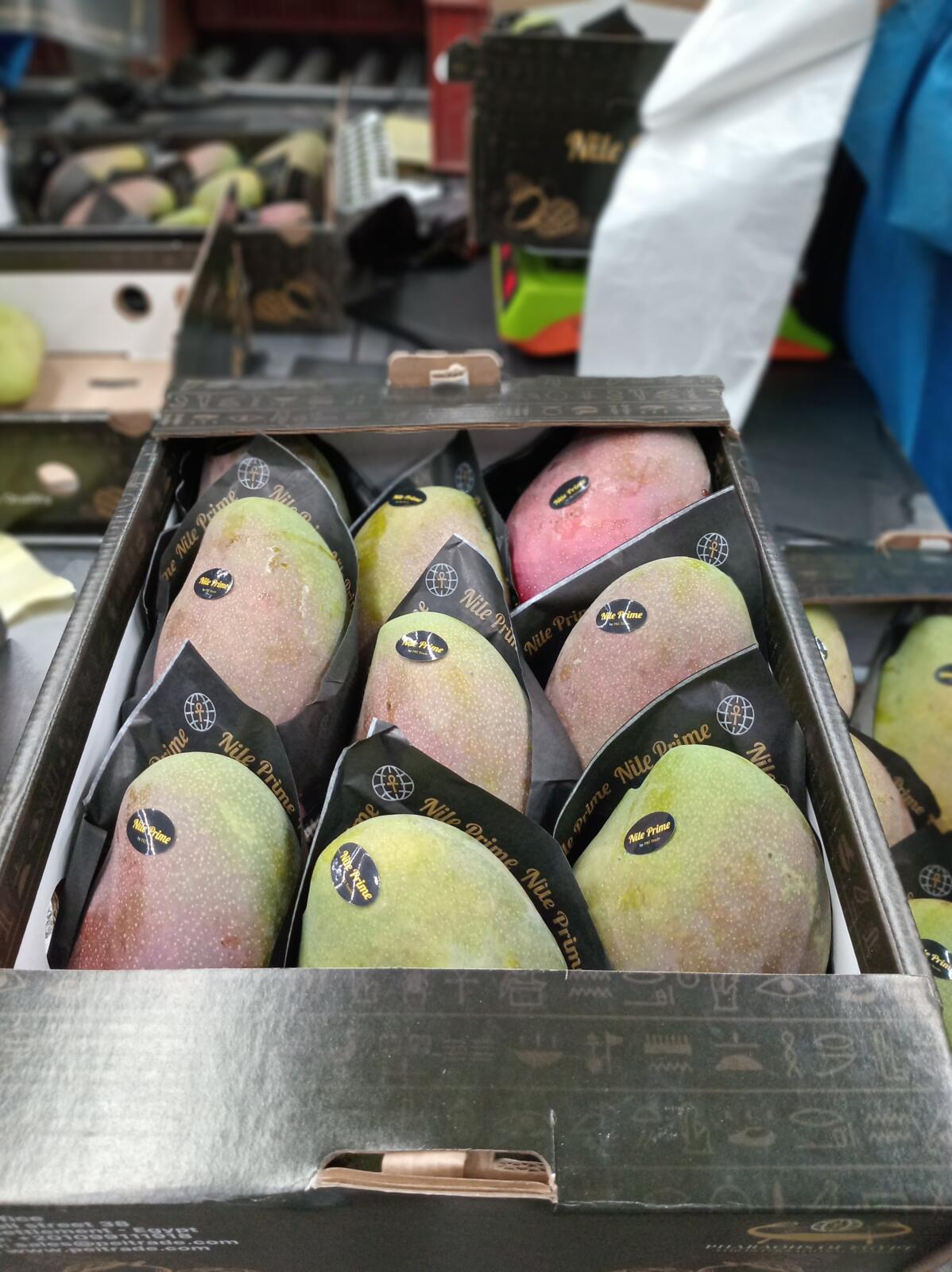
Almost every rejection argument on mango is about the skin. The flesh is usually fine. What decides whether a pallet clears a retail specification, gets diverted to wholesale, or comes back as a claim is a set of surface defects that each have a different cause and a different tolerance. Knowing which defect you are looking at tells you whether the problem happened in the orchard, on the packline, or in the container.
Sap burn
This is the most common and the most preventable. When the fruit is detached, latex sap runs from the cut stem and etches the skin wherever it lands, leaving brown or black streaks that darken over the following days. The mark is superficial but it is progressive, so fruit that looked acceptable at packing can present badly on arrival. Prevention is entirely a harvest practice question. Fruit is cut with a stem left on, held stem down so the sap runs away from the shoulder, and de-sapped in a controlled way before it reaches the grading line. Sap burn beyond a light trace is a Class II defect and is not accepted on retail programmes.
Lenticel spotting
Lenticels are the natural pores on the mango skin. Under stress they darken into small brown or black dots, sometimes with a pale halo. The usual triggers are contact with water of the wrong temperature or chemistry during washing, prolonged wetting, and abrasion. It shows up more on late-season fruit and more on Keitt than on Kent. Light lenticel marking is tolerated within Class I limits on most specifications. Dense spotting across the shoulder is not, because on a green-skinned variety it reads as dirty fruit on a retail shelf.
Wind scarring and russeting
Orchard-origin marks caused by branches or leaves rubbing the developing fruit. The scar is corky, dry and healed, and it does not progress after harvest. Because it is stable, buyers who are willing to accept a defined area of healed scarring can take good fruit at a better price. Specifications usually express the tolerance as a maximum total affected area in square centimetres rather than as a yes or no. Our note on Class I and Class II tolerances sets out how these limits are normally written.
Hot water treatment blemish
Where hot water treatment is applied for disease control or market access, over-treatment leaves scald, softening at the shoulder, or an irregular pale patch. The defect is a process failure, not a fruit defect, and the answer is a validated time and temperature combination with logged records for each batch. If your destination requires treatment, ask for the treatment log with the shipping documents. The background is covered in our note on postharvest disease control.
Bruising and compression
Bruising is a handling defect and it is usually invisible at packing. It appears on arrival as a soft, slightly sunken area that darkens. The causes are drop height on the line, over-filled cartons, and pallets stacked without adequate corner support. Compression marking along the shoulder normally points to a carton count that does not match the fruit size, which is why matching count to size properly matters more than it appears to.
What to specify
Write the tolerance rather than the adjective. State the maximum affected area per fruit, whether the defect must be healed, and the percentage of fruit in the lot permitted to carry it. A specification that says fruit must be free from blemish is unworkable on any natural product and simply moves the argument to arrival. A specification that allows, for example, healed scarring up to two square centimetres on no more than ten percent of fruit is one both sides can inspect against.
Nile Prime grades to written tolerances agreed before loading and can arrange third party pre-shipment inspection on request. To discuss a specification for your programme, contact us on WhatsApp at +20 10 9911 1918.